Key Points
- Heritage Day at Historic London Bus Museum: The London Bus Museum is planning a heritage day in honor of the historic 106 bus route which connects north and east London.
- Complimentary Public Service: There will be a complimentary bus service on 3 October 2026 from 10am to 5pm.
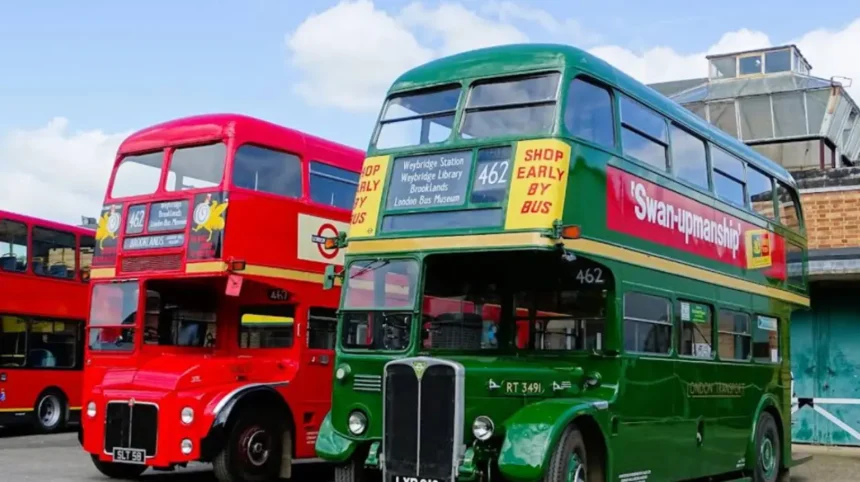
- Classic Vintage Vehicles Fleet: There will be a fleet of classic vintage vehicles which date back to 1950s to 1970s and come with rear open platform and on-board conductor.
- Designated Route Terminals: Classic vintage vehicles will be used for all transport stops along route 106 from Finsbury Park to Ash Grove bus garage at Hackney.
- Operations on Parallel Timetable: The heritage event will operate simultaneously with the regular Transport for London timetable which is currently operated by Stagecoach London.
- Heritage of Centuries Past: The 106 bus route first came into existence near the beginning of World War One.
Hackney (North London News) September 5, 2026 – Passengers in north and east London will have the opportunity to step back in time this autumn as a classic fleet of heritage buses takes over a prominent transport corridor. As reported by local media correspondents across London, the London Bus Museum is staging a special heritage event to trace the century-old historic 106 bus route. The non-commercial, free heritage service will operate on Saturday, 3 October 2026, between 10:00 BST and 17:00 BST, serving all standard stops along the route between Finsbury Park interchange and the Ash Grove bus garage in Hackney.
The event aims to offer both nostalgic trips down memory lane for older commuters and an immersive historical experience for younger generations. The special fleet will feature classic double-decker buses dating from the 1950s through to the 1970s. These preserved public transport vehicles feature open rear boarding platforms and operating conductors handing out traditional paper tickets, recreating mid-twentieth-century travel conditions in the capital.
What Features And Operational Details Can Passengers Expect On The Day?
As reported by journalists covering transport developments in London, the heritage vehicles will operate alongside the existing schedule. As detailed by the reporting team at the Hackney Gazette, the heritage service will run in parallel with the standard daily scheduled route 106 service, ensuring that ordinary local commuters experience no disruption to their regular Saturday travel plans.
As noted by transport journalist Will Noble of Londonist, the event marks the return of the museum’s popular semi-regular heritage day operations, where historic vehicles ping between Finsbury Park and Ash Grove bus station on Mare Street. Passengers will be permitted to board and alight freely without charging a fare, providing direct access to historic transport infrastructure for residents across Hackney, Clapton, and Finsbury Park.
How Has Route 106 Evolved Since Its Creation In The Early Twentieth Century?
As reported by media coverage in the Hampstead & Highgate Express, route 106 holds a prominent place in the capital’s public transport history, tracing its lineage back to late 19th-century horse-drawn omnibuses before motor buses permanently replaced horse power in 1912. The service was formally renumbered as route 106 in 1914 at the onset of World War One.
According to archival documentation cited by local media sources, the original early route ran from Colney Hatch Lane through Muswell Hill and Archway, heading south-east via Finsbury Park and Leytonstone. During the expansion of the 1920s, the line was extended eastwards via Canning Town and Beckton Road to Barking and Becontree, terminating at Chitty’s Lane. At its peak frequency in that era, buses ran every four minutes from Finsbury Park to Poplar, taking one and a half hours to complete the full journey.
Further historical modifications occurred in October 1934 when portions of the line were extended to Royal Victoria Dock, and between February 1937 and October 1942, selected journeys reached as far as West Ham stadium. The route underwent structural contraction in July 1941 when trolleybuses replaced the Victoria Dock legs, and by 1971, the 106 service was formally withdrawn from areas east of Blackwall Tunnel.
In recent history, the route converted back fully to double-deckers in 2001. Commercial operations were awarded to operator CT Plus in September 2018, before Transport for London contracts officially passed to Stagecoach London in August 2022. Stagecoach currently continues to manage the daily commercial contract using modern low-emission single-decker vehicles based out of the historic Ash Grove garage.
Background Of Route 106 Heritage Day
The London Bus Museum, located at Brooklands in Weybridge, Surrey, regularly organizes heritage days across the capital to preserve London’s transit heritage. These public exhibitions serve to display restored operational vehicles from the Museum’s extensive collection, which spans over a century of road transport history.
Route 106 was chosen for the 2026 autumn heritage event due to its historic significance as a continuous north-to-east transport spine. Running through diverse neighbourhoods including Finsbury Park, Clissold Park, Stoke Newington, Clapton Pond, and central Hackney, the route has adapted through world wars, suburban expansion, municipal management changes, and privatization. The choice of Ash Grove garage as a terminus provides an operational link to the modern bus fleet operated by Stagecoach London.
Explore More Hackney News
60 Firefighters Battle Blaze Disrupting London Overground: Hackney Central 2026
Green Paper Candidates Win Surprise Council Seats; North London, 2026
Prediction: How This Development Will Affect Transport Enthusiasts, Local Residents, And Retail Businesses
The staging of the Route 106 Heritage Day is anticipated to bring noticeable impacts across three distinct local groups:
1. Transport Enthusiasts and Historians
Bus preservationists, local historians, and transport photography enthusiasts will gain direct access to operational vehicles that are rarely seen on active suburban streets. The opportunity to ride inside restored AEC Routemasters and earlier mid-century models with working conductors provides an authentic educational experience that static museum displays cannot replicate.
2. Local Residents and Families
For local residents across Hackney and Haringey, the event provides a free weekend leisure activity. Families with young children will experience mid-century public transit firsthand, while older residents who remember the original platform-style buses will experience a nostalgic community event. Because the free vintage service runs alongside the standard modern Stagecoach schedule, everyday commuters will not experience route delays or reduced capacity.
3. Local High Street Businesses
Retailers, cafes, and markets situated along the Mare Street, Clapton, and Finsbury Park corridors are expected to see an increase in weekend footfall. Events organised by the London Bus Museum historically attract thousands of visitors from outside the immediate borough, benefiting hospitality and retail businesses situated near major stops and the Ash Grove garage terminus.