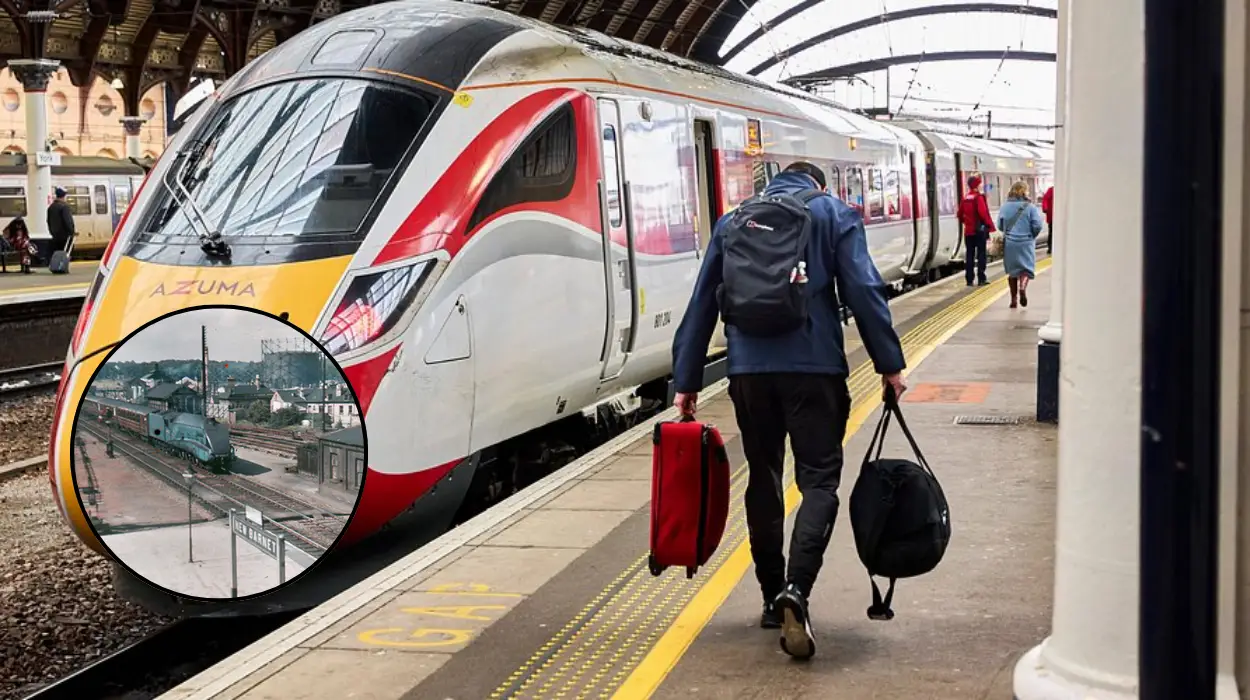
Established on January 1, 1923, as part of the Railways Act 1921 consolidation of British rail services, the LNER was one of the “Big Four” railway companies in the United Kingdom. It was created through the merger of six major and 27 smaller railway companies, managing rail transport primarily to the north and east of London. The LNER became the second largest railway company after the LMS (London, Midland and Scottish Railway) and played a crucial role in the development of the East Coast Main Line, which connects London to Edinburgh, York, Newcastle upon Tyne, and further to Aberdeen and Inverness in Scotland. The company’s influence also extended to the Great Central Main Line running from London Marylebone to Sheffield. The operational territory of LNER included most of the country east of the Pennines and was essential for both passenger and freight transport.
Historical Context and Formation
The formation of the LNER was part of a broader effort by the British government to rationalize a fragmented railway network that had become inefficient after World War I. The Railways Act 1921 was designed to consolidate around 120 railway companies into just four large entities to improve service reliability, coordination, and financial stability. The LNER was created by amalgamating many smaller railways, including the historically important North Eastern Railway (NER), an English railway company established in 1854. The NER was a critical predecessor, operating the rail system in the northeast of England, setting the foundation for the LNER’s extensive coverage.
The LNER’s Iconic Contributions and Innovations
Under the leadership of Sir Nigel Gresley, the LNER became renowned for engineering excellence and innovative design. Gresley served as Chief Mechanical Engineer and was responsible for designing powerful and efficient steam locomotives that became iconic symbols of British rail travel. Among these were the A3 and A4 Pacific-class locomotives, including the legendary “Flying Scotsman” and the world-record-holding “Mallard.” The Mallard set a world speed record for steam locomotives, reaching 126 miles per hour in 1938, a feat that remains unbeaten.
The LNER was also famous for luxurious and fast passenger services, including the “Silver Jubilee” train introduced in 1935 with streamlined design features that represented the height of 1930s elegance and technological advancement. The non-stop London to Edinburgh services, promoted heavily by LNER’s publicity efforts, ingrained themselves deeply into public imagination and helped to elevate the company’s prestige.
LNER’s Role in North London
While the LNER’s main lines extended far beyond North London, the region served as a critical hub for its operations. The Stratford Works in East London, part of the LNER’s workshops, was a key site for construction and maintenance, supporting the large fleet of rolling stock. North London benefited from the connectivity the LNER provided, facilitating passenger and freight movement to and from the capital, and supporting economic growth and urban development in areas surrounding London. The East Coast Main Line passes directly through North London rail hubs, such as at King’s Cross, making it a vital gateway to Scotland and the Northeast of England.
Nationalisation and Legacy
The London and North Eastern Railway ceased to exist as an independent company on January 1, 1948, when it was nationalised along with the other big railway companies to form British Railways. The LNER’s routes were divided among the new Eastern Region, North Eastern Region, and parts of the Scottish Region of British Railways.
Despite its formal dissolution, the legacy of the LNER endures. In 1996, during the privatisation of British Rail, the long-distance express services on the East Coast Main Line were awarded to Sea Containers Ltd, which established the Great North Eastern Railway (GNER). This name and branding echoed the historical LNER, connecting contemporary services to a celebrated heritage of rail travel.
Continuing Influence and Importance Today
The East Coast Main Line remains one of the most important rail corridors in the UK, linking London with key northern cities and Scotland. Modern services operated by companies that succeeded GNER continue to inherit and build upon the infrastructure and routes laid down by the London and North Eastern Railway.
For residents and commuters in North London, the LNER’s historical routes and hubs continue to shape daily travel patterns. The railway has been a driver of regional development, encouraging commuter culture, influencing urbanization, and supporting tourism and business.
The London and North Eastern Railway exemplifies a crucial era in British railway history with enduring influence on the transport infrastructure of North London and beyond. From its iconic locomotives and streamlined trains to its fundamental role in shaping the East Coast Main Line, the LNER’s legacy is alive in both the fabric of British rail and the day-to-day life of North Londoners. Writing on this topic provides a rich, well-sourced, and engaging evergreen narrative that continues to attract interest across search engines and informational platforms, making it a valuable addition to any blog focused on North London.