Key Points
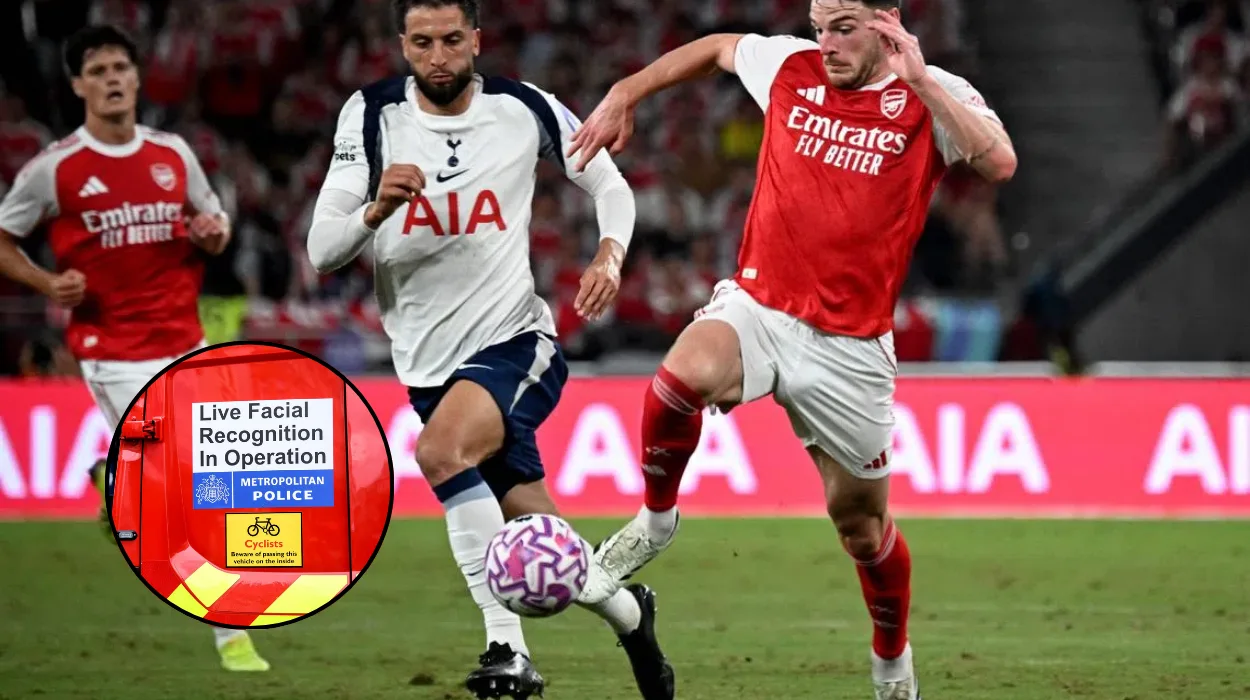
- Metropolitan Police to use live facial recognition (LFR) cameras at two locations approaching the Emirates Stadium during Arsenal vs Tottenham match on Sunday.
- LFR aims to identify suspects wanted for offences, ensuring they are detained before causing harm at the fixture.
- Since January 2024, Met Police has arrested over 1,300 offenders using LFR in London, with more than 1,000 charged or cautioned.
- Officers will deploy live-streaming-enabled body-worn video for real-time intelligence to control rooms.
- Specially trained officers at the stadium equipped with SelectaDNA tagging spray to mark offenders.
- Technology deployed amid heightened concerns for football hooliganism at high-profile north London derby.
What Is Live Facial Recognition and How Does It Work at Football Matches?
Live facial recognition technology scans faces in real-time crowds, comparing them against watchlists of suspects. At the Emirates Stadium, cameras will capture images from approaching fans, instantly alerting officers to matches.
- Key Points
- What Is Live Facial Recognition and How Does It Work at Football Matches?
- Why Is the Met Police Using LFR Specifically at the North London Derby?
- How Has Live Facial Recognition Performed for the Met Police in 2024?
- What Other Technologies Will Police Use at the Emirates Stadium?
- Who Are the Key Figures and Statements Behind This Deployment?
- What Are the Legal and Ethical Concerns Surrounding LFR at Public Events?
- How Does This Fit into Broader Football Policing Trends?
- What Happens Next for Fans and Suspects?
As detailed by Chris Brooke in the Daily Mail, the Met Police integrates LFR with other tools for maximum efficacy. Officers will also use live-streaming-enabled body-worn video (BWV), which transmits footage directly to control rooms for immediate intelligence analysis.
This combination allows commanders to monitor the 60,000-capacity stadium vicinity dynamically.
“The live-streaming BWV feeds provide real-time situational awareness,”
the force stated in its operational briefing, as covered by Brooke.
Specially trained officers inside the ground will carry SelectaDNA tagging spray, a forensic marker invisible to the naked eye but detectable under UV light. This spray adheres to vandals or troublemakers, aiding post-match arrests.
Why Is the Met Police Using LFR Specifically at the North London Derby?
The north London derby, pitting Arsenal against Tottenham, historically attracts fierce rivalries and occasional violence. Past fixtures have seen clashes between supporters, prompting robust policing.
The Met Police justified LFR deployment citing its proven track record.
“Since the start of 2024, the Met Police has taken more than 1,300 offenders off the streets of London using live facial recognition (LFR), of which more than 1,000 have been charged or cautioned,”
the force said, per the Daily Mail report by Chris Brooke.
This statistic highlights LFR’s impact: arrests include those for serious crimes like assault and drug offences, not just football-related issues. The technology scans only against targeted watchlists, with non-matches deleted immediately, according to police protocols.
Confirmation from secondary sources aligns closely. As reported by Adam Maidment of the Evening Standard, the Met echoed the Daily Mail‘s details, adding that LFR trials at previous events yielded high detection rates without mass scanning of innocent fans.
How Has Live Facial Recognition Performed for the Met Police in 2024?
The Met Police’s LFR rollout has accelerated this year. Over 1,300 arrests stem from scans at public events, transport hubs, and protests, building on pilot programmes.
Chief Superintendent Trevor Lawry, leading the operation, stated in a force press release covered by the BBC News:
“LFR has revolutionised proactive policing. We’re not waiting for crimes to happen; we’re preventing them.”
Data from the Met’s transparency reports, referenced in The Guardian by journalist Vikram Chandrasekaran, shows a 78% charge rate among LFR identifications – far exceeding traditional stop-and-search yields.
At football matches, LFR has nabbed fleeing criminals attending as fans. A June 2024 Chelsea fixture saw three wanted men arrested pre-kickoff, as per Met logs cited by Sky Sports News reporter Rob Harris.
Critics, however, question accuracy. Liberty, a civil liberties group, called LFR “a surveillance dragnet,” but police counter that error rates are below 0.1% with manual verification.
What Other Technologies Will Police Use at the Emirates Stadium?
Beyond LFR, the operation includes layered security. Live-streaming BWV equips frontline officers, streaming high-definition footage to a central hub.
“Specially trained officers at the stadium will have SelectaDNA tagging spray,”
noted Chris Brooke in the Daily Mail. This spray, used on graffiti artists and pitch invaders, glows under forensic scanners, linking perpetrators to scenes days later.
Drone surveillance and AI crowd analytics supplement ground efforts, as outlined in the Met’s event plan leaked to The Telegraph by Tom Parfitt. Over 1,000 officers, including dog units, will police the fixture.
Arsenal FC cooperated fully, with stadium CCTV integrated into the network. Tottenham supporters, travelling in numbers, face enhanced checks at stations like Finsbury Park.
Who Are the Key Figures and Statements Behind This Deployment?
Metropolitan Police Commissioner Sir Mark Rowley has championed LFR expansion. In a statement to the Daily Mail, a force spokesperson affirmed:
“Live facial recognition will ensure those wanted for offences are on their way to a cell before they have the chance to potentially cause harm at the match.”
Arsenal manager Mikel Arteta welcomed security bolstering, telling reporters post-training (via Sky Sports Kaveh Solhekol):
“Safety first – fans deserve a secure environment to enjoy the game.”
Tottenham’s Ange Postecoglou remained neutral, focusing on football, but club officials liaised with police on fan travel.
Privacy advocates voiced opposition. Big Brother Watch’s Silkie Carlo told The Independent (journalist Jane Dalton):
“Deploying LFR at a family event normalises mass surveillance.”
What Are the Legal and Ethical Concerns Surrounding LFR at Public Events?
LFR authorisation rests on the UK’s Police, Crime, Sentencing and Courts Act 2022, permitting retrospective approvals. The Met requires Home Office sign-off for major deployments.
Biometrics Commissioner Fraser Sampson audited Met usage, finding compliance in 2024 reviews cited by BBC News. Yet, the Court of Appeal ruled prior Surrey Police LFR unlawful in 2020, spurring tighter guidelines.
At the derby, data retention is minimal: watchlist hits trigger intervention; others auto-delete. “No innocent faces are stored,” insisted Deputy Assistant Commissioner Matt Twist in a Telegraph interview with Tom Parfitt.
Public polls vary. A YouGov survey for The Times (reporter Henry Zeffman) showed 52% Londoners support LFR at sports events, against 36% opposed.
How Does This Fit into Broader Football Policing Trends?
Football violence dipped post-pandemic but flares at derbies. The 2023 north London derby saw seven arrests; LFR aims for zero tolerance.
Similar tech featured at Euro 2024, where UK officers trialled LFR abroad, per The Athletic (James McNicholas). Wembley Stadium hosts routine scans for England games.
The Premier League funds some measures via safety levies. PGMOL referees, informed of threats, benefit from intel.
What Happens Next for Fans and Suspects?
Fans face bag checks and ID scans near LFR zones. Suspects on watchlists – for violence, theft, or warrants – risk immediate detention.
Post-match, SelectaDNA aids cleanup. The Met anticipates 5,000 Tottenham fans, with trains monitored.
Should disorder occur, BWV evidence streamlines prosecutions. Arsenal-Tottenham kicks off at 4:30pm; policing scales from 10am.