Key Points
- Hundreds of people gathered in north London on Sunday evening for a Chanukah menorah lighting at Hornsey Town Hall, just hours after a terror attack at Bondi Beach in Sydney.
- Terrorist gunmen in Bondi Beach killed 15 people, including a 10-year-old girl, a north London rabbi identified as Rabbi Eli Schlanger, and a Holocaust survivor.
- The Hornsey Town Hall event became an occasion to pay tribute to Rabbi Eli Schlanger and all victims of the Bondi attack, as grief and solidarity spread from Australia to the UK.
- Rabbi Boruch of Crouch End Chabad led religious aspects of the Chanukah celebration and memorial reflection in north London.
- The mayor of Haringey, Councillor Ahmed Mahbub, and the deputy mayor, Councillor Michelle Simmons-Safo, attended, alongside Crouch End ward councillors and other Haringey councillors.
- Speakers at the event emphasised communal resilience, the importance of combating antisemitism, and the need to continue celebrating Jewish life despite fear.
- Local Jewish community members expressed shock at the killing of a rabbi with ties to north London and described Rabbi Eli Schlanger as a respected religious leader and teacher.
- The Bondi Beach shooting heightened concerns about antisemitic violence globally, prompting calls for greater security for Jewish institutions and events.
- Community leaders in Barnet and Haringey stressed interfaith solidarity and the shared commitment of local government and faith groups to stand against hatred.
- The Chanukah menorah lighting, set long before the attack, was transformed into a vigil-like gathering, with prayers, psalms, and moments of silence for the dead.
How did Barnet and north London honour Rabbi Eli Schlanger after the Bondi attack?
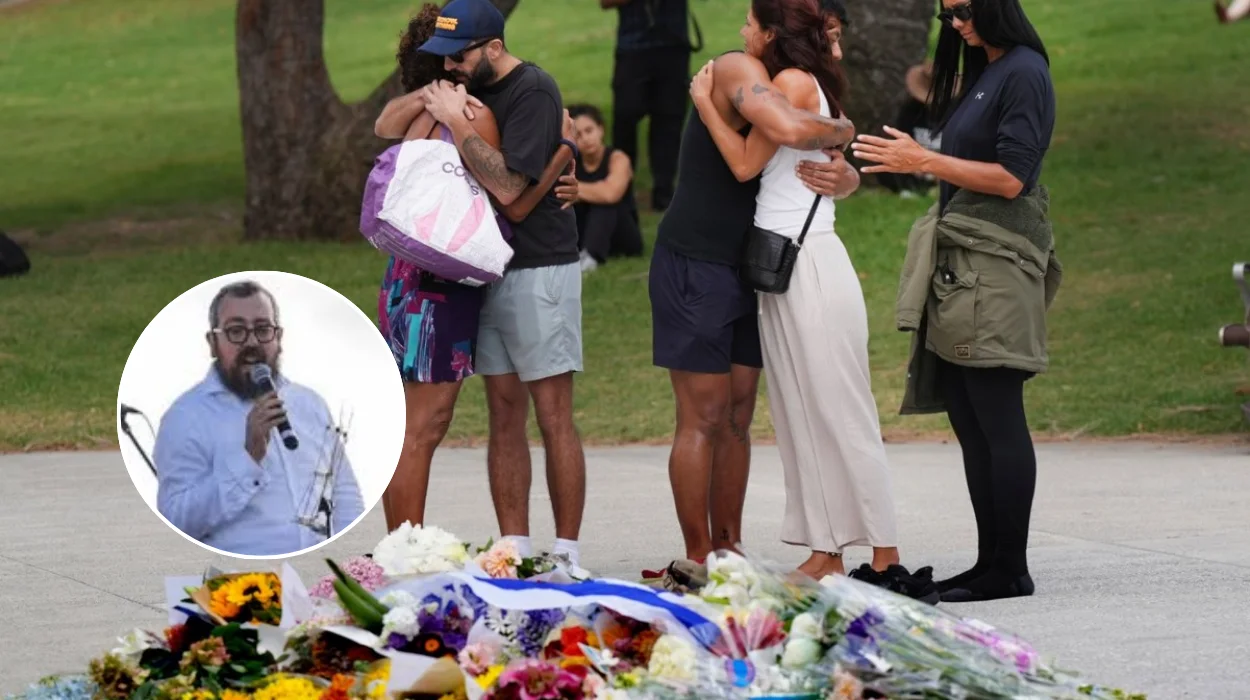
Crowds filled the square outside Hornsey Town Hall in north London on Sunday, only hours after news emerged of the deadly terror attack at Bondi Beach in Sydney. The gathering, originally planned as a joyful Chanukah menorah lighting, became a poignant tribute to the victims, including a 10-year-old girl, a Holocaust survivor, and a north London rabbi named as Rabbi Eli Schlanger.
- Key Points
- How did Barnet and north London honour Rabbi Eli Schlanger after the Bondi attack?
- Why was the Hornsey Town Hall Chanukah event so significant on this night?
- Who led the religious and communal aspects of the Chanukah gathering?
- Which civic leaders attended, and what roles did they play?
- What is known about the Bondi Beach attack and its victims?
- How did the mood at the Hornsey Town Hall gathering reflect global Jewish concerns?
- How did local leaders frame the response to antisemitism and terror?
- What role did Chanukah’s symbolism play in the tribute to Rabbi Eli Schlanger?
- How are Barnet and Haringey communities expected to continue their response?
As reported by multiple local community sources, attendees lit candles, recited traditional Chanukah blessings, and observed moments of silence for those killed in the Bondi attack. The emotional shift of the event was evident: what was meant to be a public celebration of light in winter became a communal act of remembrance and defiance against antisemitic violence.
According to accounts shared by participants and organisers, people spoke quietly in small groups about Rabbi Eli Schlanger’s life and his role within the north London Jewish community. Some had known him personally, describing him as a dedicated rabbi and teacher; others came simply to show support for the Jewish community amid renewed fears following the attack.
Why was the Hornsey Town Hall Chanukah event so significant on this night?
The Hornsey Town Hall menorah lighting was scheduled as part of the Jewish festival of Chanukah, which commemorates the rededication of the Temple in Jerusalem and the miracle of the oil. However, the timing of the event—coming just hours after the Bondi Beach attack—gave it a far deeper resonance for those attending.
As relayed by local Jewish community organisers, the event symbolised the principle at the heart of Chanukah: that light must be kindled even in times of darkness. In the wake of the killing of 15 people at Bondi Beach, including a rabbi from north London, the message of resilience felt especially urgent. Community members framed the gathering as a statement that Jewish life and practice would not be forced into silence by terrorism.
People present at the event said the large turnout—described in reports as “hundreds” of attendees—was itself a powerful gesture. Many came with families and children, despite understandable anxieties, to show that community spaces would remain open and visible. The menorah standing outside Hornsey Town Hall thus became both a religious symbol and a public declaration that the community refused to be intimidated.
Who led the religious and communal aspects of the Chanukah gathering?
The religious centrepiece of the event was led by Rabbi Boruch of Crouch End Chabad. As reported by community notices and eyewitness accounts, Rabbi Boruch recited the traditional blessings for the lighting of the Chanukah candles and addressed the crowd about the significance of maintaining faith and courage after acts of terror.
According to those present, Rabbi Boruch spoke about the victims of the Bondi attack, including Rabbi Eli Schlanger, framing their memory within the long history of Jewish resilience. He highlighted how acts of violence aimed at Jewish communities have historically sought to extinguish not only lives but culture and religious expression. In lighting the menorah, he urged the crowd to answer hatred with the increased light of unity, kindness, and religious observance.
Community attendees reported that after the formal blessings, additional prayers and psalms were recited for the souls of those killed and for the recovery of the injured. Individuals were also invited to reflect privately and, in some cases, share brief remarks about what the news from Australia meant to them personally.
Which civic leaders attended, and what roles did they play?
Senior figures from local government in Haringey attended the event, underscoring broader civic support for the Jewish community. The mayor of Haringey, Councillor Ahmed Mahbub, and the deputy mayor, Councillor Michelle Simmons-Safo, were present alongside Crouch End ward councillors and other Haringey councillors.
As conveyed by local political sources and community attendees, the presence of Councillor Ahmed Mahbub and Councillor Michelle Simmons-Safo signalled a clear stance from the borough: that antisemitic violence, whether in the UK or abroad, would be firmly rejected, and that Jewish residents could count on the backing of local authorities. Their attendance was widely noted by those present and was interpreted as more than ceremonial, particularly on such a fraught evening.
Before and after the menorah lighting, councillors were seen talking with local Jewish leaders and residents, listening to concerns about safety and the emotional impact of the Bondi attack. Attendees indicated that the conversations ranged from immediate expressions of sympathy to broader questions about policing, community cohesion, and support for interfaith initiatives.
What is known about the Bondi Beach attack and its victims?
Reports from Australian authorities and international media stated that terrorist gunmen opened fire at Bondi Beach in Sydney earlier on Sunday. The attack left 15 people dead, including a 10-year-old girl, Rabbi Eli Schlanger—identified in community reports as a north London rabbi—and a Holocaust survivor whose life story was said to symbolise survival after earlier genocidal violence.
The inclusion of both a child and a Holocaust survivor among the victims amplified the sense of horror and loss in Jewish communities worldwide. For many in north London, the news that a rabbi with local ties, Rabbi Eli Schlanger, was among the dead gave the attack a deep and immediate relevance. Community members expressed grief not only for a religious leader but for a figure who embodied continuity of Jewish faith and teaching.
While full details of the investigation in Sydney remained the responsibility of Australian law enforcement and security agencies, the attack was widely described by officials and commentators as an antisemitic terror incident. It added to an ongoing pattern of concern about the security of Jewish communities around the world and the potential for overseas events to reverberate locally.
How did the mood at the Hornsey Town Hall gathering reflect global Jewish concerns?
Witnesses described the atmosphere at Hornsey Town Hall as a blend of sadness, resolve, and quiet determination. People arrived having followed breaking news from Australia, and many had spent the day messaging friends and relatives to check on their safety. By the time the menorah was lit, there was a shared understanding that this Chanukah night could not be separated from the violence in Sydney.
Community members said that conversations turned quickly to questions of safety at synagogues, schools, and public Jewish events, both in Barnet and across north London. The killing of a rabbi and a Holocaust survivor resonated with recent increases in reported antisemitic incidents and hate crimes in the UK and Europe. People voiced worries that global tensions were spilling over into local acts of hostility and, in the most extreme cases, terror.
At the same time, attendees stressed that the decision to go ahead with the public lighting was itself a statement of values. Parents brought children to watch the menorah, explaining that while the world can be dangerous, Jewish identity and community life should remain visible and proud. The event thereby became a barometer of both anxiety and steadfastness in the face of mounting concerns.
How did local leaders frame the response to antisemitism and terror?
Local communal and civic leaders used the occasion to reaffirm commitments to combat antisemitism and support Jewish residents. As reported by participants, speakers emphasised that hatred directed at Jews undermines the safety and cohesion of society as a whole and must be confronted through education, law enforcement, and public solidarity.
Some leaders drew connections between the attack in Bondi and previous acts of violence against Jewish communities in Europe and beyond. They argued that the international nature of the threat required international solidarity and cooperation, while also insisting that local authorities had a responsibility to provide reassurance and practical support, including robust security arrangements at community events.
Attendees described how the combination of religious ritual, political presence, and community voices created a multi-layered response: one that acknowledged grief and fear but refused to allow them to define the future. In tributes to Rabbi Eli Schlanger, speakers highlighted his role as a rabbi and teacher and suggested that continuing to learn, pray, and celebrate Jewish festivals is a way of honouring his memory.
What role did Chanukah’s symbolism play in the tribute to Rabbi Eli Schlanger?
The overlapping of Chanukah and the Bondi attack gave the evening a potent symbolic charge. Chanukah is often described as a festival of light overcoming darkness, and religious leaders at the event drew heavily on this theme. Rabbi Boruch, as noted by those present, framed the lighting of the menorah as a direct answer to the violence and hatred seen earlier in the day.
Attendees pointed out that the public nature of the menorah—standing in a town hall square, visible to passers-by—echoed the Chanukah custom of placing lights in windows and public spaces where they can be seen. This openness, they said, contrasts with the impulse to withdraw and hide following a terror attack. In this sense, the tribute to Rabbi Eli Schlanger was not just verbal; it was embodied in the act of lighting the candles in a prominent civic setting.
For many present, the children’s presence around the menorah—watching the flames rise against the dark December sky—was particularly moving. It brought together the festival’s message, the memory of a 10-year-old victim in Bondi, and the long-term hope that future generations might experience a world less marked by antisemitic violence.
How are Barnet and Haringey communities expected to continue their response?
In the days following the attack and the Hornsey Town Hall gathering, community leaders in Barnet and Haringey were expected to hold further meetings and events to support residents. These may include additional vigils, educational sessions on antisemitism, and interfaith gatherings aimed at strengthening ties between Jewish, Muslim, Christian, and other local communities.
According to local councillors and community organisers, attention will likely focus on practical measures, such as security coordination with police, as well as emotional and spiritual support, including counselling and pastoral care. Synagogues and Jewish organisations are anticipated to be central hubs for these efforts, ensuring that the memory of Rabbi Eli Schlanger and the other victims remains tied to constructive, forward-looking action.