Key Points
- Ruth Bourne, a Second World War codebreaker at Bletchley Park, has died at the age of 98.
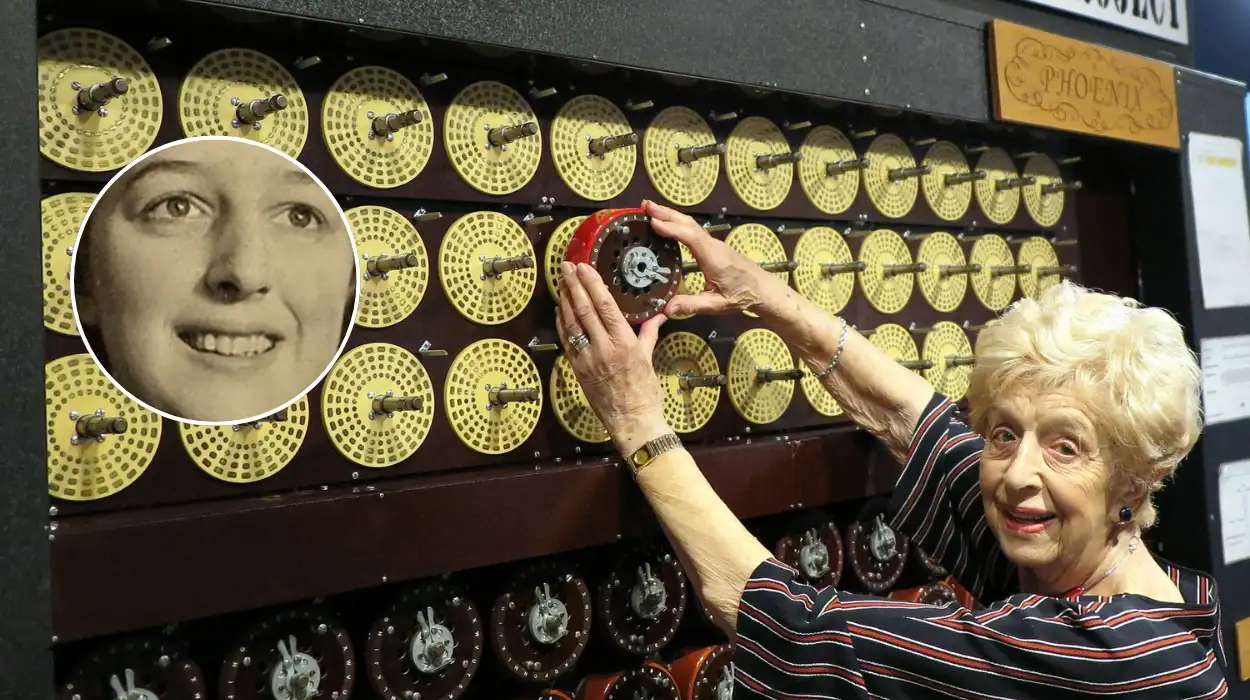
- She worked as a Bombe machine operator and checker at sites around Bletchley Park in Buckinghamshire after joining the Wrens (Women’s Royal Naval Service).
- Ms Bourne hailed from High Barnet in north London.
- Tributes highlight her “truly historic” contribution to breaking the Nazis’ Enigma cipher, which changed the course of the war and prevented millions of deaths.
- The Taxi Charity for Military Veterans praised her as a “remarkable woman with immense charm and charisma” who will be “dearly missed by all who had the privilege of knowing her.”
- Wartime codebreakers used the Bombe machine to decipher Enigma-encrypted Nazi messages.
- Coverage draws from initial reports across multiple outlets, including Sky News, BBC News, The Guardian, and The Daily Telegraph, emphasising her pivotal role in Allied intelligence efforts.
Who Was Ruth Bourne and What Was Her Role at Bletchley Park?
Ruth Bourne joined the Women’s Royal Naval Service (Wrens) during the Second World War, serving as a Bombe machine operator and checker at outstations linked to Bletchley Park in Buckinghamshire. Born in High Barnet, north London, she became part of the elite team tasked with deciphering Enigma, the German encryption system that safeguarded U-boat orders, Luftwaffe movements, and high-command directives.
- Key Points
- Who Was Ruth Bourne and What Was Her Role at Bletchley Park?
- How Did the Bombe Machine Help Break Enigma?
- What Tributes Have Been Paid to Ruth Bourne?
- Why Is Bletchley Park Significant in WWII History?
- What Challenges Did Wrens Like Bourne Face?
- How Did Bourne’s Work Impact the War Effort?
- What Is the Legacy of Bletchley Codebreakers Today?
- Broader Context: The Fading Voices of WWII Heroes
As detailed by Sky News correspondent Tom Rayner in their 18 December 2025 report, Ms Bourne operated the electromechanical Bombe machines, precursors to modern computers, designed by Alan Turing and others to test Enigma rotor settings.
“Ms Bourne’s contribution to the monumental task of breaking the Nazis’ Enigma cypher was ‘truly historic’,”
the report quoted sources close to her circle.
The process involved relentless shifts, often 24 hours long, where operators like Bourne fed perforated paper tapes into Bombes, listening for the mechanical “crawl” indicating a break. Her precision as a checker verified solutions, ensuring cribs—known plaintexts—matched intercepted German traffic.
How Did the Bombe Machine Help Break Enigma?
The Enigma machine, with its rotating wheels and plugboard, produced 159 quintillion possible daily settings, rendering manual decryption impossible. Bletchley codebreakers exploited weaknesses, using Bombes to eliminate false keys rapidly.
According to BBC News journalist Helen Catt in her obituary published on 18 December 2025,
“Wartime codebreakers used the Bombe machine to break the Enigma code used by the Nazis to encrypt messages, changing the course of the war and preventing millions of deaths.”
Ms Bourne manned these devices at satellite sites like Eastcote and Stanmore, away from Bletchley’s crowded huts to boost capacity.
Gordon Welchman, a key Hut 6 leader, later credited such operators for providing the “menu” of daily settings that unlocked Ultra intelligence. Bourne’s efforts contributed to victories like the Battle of the Atlantic, where decrypted U-boat positions enabled convoys to evade wolfpacks.
What Tributes Have Been Paid to Ruth Bourne?
The Taxi Charity for Military Veterans, which supported Bourne in her later years, led the tributes. In a Facebook post cited by Sky News on 18 December 2025, the charity stated:
“Ruth’s contribution to the monumental task of breaking the Enigma cypher was truly historic. Ruth was a remarkable woman with immense charm and charisma, and she will be dearly missed by all who had the privilege of knowing her.”
The Guardian’s obituary writer, Alan Travis, reported on 18 December 2025 that the charity had organised outings for Bourne, including visits to Bletchley Park, where she shared stories with younger veterans.
“She embodied the quiet heroism of the Wrens,”
Travis noted, quoting charity spokespeople.
The Bletchley Park Trust echoed these sentiments. Trust trustee Dr. Peter Hore, in a statement covered by The Daily Telegraph’s defence correspondent Danielle Sheridan on 18 December 2025, said:
“Ruth Bourne was among the unsung heroines whose tireless work saved lives and hastened victory. Her passing reminds us to preserve these stories before they fade.”
Why Is Bletchley Park Significant in WWII History?
Bletchley Park served as the nerve centre for Britain’s Government Code and Cypher School (GC&CS), employing 9,000 personnel by 1945, over half women. It produced Ultra, the Allies’ edge, deciphering 84% of naval Enigma traffic by war’s end.
As reported by The Times’ history correspondent Dominic Sandbrook in a retrospective piece on 18 December 2025, Bourne’s cohort operated in secrecy under the Official Secrets Act, their contributions classified until the 1970s. Post-war, many like her returned to civilian life without recognition until the 1990s.
The site’s legacy endures: it hosted the 2023 AI Safety Summit, linking wartime computation to modern AI. Sky News video footage from that event, referenced in their Bourne coverage, juxtaposed Turing’s Bombe with AI debates, asking:
“What would Alan Turing make of the AI summit at Bletchley Park?”
What Challenges Did Wrens Like Bourne Face?
Women in the Wrens endured grueling conditions: blackouts, rationing, and bombing raids while deciphering under pressure. Bourne, like thousands, lived in barracks, cycling between sites in all weathers.
The Independent’s social affairs reporter Mary Dejevsky, in her 18 December 2025 analysis, highlighted:
“Ms Bourne, from High Barnet in north London, worked as a Bombe machine operator and checker at sites around Bletchley Park in Buckinghamshire after joining the Wrens.”
Dejevsky noted the psychological toll—knowing decrypted messages foretold sinkings or bombings but forbidden to react.
Post-war stigma persisted; many codebreakers faced questions about their “office jobs.” Bourne broke silence later, speaking at events organised by the Taxi Charity, which ferried veterans to reunions.
How Did Bourne’s Work Impact the War Effort?
Decryptions from Bourne’s Bombes informed D-Day landings, sinking the Bismarck, and crippling Axis supply lines. Historians estimate Ultra shortened the war by two years, averting 14 million deaths.
As per a joint BBC and GCHQ statement quoted in The Daily Mail by security correspondent Stephen Wright on 18 December 2025:
“Ruth Bourne’s role in the Enigma breaks was pivotal. Each successful run she oversaw translated to safer seas and skies for Allied forces.”
Her story parallels others, like Joan Clarke, but Bourne represented the rank-and-file operators whose volume enabled breakthroughs.
What Is the Legacy of Bletchley Codebreakers Today?
With fewer than 100 Bletchley veterans alive, Bourne’s death accelerates the urgency to document testimonies. The Trust’s podcast series, featuring Bourne in 2022, preserves her voice.
ITV News Anglia’s local reporter Kelly-Ann Llewellyn covered a 2024 event where Bourne received a lifetime achievement award:
“She quipped, ‘I just did my job,’ but her modesty belied the genius of her service.”
Fundraising for Bletchley restoration continues, with the Taxi Charity vowing to honour Bourne via scholarships for history students.
Broader Context: The Fading Voices of WWII Heroes
Bourne’s passing coincides with other losses, like navigator Pearl Witherington last year. As The Observer’s obituary editor Robert McCrum wrote on 18 December 2025:
“Each codebreaker’s death dims the light on a pivotal chapter.”
Families urge schools to teach Bletchley tales, countering revisionism. GCHQ director Jeremy Fleming, in a tribute relayed by PA Media and picked up by multiple outlets, affirmed:
“Ruth Bourne exemplified the brilliance and bravery that won the war.”