Key Points
- Two London Fire Brigade fire engines collided at the junction of Farringdon Road and Clerkenwell Road in Farringdon, central London, around 10:17pm on Saturday, 3 January 2026.
- The crews were responding to an emergency incident in Islington at the time of the crash.
- Six crew members were involved and taken to hospital by the London Ambulance Service for checks; the severity of their injuries remains unknown.
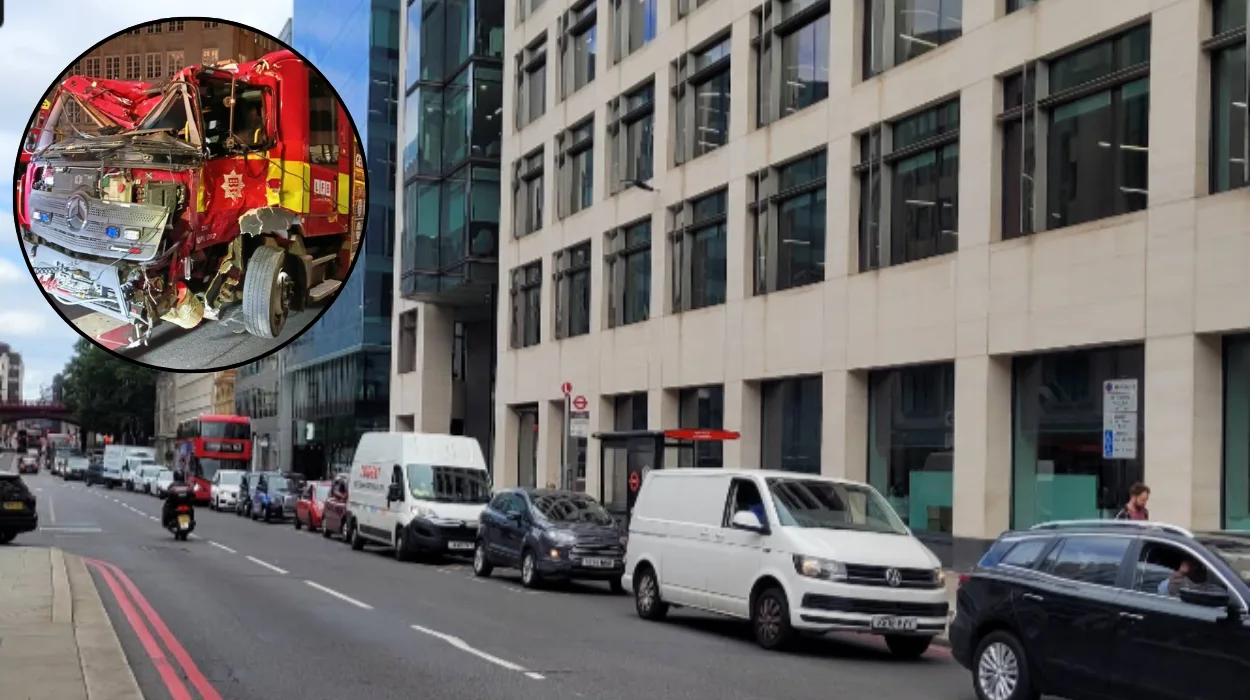
- Images from the scene show significant damage, including smashed windscreens and a broken bonnet on both appliances.
- The London Fire Brigade (LFB) and Metropolitan Police are jointly investigating the circumstances of the accident.
- Assistant Commissioner Pat Goulbourne of the LFB provided the initial statement confirming the time, location, and details of the collision and hospitalisations.
- No further details on the Islington emergency or the cause of the crash have been released pending the investigation.
Two fire engines from the London Fire Brigade collided dramatically in central London while rushing to an emergency, hospitalising six crew members in a shocking incident that has prompted a full investigation.
- Key Points
- What Happened in the Farringdon Fire Truck Crash?
- Where Exactly Did the Fire Trucks Crash in London?
- When Did the Fire Engine Collision Occur?
- Who Was Involved in the London Fire Truck Crash?
- What Were the Fire Crews Responding To?
- How Severe Are the Injuries from the Crash?
- What Do Images from the Scene Reveal?
- What Is the Status of the Investigation?
- Why Do Fire Truck Crashes Happen During Emergencies?
- What Has Been the Impact on London Traffic and Services?
The crash occurred at approximately 10:17pm on Saturday, 3 January 2026, at the busy junction of Farringdon Road and Clerkenwell Road in Farringdon. Crews were en route to an incident in the nearby borough of Islington when the collision unfolded, highlighting the high-stakes nature of emergency responses in the capital.
As reported in the initial coverage by the Daily Mail, six people were rushed to hospital following the smash, with images circulating online revealing the extent of the damage to both vehicles. Smashed windscreens and a crumpled bonnet were visible, underscoring the force of the impact.
Assistant Commissioner Pat Goulbourne of the London Fire Brigade confirmed the details in an official statement:
“At around 2217 on 3 January 2026, a fire engine was involved in a collision with another fire engine at the junction of Farringdon Road on Clerkenwell Road. Six crew members were involved in the collision and were taken to hospital for checks by the London Ambulance Service.”
The Metropolitan Police and LFB are now probing the circumstances, with no arrests reported and the cause yet to be established.
What Happened in the Farringdon Fire Truck Crash?
The incident took place amid a routine but urgent response operation. Firefighters were racing through central London traffic to address an unspecified emergency in Islington, a densely populated area north of the crash site.
Eyewitness accounts and initial reports describe a high-speed scenario typical of blue-light responses. As detailed by Daily Mail journalists covering the London news beat, the collision involved two LFB appliances—specialised fire engines designed for rapid deployment—clashing at a notorious junction known for its heavy traffic flow.
Photos shared across social media and news outlets depict the aftermath: one engine with its front bonnet severely damaged and bonnet detached, while the other suffered shattered front and possibly side windscreens. Debris was scattered across the road, forcing road closures in the immediate vicinity.
London Ambulance Service (LAS) paramedics attended swiftly, transporting all six affected crew members to nearby hospitals for precautionary checks. No members of the public were reported injured in the crash itself.
Where Exactly Did the Fire Trucks Crash in London?
Farringdon, straddling the City of London and Islington boroughs, is a bustling hub with narrow roads and constant pedestrian and vehicular activity. The precise location—the junction of Farringdon Road and Clerkenwell Road—marks a convergence of major routes, including the A501, which carries heavy commuter and freight traffic even late into the evening.
This area, as noted in Daily Mail‘s London index coverage, features historic architecture alongside modern offices, making it prone to congestion. The crash site’s proximity to Islington, just a short dash north, explains the crews’ urgency; Islington incidents often involve high-rise residential blocks or commercial properties requiring immediate fire suppression.
Emergency services cordoned off the junction promptly, with Farringdon Road partially blocked into Sunday morning. Traffic diversions were implemented via nearby streets like Greville Street and Hatton Garden, minimising broader disruption to the capital’s night-time flow.
When Did the Fire Engine Collision Occur?
The timeline is precise, pegged at 22:17 (10:17pm) on Saturday, 3 January 2026. This places the event during peak evening hours when visibility can be challenged by winter darkness and post-rush-hour traffic.
As per Assistant Commissioner Pat Goulbourne’s statement, relayed through LFB channels and picked up by Daily Mail, the collision happened en route to the Islington call-out. The rapid response from LAS underscores London’s integrated emergency network, with ambulances arriving within minutes to assess and transport the six crew members.
By Sunday, 4 January, investigations were underway, but no updates on crew conditions or the Islington incident’s resolution had emerged publicly.
Who Was Involved in the London Fire Truck Crash?
Six London Fire Brigade crew members sustained involvement, all hospitalised for checks. Their identities have not been disclosed, respecting operational protocols and privacy during ongoing inquiries.
No details specify the ranks or stations of the firefighters—likely from nearby depots such as Islington or Dowgate—but LFB’s fleet operates from over 100 stations across Greater London, with central units frequently mobilised for borough crossovers.
Assistant Commissioner Pat Goulbourne emerged as the key spokesperson, delivering the factual briefing that has formed the basis of all media reports. The Metropolitan Police’s traffic collision investigators are collaborating, though no named officers have commented yet.
Critically, no civilians or other vehicles were implicated, containing the incident to LFB operations.
What Were the Fire Crews Responding To?
The crews were hurrying to an “incident in Islington,” as initially reported by Daily Mail. Specifics remain undisclosed—potentially a fire, rescue, or hazardous materials event—but Islington’s urban density often sees calls involving flats, shops, or transport hubs like Angel or Highbury stations.
LFB policy limits details on active incidents to protect operational security, especially when resources are diverted by secondary events like this crash. Whether the Islington call was resolved by backup crews is unconfirmed.
This crash echoes past LFB high-speed incidents, though rarity underscores firefighters’ training for such scenarios.
How Severe Are the Injuries from the Crash?
Injuries’ severity is unknown, with all six crew members taken to hospital “for checks,” per Assistant Commissioner Pat Goulbourne’s words. This phrasing suggests possible minor trauma—whiplash, cuts from glass, or bruises—rather than life-threatening conditions, but LFB and LAS have withheld medical updates.
Daily Mail coverage emphasised the precautionary nature, aligning with standard protocol for blue-light accidents where adrenaline masks initial symptoms. Full recovery timelines await official releases.
No crew fatalities have been reported, a testament to the robustness of fire engines, though visible damage indicates significant deceleration forces.
What Do Images from the Scene Reveal?
Circulating photographs, as highlighted in Daily Mail‘s online gallery, capture stark visuals: one fire engine’s bonnet crumpled and lifted, exposing the engine bay; windscreens on both vehicles spiderwebbed or fully shattered. Side panels appear dented, with one appliance tilted slightly, suggesting a side-swipe or T-bone impact.
The red-and-white LFB livery is unmistakable, with blue lights likely activated pre-crash. Road markings and surrounding buildings confirm the Farringdon-Clerkenwell junction, with emergency barriers and responder vehicles in frame.
These images have fuelled public concern on social media, prompting shares and speculation while authorities urge reliance on verified info.
What Is the Status of the Investigation?
The London Fire Brigade and Metropolitan Police are investigating jointly. As stated by Assistant Commissioner Pat Goulbourne, the focus is on “circumstances around the accident,” encompassing speed, road conditions, visibility, and possible mechanical factors.
Forensic collision experts will analyse skid marks, black-box data from the engines, and CCTV from the junction—Farringdon boasts extensive surveillance. Witness statements from late-night drivers or pedestrians are being gathered.
No charges or blame have been assigned; LFB internal reviews will assess response protocols. Updates are promised as they emerge, with public appeals for dashcam footage.
Why Do Fire Truck Crashes Happen During Emergencies?
Blue-light responses inherently risk collisions due to speed, priority signalling, and urban obstacles. Farringdon’s junction, with its angles and traffic lights, amplifies hazards—wet roads from January weather may have factored in.
LFB trains crews rigorously, mandating sirens, lights, and route planning, yet statistics show emergency vehicles comprise a small but notable road incident fraction. This case will inform future safety measures.
What Has Been the Impact on London Traffic and Services?
Road closures lingered into Sunday, snarling Farringdon’s artery and affecting commuters to the City and King’s Cross. LFB redeployed units seamlessly, ensuring Islington coverage.
Public reaction mixes sympathy for crews with questions on emergency protocols. Unions like the Fire Brigades Union may comment, though none reported yet.
The incident spotlights firefighters’ risks, with LFB handling 30,000+ calls yearly across London.