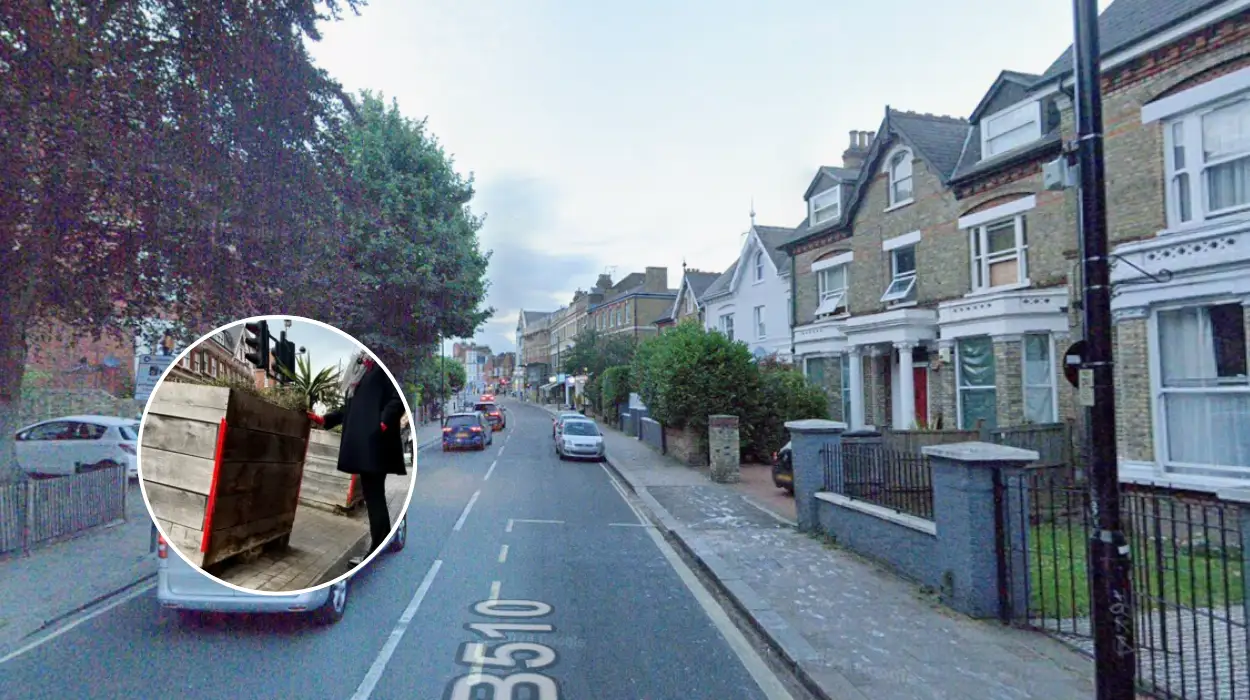
Key Points
- An “unacceptable” slanted pavement on West End Lane in West Hampstead, north-west London, likened to a ski jump, will be fixed after a year-long dispute over responsibility.
- The issue arose following the completion of the £120m West Hampstead Central development, featuring one and two-bedroom apartments, which began in 2017 and finished last year.
- Hoardings were removed in October 2024 at 156 West End Lane, revealing the steep, hazardous ramp-like walkway that poses risks to unsteady pedestrians, those with pushchairs, and older people.
- Camden Council, as the highway authority, blames developers A2 Dominion and Astir Living for creating the slope without permission before repaving could occur.
- Developers deny responsibility, pointing to the council’s “continued inaction” and “prolonged inaction”; Astir Living paid £67,000 in February 2020 under a Section 106 agreement for highway works.
- Labour Councillor Sharon Hardwick, representing West Hampstead, reported her inbox flooded with resident complaints and criticised the developers for “spectacularly failing” to follow plans.
- Local resident Ian Ferrie described it as a “ski jump” that is “very, very dangerous for older people.”
- Works began on Monday to level the slope, starting with BT Openreach lowering a telecoms chamber for a week, followed by council resurfacing; expected completion by mid-February with traffic controls.
- Council expects developers to reimburse fixing costs under Section 106; a spokesperson stated, “This should never have happened, but we are stepping in to fix this.”
- Chris Ives of A2 Dominion said pavement works were not completed by council as development neared finish, with Astir temporarily reinstating it by agreement.
- Astir spokesperson claimed delivery “fully in accordance with approved planning consent” and council “remained silent” despite repeated engagement attempts.
- Councillor Hardwick noted, “There is now a light at the end of this particular tunnel.”
West Hampstead, North London – Camden Council has confirmed works began on Monday to rectify the “steep and hazardous” ski jump-like pavement on West End Lane, following a protracted row with developers A2 Dominion and Astir Living over the West Hampstead Central project. January 13, 2026. The slant, exposed after hoardings came down in October 2024, has sparked widespread concern among residents, particularly those less stable on their feet or using pushchairs. Labour Councillor Sharon Hardwick described it as unacceptable, signalling relief that resolution is underway.
- Key Points
- Why Has the Pavement Become a Hazard?
- Who Bears Responsibility for the Slant?
- What Have Residents and Councillors Said?
- When and How Will Repairs Happen?
- What Is the West Hampstead Central Project?
- Why Did the Row Last a Year?
- How Does This Affect the Community?
- What Lessons Emerge from the Dispute?
Why Has the Pavement Become a Hazard?
The problematic walkway emerged as part of the £120 million West Hampstead Central residential scheme, which delivered one and two-bedroom apartments and concluded last year after starting in 2017. As reported in coverage by the Local Democracy Reporting Service (LDRS), the ramp-like slope on West End Lane has caused significant alarm since its revelation. Residents like Ian Ferrie told the BBC in November that
“They’ve made a ski jump. That is very, very dangerous for older people,”
highlighting the peril for vulnerable groups.
Camden Council, responsible as the highway authority for the footpath, maintains that the developers executed works without requisite consent, leading to the uneven surface. A council spokesperson emphasised,
“This should never have happened, but we are stepping in to fix this,”
underscoring the authority’s intervention despite the dispute. The council further noted that the firms’ actions preceded planned repaving, “resulting in an unacceptable slope for which they should take accountability.”
Who Bears Responsibility for the Slant?
Developers A2 Dominion and Astir Living have firmly rebutted the council’s claims, shifting blame to local authority delays. Chris Ives, managing director of development and regeneration at A2 Dominion, stated that as their development approached completion, “scheduled pavement works had not yet been completed by the council.” He explained, “With agreement from the council our development partners Astir temporarily reinstated the pavement so that the council could finalise their permanent plans for the pathway.” Ives added that while the “matter does not fall under our direct responsibility,” the firm had engaged constructively for a “timely and effective solution.”
A spokesperson for Astir Living reinforced this position, noting the company paid roughly £67,000 to the council in February 2020 towards highway works under the project’s Section 106 planning agreement. “This prolonged inaction is unacceptable and cannot be attributed to the developer or the planning process,” the spokesperson asserted. They further claimed the development was delivered “fully in accordance with the approved planning consent,” with the council having “remained silent” despite the firm’s “repeated” attempts to engage over the issue.
Camden Council countered that under the Section 106 legal agreement, it expects the developers to reimburse the costs of remediation. This financial mechanism, tied to planning permissions, aims to mitigate infrastructure burdens from new builds.
What Have Residents and Councillors Said?
Councillor Sharon Hardwick, Labour representative for West Hampstead, has been at the forefront of resident advocacy. She told the Local Democracy Reporting Service (LDRS) that her inbox had been “full of emails from residents worried about the slant.” Hardwick elaborated, “If you’re unsteady on your feet or have got a pushchair you really have to navigate it,” capturing the daily challenges faced by locals. She accused the firms of having “spectacularly failed” to adhere to their own plans, a pointed critique amid the finger-pointing.
Resident feedback echoes this frustration, with the slope dubbed a “ski jump” for its pronounced incline. The year-long row has amplified calls for accountability, with Hardwick optimistically concluding, “There is now a light at the end of this particular tunnel.” Her comments reflect a community weary of bureaucratic stalemate but hopeful for swift correction.
When and How Will Repairs Happen?
Remediation commenced on Monday, with BT Openreach tasked first to lower an underground telecoms chamber, a process slated for one week. Council teams will then level and resurface the pavement, aiming for completion by mid-February. Temporary traffic controls are anticipated, potentially causing localised delays on West End Lane.
As the highway authority, Camden required developer consent for alterations, a procedural step allegedly bypassed. The council’s proactive stance now prioritises safety, ensuring the footway meets standards post-resolution.
What Is the West Hampstead Central Project?
Launched in 2017, the West Hampstead Central initiative at 156 West End Lane represented a major investment totalling £120 million. It introduced modern apartments tailored for one and two-bedroom living, enhancing local housing stock. Completion last year marked a milestone, yet the pavement flaw overshadowed the handover.
Hoardings obscuring the site were dismantled in October 2024, publicly unveiling the contentious slant. This timing intensified scrutiny, drawing media attention from outlets like the BBC and LDRS.
Why Did the Row Last a Year?
The dispute endured for 12 months due to entrenched positions: council insistence on developer accountability versus firms’ emphasis on authority inaction. Section 106 funds, disbursed by Astir in 2020, were earmarked for such improvements, yet implementation lagged. Repeated engagements yielded no progress until recent intervention.
Both sides cite procedural lapses—the council permissions ungranted, developers awaiting council-led works—fueling the impasse. Resident pressure, channelled through figures like Hardwick, ultimately catalysed action.
How Does This Affect the Community?
West Hampstead locals, navigating the incline daily, faced heightened risks, especially in inclement weather. Older residents and parents with pushchairs reported navigation difficulties, amplifying accessibility concerns in a bustling north-west London thoroughfare. The fix promises restored safety, though short-term disruptions loom.
Broader implications touch urban planning: Section 106 agreements bind developers to community benefits, yet enforcement disputes can prolong issues. This case exemplifies tensions between growth and infrastructure upkeep.
What Lessons Emerge from the Dispute?
Neutral observers note the need for clearer delineations in planning consents. Councils must expedite scheduled works, while developers secure explicit approvals. Hardwick’s constituent volume underscores resident vigilance’s role in resolution.
Camden’s reimbursement pursuit via Section 106 sets precedent for cost recovery. As works progress, West End Lane stands to regain usability, closing a chapter on avoidable contention.