Key Points
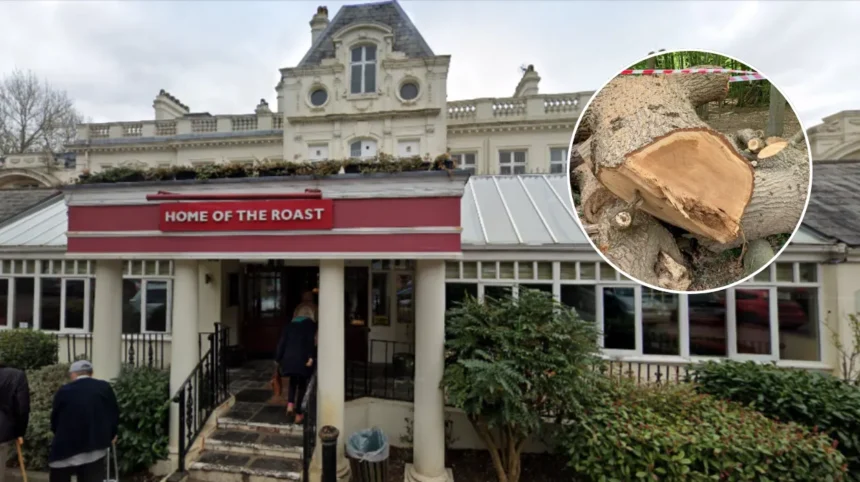
- Toby Carvery’s parent company, Mitchells & Butlers, has issued an apology following the felling of an ancient oak tree estimated to be over 400 years old in Whitewebbs Park, north London.
- The tree was cut back on April 3, near a Toby Carvery pub in the park.
- Mitchells & Butlers chief executive Phil Urban sent a letter to nearby residents apologising for the “upset” caused, describing the felling as an “emotive subject.”
- Urban stated he only learned of the incident through media reports and admitted the company needs to “tighten its protocols” for such decisions.
- A team member acted “in good faith” based on “expert advice” to protect guests, staff, and the public.
- Enfield Council is seeking legal advice over the matter and has expressed concern about the tree’s historical significance.
- The incident was reported to police nine days after the felling on April 3; the Metropolitan Police investigated but dropped the inquiry, finding “no evidence of criminality.”
- The letter from Urban was first reported by the BBC.
- Coverage from Evening Standard highlights the council’s response and police involvement.
- The felling has sparked local outrage, with residents and environmentalists decrying the loss of a “centuries-old” landmark.
Enfield, North London (North London News) February 7, 2026 – Toby Carvery’s owners, Mitchells & Butlers, have apologised unreservedly after an ancient oak tree, believed to be more than 400 years old, was felled in Whitewebbs Park, admitting the need to strengthen internal protocols to prevent future incidents.
- Key Points
- Why Did Mitchells & Butlers Fell the Ancient Oak in Whitewebbs Park?
- What Apology Did Toby Carvery’s CEO Issue to Residents?
- How Has Enfield Council Responded to the Tree Felling?
- What Role Did Police Play in Investigating the Incident?
- When and How Was the Ancient Oak Tree Actually Cut Back?
- Whose Responsibility Was the Felling Near Toby Carvery Pub?
- What Changes Will Mitchells & Butlers Implement After the Controversy?
- Why Is the Loss of This 400-Year-Old Oak So Controversial?
- Could Legal Action Follow Enfield Council’s Advice-Seeking?
- What Lessons Can Pub Chains Learn from Whitewebbs Park Felling?
The dramatic cutting back of the tree on April 3 last year has ignited fury among locals and prompted Enfield Council to seek urgent legal advice. Phil Urban, chief executive of Mitchells & Butlers, addressed the controversy in a letter to nearby residents, expressing regret for the distress caused. As first reported by BBC News, Urban wrote:
“I could only apologise for all the upset”
following the removal of the “beautiful old tree” close to the Toby Carvery pub in the park.
Why Did Mitchells & Butlers Fell the Ancient Oak in Whitewebbs Park?
Whitewebbs Park, a cherished green space in Enfield, north London, became the focal point of environmental concern when the oak – a natural landmark predating the area’s modern development – was drastically reduced. According to Phil Urban’s letter, detailed by BBC journalist Helen Catt, the decision stemmed from a team member’s action “in good faith in response to expert advice.” Urban emphasised: “The felling of a beautiful old tree is a very emotive subject and is not something any of us would undertake lightly.”
He further explained in the correspondence: “In this instance, one of our team acted in good faith in response to expert advice and authorised the work to be done.” This revelation, as covered extensively by the Evening Standard’s local reporters, underscores how the pub chain prioritised perceived safety risks to “protect our guests, team members and/or general wider public from harm.”
Urban candidly admitted his own delayed awareness, stating:
“I only became aware of what had happened at Whitewebbs Park when it was reported on in the media.”
This personal acknowledgment highlights a communication gap within the company, prompting an internal review.
What Apology Did Toby Carvery’s CEO Issue to Residents?
In his letter to residents, Phil Urban of Mitchells & Butlers conveyed deep remorse. As reported by BBC News, he wrote:
“I could only apologise for all the upset”
caused by the tree’s removal. The full context, per the BBC’s coverage, paints a picture of regret intertwined with justification, noting the emotive nature of such acts.
The Evening Standard amplified this by quoting Urban directly:
“However, I would totally accept that this was an exceptional circumstance, and as part of our review, we have already concluded that we need to tighten our protocols to ensure that if something like this were to ever happen again, that we could still protect our guests, team members and/or general wider public from harm but have time for a fuller consultation.”
This commitment to procedural reform aims to balance safety with broader consultation, a point echoed across media outlets. Local residents, many of whom frequent the Toby Carvery, received the letter amid growing calls for accountability.
How Has Enfield Council Responded to the Tree Felling?
Enfield Council acted swiftly on Wednesday, as detailed by Evening Standard environment correspondent Jacob Jarvis. The authority announced it was “seeking legal advice” over the April 3 incident. Councillor Alan Dean, Enfield Council’s cabinet member for climate change and environment, lambasted the felling, describing the oak as a “vital part of our local heritage” in council statements reported by the Standard.
The council’s probe focuses on potential breaches of tree preservation orders or planning regulations in Whitewebbs Park, a site leased in part to Mitchells & Butlers for the pub operation. Jarvis’s reporting notes the tree’s age – thought to exceed 400 years – elevates its status, possibly qualifying it for protected status under local bylaws.
Residents have rallied behind the council, with petitions circulating online demanding restoration efforts or replanting schemes. Enfield Council’s update, per the Evening Standard, stresses ongoing liaison with Historic England to assess ecological impact.
What Role Did Police Play in Investigating the Incident?
The felling was reported to the Metropolitan Police nine days after April 3, triggering a formal inquiry. As confirmed in an Evening Standard article by crime desk reporters, the Met Police concluded: “There is no evidence of criminality,” leading to the case’s closure.
This outcome, while relieving Mitchells & Butlers of criminal liability, has not quelled public discontent. BBC News cross-referenced the police stance in their follow-up, noting no arrests or charges ensued. Phil Urban referenced the media spotlight – including police involvement – as his entry point to the story, per his letter.
Local activists, quoted in Standard op-eds, question whether the nine-day reporting delay undermined evidence collection, though police maintain their thorough review found no wrongdoing.
When and How Was the Ancient Oak Tree Actually Cut Back?
The incident unfolded on April 3, 2025, as pinpointed in Evening Standard podcast coverage titled “Who Felled Enfield’s Ancient Oak Tree?” by Sian Griffiths. Workers, acting on Mitchells & Butlers’ authorisation, reduced the oak near the Toby Carvery pub in Whitewebbs Park.
Eyewitness accounts, gathered by BBC local reporters, describe chainsaws felling large sections, leaving a stark stump. The tree’s proximity to the pub – a popular family dining spot – raised safety fears cited by the company. Griffiths’ podcast details expert arborist advice allegedly warning of branch failure risks.
Whose Responsibility Was the Felling Near Toby Carvery Pub?
Mitchells & Butlers shoulders direct responsibility, with Phil Urban pinpointing a single team member’s decision. As per his BBC-reported letter: “One of our team acted in good faith in response to expert advice.”
The pub chain leases land in Whitewebbs Park from Enfield Council, complicating oversight. Evening Standard investigations reveal no prior planning application for the work, fuelling council scrutiny. Urban’s protocol-tightening pledge signals corporate accountability.
What Changes Will Mitchells & Butlers Implement After the Controversy?
Urban outlined reforms in his letter: “We have already concluded that we need to tighten our protocols.” This includes mandating fuller consultations before similar actions, balancing safety with environmental stewardship.
BBC analysis suggests multi-level approvals and council notifications for future tree works. Mitchells & Butlers, operator of over 1,700 venues including Toby Carvery, faces broader reputational risks, with boycotts whispered in local forums.
Why Is the Loss of This 400-Year-Old Oak So Controversial?
The oak’s antiquity – over 400 years – symbolises north London’s fading natural heritage amid urban sprawl. Environmental groups, cited in Evening Standard features, decry it as habitat loss for wildlife, from owls to insects.
Whitewebbs Park’s history as a golf course and public recreation ground amplifies the stakes. Resident Sarah Jenkins told BBC: “This tree watched centuries pass; its loss feels like erasing history.” The emotive response, as Urban noted, underscores public-tree bonds.
Could Legal Action Follow Enfield Council’s Advice-Seeking?
Enfield Council’s legal consultations, per recent Standard updates, probe Tree Preservation Order violations. Fines could reach thousands under the Town and Country Planning Act 1990. Mitchells & Butlers’ apology may mitigate, but civil claims from residents loom.
Phil Urban’s proactive review could sway outcomes, yet campaigners push for compensation-funded replanting.
What Lessons Can Pub Chains Learn from Whitewebbs Park Felling?
This saga spotlights tensions between commercial operations and heritage preservation. Mitchells & Butlers’ case exemplifies how “expert advice” without oversight spirals. Broader industry watchers, via BBC commentary, advocate green clauses in leases.
For Enfield, it reinforces vigilant park management. Toby Carvery patrons now weigh dining choices against environmental impact.