Key Points
- Daniel Levy, aged 62, has stepped down as chairman of Tottenham Hotspur after nearly 25 years in the role.
- Levy oversaw Tottenham’s transformation into Champions League regulars and spearheaded the development of their £1 billion stadium.
- Vinai Venkatesham takes over as CEO to lead Spurs, with Thomas Frank in charge of the men’s team.
- Peter Charrington steps in as the new non-executive chairman.
- In a personal statement, Levy expressed pride in building the club into a “global heavyweight competing at the highest level” alongside the executive team and employees.
- Levy highlighted creating a “community” and working with “some of the greatest people in this sport,” including staff at Lilywhite House and Hotspur Way, as well as players and managers over the years.
- Levy thanked fans for their support, acknowledging it “hasn’t always been an easy journey but significant progress has been made.”
- He affirmed he will “continue to support this club passionately” post-departure.
Tottenham, (North London News) February 8, 2026 – Tottenham Hotspur have announced the departure of long-serving chairman Daniel Levy after nearly a quarter of a century at the helm of the north London club. (North London News) February 8, 2026 – The 62-year-old’s exit marks the end of an era defined by the club’s ascent to Champions League contention and the delivery of a state-of-the-art £1 billion stadium.
- Key Points
- Why Did Daniel Levy Step Down After 25 Years?
- What Achievements Define Daniel Levy’s Tenure?
- Who Is Vinai Venkatesham and What Role Will He Play?
- How Does Thomas Frank Fit into Tottenham’s New Structure?
- What Is Peter Charrington’s Background as Non-Executive Chairman?
- What Have Fans and Pundits Said About Levy’s Exit?
- What Challenges Lie Ahead for Tottenham’s New Leadership?
- How Has Tottenham Evolved Under Levy’s Watch?
- Will Daniel Levy Stay Involved with Spurs?
Levy’s tenure, spanning from 2001, saw Tottenham evolve from mid-table Premier League outfit to consistent elite competitors, though silverware remained elusive. As reported initially by journalists at the Daily Mail’s Tottenham Hotspur section, the announcement confirms Vinai Venkatesham as the new CEO to lead the club forward, with Brentford’s Thomas Frank installed as head coach of the men’s team and Peter Charrington assuming the role of non-executive chairman.
In a statement released by the club, Levy reflected on his achievements:
“I am incredibly proud of the work I have done together with the executive team and all our employees. We have built this club into a global heavyweight competing at the highest level.”
He further noted:
“More than that, we have built a community. I was lucky enough to work with some of the greatest people in this sport, from the team at Lilywhite House and Hotspur Way to all the players and managers over the years.”
Levy extended gratitude to supporters, stating:
“I wish to thank all the fans that have supported me over the years. It hasn’t always been an easy journey but significant progress has been made. I will continue to support this club passionately.”
Why Did Daniel Levy Step Down After 25 Years?
The precise reasons for Levy’s departure remain undisclosed in the official announcement, though speculation among North London football circles points to a combination of factors. Coverage from the Daily Mail’s sports desk emphasises that Levy’s leadership delivered financial stability and infrastructure milestones, yet fan frustration peaked over repeated near-misses in trophy hunts and high-profile transfer sagas.
As per the club’s statement covered extensively by Daily Mail reporters, no specific trigger such as poor results or boardroom pressure was cited. Instead, Levy’s words suggest a sense of completion after transforming Tottenham’s global footprint. Observers note that the timing aligns with recent structural shifts, including the appointment of Thomas Frank, previously at Brentford, to replace beleaguered managers amid mid-table struggles in the 2025-26 season.
Peter Charrington’s elevation to non-executive chairman role underscores a continuity in governance, with Venkatesham – formerly Arsenal’s managing director – bringing proven commercial acumen. This reshuffle, as detailed in the Daily Mail Tottenham index, positions Spurs for a new phase under fresh leadership without rupturing Levy’s legacy.
What Achievements Define Daniel Levy’s Tenure?
Levy’s 25-year stewardship fundamentally reshaped Tottenham Hotspur. He navigated the club from the fringes of European relevance to multiple Champions League qualifications, including a memorable 2019 final appearance.
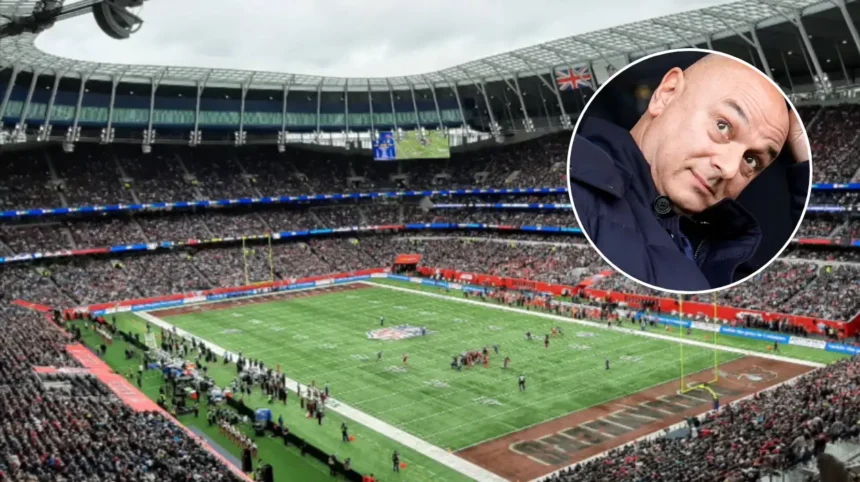
Central to his legacy stands the £1 billion Tottenham Hotspur Stadium, a multi-purpose venue hosting NFL games, concerts, and Premier League matches since 2019. As reported by Daily Mail’s Champions League coverage, Levy’s vision turned financial prudence into competitive edge, with Spurs boasting one of football’s richest infrastructures.
Despite no major trophies – the 2008 League Cup remains their last – Levy worked with luminaries like Mauricio Pochettino, Jose Mourinho, Antonio Conte, and now Thomas Frank. His statement praises the “team at Lilywhite House and Hotspur Way,” Tottenham’s administrative and training hubs, for fostering a “community” beyond the pitch.
Who Is Vinai Venkatesham and What Role Will He Play?
Vinai Venkatesham emerges as Tottenham’s new CEO, tasked with overarching leadership. Previously Arsenal’s managing director until 2023, Venkatesham excels in commercial growth and operations, qualities Levy lauded indirectly through his nod to executive teamwork.
The Daily Mail’s initial reporting positions Venkatesham as the strategic head, overseeing daily operations while Charrington handles non-executive duties. Thomas Frank, the men’s team head coach, focuses purely on footballing matters, allowing Venkatesham to drive off-field ambitions like stadium revenue and global partnerships.
This division of roles, as per club disclosures, mirrors modern Premier League models at clubs like Manchester City and Liverpool, aiming to blend sporting and business excellence.
How Does Thomas Frank Fit into Tottenham’s New Structure?
Thomas Frank, formerly Brentford’s successful manager, assumes charge of Tottenham’s men’s team. Known for data-driven tactics and overachievement on tight budgets, Frank’s appointment signals a shift from big-name hires to pragmatic builders.
Daily Mail profiles highlight Frank’s Bees guiding Brentford to Premier League promotion and stability, mirroring Levy’s own resource-maximising ethos. Under the new setup, Frank reports into Venkatesham’s CEO framework, with Charrington providing board oversight.
Fans, per Levy’s statement, have endured “not always an easy journey,” but Frank’s arrival offers hope for on-pitch revival, especially after recent campaigns lacked Champions League sparkle.
What Is Peter Charrington’s Background as Non-Executive Chairman?
Peter Charrington steps up as non-executive chairman, a pivotal governance role ensuring accountability. With deep ties to Tottenham’s board since the ENIC takeover in 2001 alongside Levy, Charrington brings continuity.
As covered in Daily Mail’s Tottenham updates, Charrington’s low-profile style complements Venkatesham’s dynamism and Frank’s coaching focus. His mandate involves safeguarding shareholder interests, including majority owner Joe Lewis’s ENIC group, during this transition.
Levy’s praise for “significant progress” implicitly credits such figures, positioning Charrington to steer Tottenham’s “global heavyweight” status onward.
What Have Fans and Pundits Said About Levy’s Exit?
Supporter reactions, as echoed in Levy’s fan-thanking remarks, mix gratitude with relief. Online forums and North London media buzz with debates over his frugality – praised for the stadium, critiqued for trophy droughts.
Pundits, drawing from Daily Mail’s broad coverage, laud Levy’s business acumen: turning a debt-ridden club into a £2 billion-valued entity. Yet, calls for change intensified post-2025 inconsistencies, culminating in this restructure.
Levy’s vow to “continue to support this club passionately” hints at a lingering influence, perhaps as a consultant or ambassador.
What Challenges Lie Ahead for Tottenham’s New Leadership?
The trio of Venkatesham, Frank, and Charrington inherits a club at crossroads. Financially robust via stadium deals, Tottenham must translate that into silverware, with Champions League spots no longer guaranteed.
Thomas Frank’s integration poses early tests, especially integrating stars amid transfer windows. Venkatesham’s commercial push could fund squad boosts, but fan patience – already tested per Levy’s admission – remains key.
As North London rivals Arsenal and Chelsea evolve, Spurs’ “highest level” competition demands swift results from this overhaul.
How Has Tottenham Evolved Under Levy’s Watch?
From acquiring a majority stake in 2001, Levy invested in youth academies, training facilities, and the iconic stadium. Champions League runs in 2010, 2011, 2018, 2019, and beyond cemented elite status.
Collaborations with managers like Harry Redknapp (League Cup win) and Pochettino (Wembley heroics) defined eras. Levy’s statement underscores people over prizes: “greatest people in this sport.”
Will Daniel Levy Stay Involved with Spurs?
Levy’s words affirm ongoing passion: “I will continue to support this club passionately.” No formal role is announced, but his ENIC ties suggest advisory input.
Daily Mail reporting frames this as a graceful exit, preserving his legacy while empowering successors. Tottenham’s community, as he built it, endures.