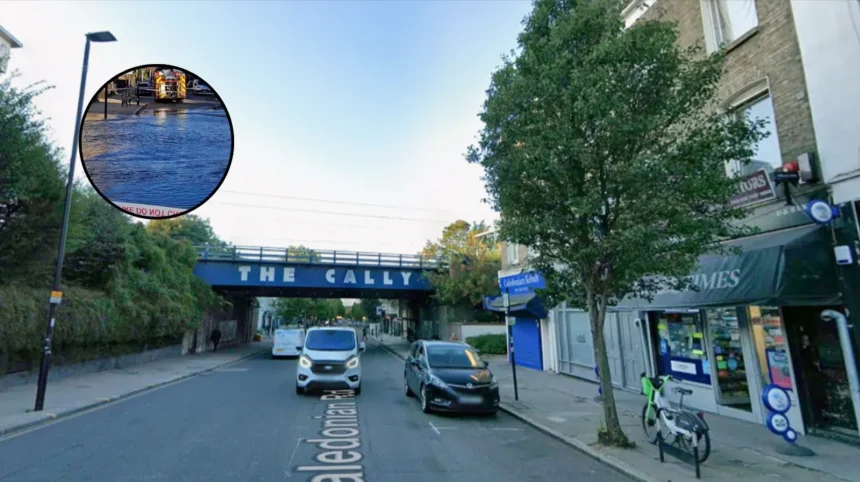
Key Points
- A 30-inch (76cm) water main burst in Islington, north London, causing significant flooding on roads between Caledonian Road and Twyford Street, extending to the junction of Thornhill Bridge Wharf and Caledonian Road.
- The incident was reported around 13:45 GMT, with London Fire Brigade (LFB) responding at approximately 14:45 GMT.
- Six fire engines and around 40 firefighters, along with specialist teams, attended the scene; LFB operations concluded just after 18:40 GMT.
- Thames Water engineers arrived shortly after 13:45 GMT, isolated the damaged pipe section, stabilised the network, and restored water supply to the wider area.
- Ongoing work aims to gradually restore supply to remaining customers in postcodes N1, N7, WC1X, and EC1R, where low pressure or intermittent supply may persist.
- Drivers have been urged to avoid the affected area due to flooding.
- A respite centre for affected residents has been established at Islington Tennis Centre.
- Islington Council Leader Una O’Halloran expressed sympathy for residents and businesses, calling on Thames Water to expedite resolution and support recovery efforts.
- Council staff are assisting emergency services in managing the situation.
Islington, (North London News) February 25, 2026 – A burst 30-inch (76cm) water main has caused widespread flooding on key roads in Islington, prompting a major response from the London Fire Brigade (LFB) and Thames Water engineers.
- Key Points
- What Caused the Burst Water Main in Islington?
- How Did the London Fire Brigade Respond to the Flooding?
- What Is Thames Water Doing to Restore Services?
- Which Areas Are Impacted by the Low Water Pressure?
- What Support Is Available for Affected Residents?
- What Has Islington Council Said About the Incident?
- Why Are Drivers Being Urged to Avoid the Area?
- When Will Normal Water Supply Resume Fully?
- How Does This Fit Into Broader Thames Water Challenges?
The incident, which began around 13:45 GMT, led to severe disruption between Caledonian Road and Twyford Street, reaching the junction with Thornhill Bridge Wharf and Caledonian Road. Six fire engines and approximately 40 firefighters, supported by specialist teams, were mobilised by the LFB at about 14:45 GMT. Their efforts concluded successfully just after 18:40 GMT, after managing the immediate flooding risks.
What Caused the Burst Water Main in Islington?
Thames Water engineers were on site shortly after the initial report at 13:45 GMT. A Thames Water spokesperson stated that the team
“successfully isolated the damaged section of pipe, which has stabilised the network and restored water supply to the wider area”.
They added:
“We are now carrying out further work to gradually return supply to the remaining customers, and then we will be accessing the damaged pipe to plan the necessary repairs.”
The burst involved a substantial 30-inch (76cm) pipe, leading to significant water escape that flooded local roads. While the exact cause of the rupture has not been detailed in initial reports, such incidents often stem from ageing infrastructure, ground movement, or pressure surges in London’s extensive Victorian-era pipe network. The LFB confirmed the pipe’s dimensions and the flooding extent in their official statement, noting the area affected from Caledonian Road to Twyford Street and beyond.
No injuries were reported from the incident, but the flooding posed hazards to motorists and pedestrians alike. Emergency services prioritised containment to prevent further escalation.
How Did the London Fire Brigade Respond to the Flooding?
The LFB’s rapid deployment underscored the scale of the emergency. Six fire engines carrying around 40 firefighters arrived at 14:45 GMT, joined by specialist teams equipped for water rescue and hazard management. Their operations focused on securing the scene and mitigating floodwater spread.
LFB personnel worked alongside Thames Water to isolate the leak, using pumps and barriers to divert water away from properties and roads.
The brigade’s efforts wrapped up just after 18:40 GMT, allowing for a transition to repair phases. This coordinated response prevented the situation from worsening, despite the pipe’s size contributing to voluminous water flow.
Drivers were explicitly urged to avoid the area, with traffic disruptions expected to linger during repairs. The LFB’s involvement highlights their critical role in urban incidents beyond fires, extending to flooding and infrastructure failures common in densely populated boroughs like Islington.
What Is Thames Water Doing to Restore Services?
Restoration efforts are underway, with Thames Water prioritising network stability. The spokesperson apologised to affected residents, emphasising that engineers acted swiftly post-13:45 GMT alert. By isolating the damaged section, they restored supply to the broader network, averting a wider outage.
Customers in postcodes N1, N7, WC1X, and EC1R may still face low pressure or intermittent supply as further work progresses. This includes gradual reconnection for remaining properties and assessment of the pipe for repairs. Thames Water committed to accessing the damaged section soon to plan fixes, aiming for minimal long-term disruption.
The firm’s proactive stance aligns with protocols for major bursts, where immediate isolation prevents pressure drops across connected mains. Historical data on Thames Water incidents shows such events, while disruptive, are typically resolved within days, though full pressure recovery can take longer in affected zones.
Which Areas Are Impacted by the Low Water Pressure?
The flooding primarily struck roads between Caledonian Road and Twyford Street, up to Thornhill Bridge Wharf junction. This central Islington location affects residential, commercial, and commuting routes, amplifying inconvenience.
Postcode-specific impacts include N1 (core Islington), N7 (adjoining Holloway areas), WC1X (near King’s Cross), and EC1R (Clerkenwell fringes). Residents here should anticipate variable supply until repairs conclude. Businesses along these roads faced access issues, with some potentially closing temporarily.
Mapping the incident reveals vulnerability in this pipe artery, serving high-density housing and amenities. Monitoring via Thames Water’s service status page is advised for real-time updates.
What Support Is Available for Affected Residents?
A respite centre has been established at Islington Tennis Centre to assist those displaced or needing aid. This facility provides water, information, and welfare support, crucial for vulnerable households during supply interruptions.
Islington Council Leader Una O’Halloran voiced solidarity, stating her “heart goes out” to those living and working in the area. As reported in initial coverage, O’Halloran said:
“Local people simply shouldn’t have to face this level of disruption – we’re doing all we can to resolve this, but we’re calling on Thames Water to manage the situation, and help get our residents and businesses back into their properties as quickly as possible.”
Council staff are actively supporting emergency services, coordinating logistics and communicating with stakeholders. This includes liaison with Thames Water for accelerated repairs and aid distribution. Such measures reflect standard protocol for council responses to utility failures, ensuring community resilience.
What Has Islington Council Said About the Incident?
O’Halloran’s comments, as leader of Islington Council, captured the frustration of locals. She reiterated council commitment: “we’re doing all we can to resolve this”. Her appeal to Thames Water underscores inter-agency tensions in infrastructure crises, where local authorities bear resident-facing pressures.
The council’s role extends to facilitating access for repairs and monitoring health impacts from potential water quality dips. Staff assistance to LFB and Thames Water teams exemplifies collaborative governance in emergencies.
No further statements from O’Halloran or council spokespeople were noted in reports, but ongoing updates are expected via official channels. This incident spotlights broader concerns over water infrastructure maintenance in north London boroughs.
Why Are Drivers Being Urged to Avoid the Area?
Flooded roads from Caledonian Road to Twyford Street pose slipping hazards and visibility issues, exacerbated by the 30-inch pipe’s output. Authorities issued clear advisories to reroute traffic, preventing pile-ups or further emergencies.
The junction with Thornhill Bridge Wharf remains problematic, with standing water likely persisting into evening. Commuters are directed to alternatives like Upper Street or alternative A-roads. This precaution aligns with LFB guidance post-containment.
Longer-term, repair excavations could extend closures, impacting public transport. TfL updates advise checking routes, as bus diversions were implemented swiftly.
When Will Normal Water Supply Resume Fully?
Thames Water’s timeline indicates phased restoration: network stabilisation achieved, with customer reconnection ongoing. Access to the pipe for repairs follows, potentially spanning days dependent on damage assessment.
Intermittent issues in listed postcodes may endure until full fixes. Historical parallels, like similar bursts in neighbouring boroughs, suggest 24-72 hours for pressure normalisation, barring complications.
Residents are encouraged to conserve water, aiding recovery. Thames Water’s apology signals accountability, with promises of swift action.
How Does This Fit Into Broader Thames Water Challenges?
This Islington burst echoes recurring issues with London’s ageing mains, prone to failures under demand strains. Thames Water faces scrutiny over leakages and bursts, with regulatory pressures for upgrades.
O’Halloran’s call for better management amplifies resident voices in a pattern of disruptions. No specific prior incidents in this exact stretch were cited, but north London’s clay soils heighten rupture risks.
Council oversight will likely probe prevention, potentially influencing future investments. Incidents like this fuel debates on infrastructure resilience amid urban growth.