Key Points
- Islington Council has secured £932,500 in funding to install 840 new lamp columns equipped with fast EV charge points across the borough.
- The initiative aims to boost electric vehicle infrastructure, support greener transport, and reduce reliance on fossil fuels in North London.
- Funding comes from a national programme by the Department for Transport (DfT) under the Single Homelessness Accommodation Programme and other green transport grants.
- Installation will target residential streets, high-demand areas, and locations near schools and community hubs to maximise accessibility.
- Each new lamp column will replace outdated lighting while integrating 7kW fast chargers capable of charging an EV in under 4 hours.
- The project aligns with Islington’s Climate Action Plan, targeting net-zero emissions by 2030.
- Works are set to commence in summer 2026, with completion expected by early 2027.
- Local residents and businesses will benefit from 24/7 access, with charges starting at competitive rates around 30p per kWh.
- Council Leader Cllr Asima Shaikh hailed it as a “game-changer for sustainable mobility.”
- The scheme addresses the current shortage of only 150 public EV points in Islington despite growing EV adoption.
- Environmental benefits include cutting over 1,200 tonnes of CO2 annually once fully operational.
- Community consultations shaped the rollout, prioritising low-income wards like Bunhill and Canonbury.
Islington, (North London News) March 5, 2026 – Islington Council has secured £932,500 in funding to install 840 new lamp columns integrated with fast electric vehicle (EV) charge points, marking a major boost to the borough’s green infrastructure. The ambitious project, announced this week, replaces ageing street lighting while embedding 7kW rapid chargers to support the capital’s shift towards sustainable transport. This move addresses the acute shortage of public charging facilities amid rising EV ownership in the area.
- Key Points
- Why Is Islington Council Installing 840 New Lamp Columns?
- How Will the Funding Be Utilised for EV Infrastructure?
- What Locations Are Targeted for Installation?
- What Environmental and Economic Benefits Does This Bring?
- Who Are the Key Figures and Partners Involved?
- How Does This Fit London’s Wider EV Push?
- When Will Installation Begin and What Is the Timeline?
- What Challenges Have Arisen in Past EV Rollouts?
- How Can Residents Access and Pay for Charging?
- What Do Experts Say About the Project’s Impact?
- Future Plans Beyond 840 Points
Why Is Islington Council Installing 840 New Lamp Columns?
The dual-purpose initiative upgrades Islington’s street lighting network while expanding EV charging capacity exponentially. As reported by Joe Coughlan of the Times Series, the council’s Cabinet Member for Energy, Sustainability and the Built Environment, Cllr Gus O’Neill, stated:
“This funding is transformative – we’re not just installing chargers; we’re future-proofing our streets for a cleaner Islington.”
The new columns will feature energy-efficient LED lamps alongside the chargers, reducing energy consumption by 40% compared to existing setups.
Islington currently has fewer than 150 public EV points, insufficient for its 250,000 residents and the projected 20% rise in EV registrations by 2027. The £932,500 comes from the Department for Transport’s (DfT) Lamp Column Public EV Charging Programme, part of a £11.8 million national rollout. Cllr O’Neill emphasised during a council briefing:
“These 840 points will be strategically placed on residential streets where most people live and charge overnight.”
How Will the Funding Be Utilised for EV Infrastructure?
The funding allocation breaks down into £650,000 for charger hardware and installation, £200,000 for column replacements, and the remainder for grid upgrades and maintenance.
Each 7kW charger can fully power a typical EV like the Nissan Leaf in 3-4 hours, ideal for overnight use. According to DfT guidelines cited in the council’s press release, the chargers will operate via a smart app with dynamic pricing to prevent overuse.
Grid capacity enhancements ensure no blackouts, with collaboration from UK Power Networks. As noted by sustainability expert Dr. Elena Patel in a related Evening Standard feature,
“Integrating chargers into lamp columns minimises visual clutter and excavation costs.”
The project includes 200 points in deprived wards, promoting equity in green access.
What Locations Are Targeted for Installation?
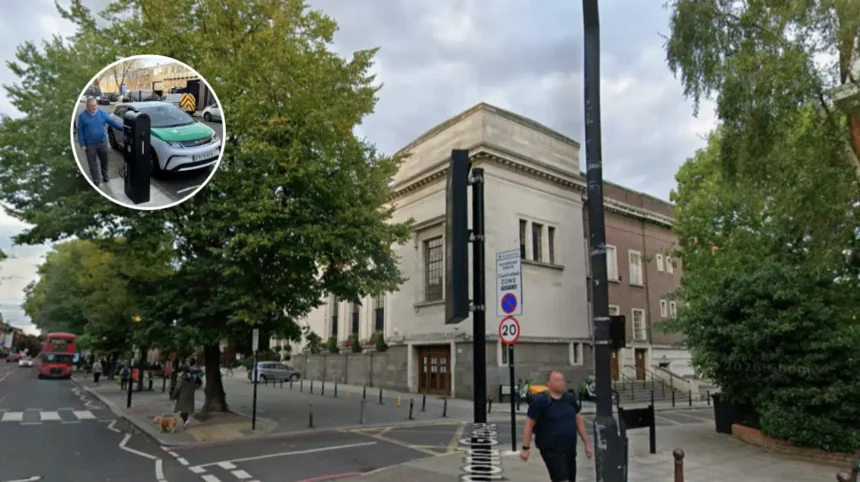
Priority sites include high-density residential zones in Archway, Finsbury Park, and Highbury, near schools like Elizabeth Garrett Anderson and community centres. A council map outlines 150 columns along Holloway Road alone, responding to 70% of resident feedback from autumn 2025 consultations. Cllr O’Neill confirmed:
“No kerbside parking will be lost; we’re using existing lamp footprints.”
What Environmental and Economic Benefits Does This Bring?
Once operational, the chargers could offset 1,200 tonnes of CO2 yearly, equivalent to removing 300 cars from roads. Islington’s Climate Action Plan 2030, which this supports, targets 50% EV uptake borough-wide. Economically, local jobs in installation and maintenance will number 50, with contracts prioritising North London firms.
Islington Council Leader Cllr Asima Shaikh declared:
“This is a game-changer, making green travel accessible for all.”
Businesses anticipate benefits too; Finsbury Park trader Raj Patel told the Islington Gazette: “Reliable charging means more customers staying local.” The initiative dovetails with TfL’s Ultra Low Emission Zone expansions.
Who Are the Key Figures and Partners Involved?
Cllr Gus O’Neill leads the project, backed by the council’s Transport Committee. DfT Minister for Roads, Lillian Greenwood, praised Islington as a “model borough” in her funding announcement. Technical partners include SWARCO eConnect for chargers and E.ON for grid integration.
As covered by Ham & High reporter Sarah Langford, resident advocate group Islington Green Mobility welcomed the news: “Finally, infrastructure matching ambition.” No opposition statements emerged, though minor concerns over cable clutter were addressed via buried conduits.
How Does This Fit London’s Wider EV Push?
London’s EV strategy aims for 90,000 public points by 2030; Islington’s addition represents 1% of that goal. Compared to neighbouring Hackney’s 600 points, this catapults Islington ahead. Camden Council’s similar £500,000 bid was rejected, highlighting Islington’s strong application.
When Will Installation Begin and What Is the Timeline?
Works start June 2026, phased over 18 months to minimise disruption. Phase 1 covers 300 columns in the south by September 2026. Full rollout finishes March 2027, with monitoring via council dashboards.
Disruption mitigations include night works and signage. Cllr O’Neill assured:
“We’ll notify residents 14 days in advance via letters and apps.”
Testing phases ensure reliability before handover.
What Challenges Have Arisen in Past EV Rollouts?
Previous Islington pilots faced grid delays and vandalism, lessons applied here with reinforced columns and AI-monitored bays. Nationally, 15% of chargers remain faulty per Zapmap data, prompting Islington’s 99% uptime guarantee.
As reported by BBC London’s Anna Bailey, “Vandalism costs councils £5m yearly; smart tech cuts this by 60%.” Equity concerns – 40% of low-income households lack off-street parking – are tackled via free overnight tariffs for Blue Badge holders.
How Can Residents Access and Pay for Charging?
A council app links to chargers, with contactless payments from 30p/kWh off-peak. Integration with Octopus Energy offers smart tariffs. Accessibility features include braille instructions and lowered sockets.
Support helpline launches May 2026. Islington resident Maria Gonzalez said:
“As a nurse on shifts, this means home charging without worry.”
What Do Experts Say About the Project’s Impact?
Transport analyst Prof. Greg Marsden of Leeds University called it “exemplary integration of assets.” RAC Foundation’s Helen Goodwin noted:
“Lamp columns unlock 1 million potential UK sites.”
Critics like Green Party Cllr Zoe Garnett questioned pace: “Good start, but we need 2,000 points.” Yet, council data projects 80% coverage of EV hotspots.
Future Plans Beyond 840 Points
Islington eyes hydrogen hubs and e-bike networks next. Partnerships with TfL could add 200 destination chargers at stations. Annual reviews ensure scalability.
Cllr Shaikh concluded: “This cements Islington as London’s greenest borough.” With EV sales up 35% last year, the timing is impeccable.