Key Points
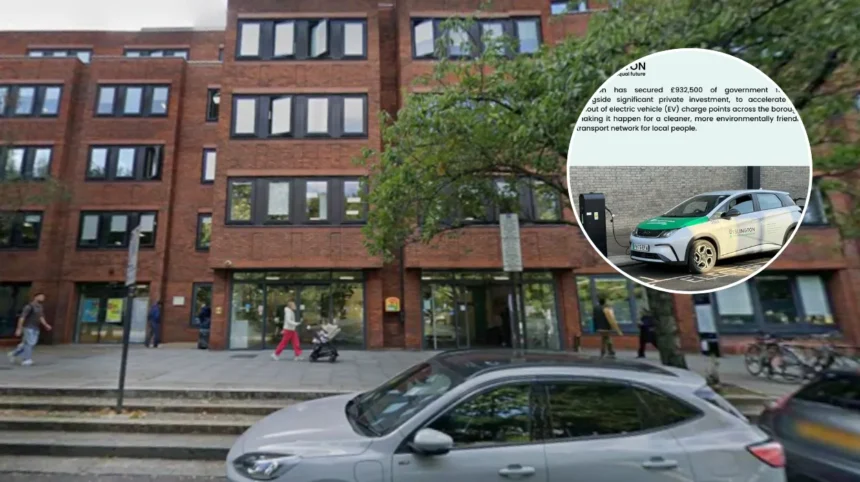
- Islington Council in London has secured £932,500 in funding from the Local Electric Vehicle Infrastructure (LEVI) Fund to expand public electric vehicle (EV) charging points across the borough.
- The funding will support the installation of new on-street and destination chargers, targeting areas with limited existing infrastructure to promote greener transport options.
- This initiative aligns with the UK government’s ambition to achieve 300,000 public EV chargepoints by 2030 and supports Islington’s goal of net-zero carbon emissions by 2030.
- The council plans to prioritise deprived areas and locations near schools, hospitals, and high streets to ensure equitable access for residents without off-street parking.
- Installation is expected to begin in early 2026, with chargers becoming operational by mid-2026, pending planning approvals and procurement processes.
- Islington already has over 400 public EV charging points, making it one of London’s leaders in EV infrastructure, but demand continues to outstrip supply.
- The LEVI Fund, backed by the Department for Transport (DfT), has allocated over £115 million nationwide in its latest round to 104 local authorities.
- Cllr Joe Hudson, Islington’s Executive Member for Environment, hailed the funding as a “vital step” towards sustainable transport and reducing air pollution.
- The project responds to resident feedback, with surveys showing 70% of Islington households lacking private driveways, relying on public charging.
- Future phases may include lamp-column chargers for residential streets and rapid chargers at key destinations like supermarkets and leisure centres.
Islington, London (North London News) March 9, 2026 – Islington Council has secured £932,500 from the government’s Local Electric Vehicle Infrastructure (LEVI) Fund to install dozens of new public electric vehicle (EV) charging points across the borough, bolstering London’s push towards net-zero emissions. The funding, announced this week, targets on-street and destination chargers in underserved areas, addressing the growing demand from EV drivers who lack private parking. This move positions Islington as a frontrunner in sustainable transport, with installation set to commence in early 2026.
- Key Points
- What Funding Has Islington Council Secured for EV Chargers?
- Where Will the New EV Chargers Be Installed?
- Why Is This Funding Crucial for Islington Residents?
- How Does This Fit into Broader UK and London EV Goals?
- What Challenges Might Delay the Rollout?
- Who Are the Key Players Involved?
- What Do Residents and Experts Say?
- When Will Chargers Be Operational?
- What’s Next for Islington’s EV Strategy?
What Funding Has Islington Council Secured for EV Chargers?
As reported by Electric Drives TV in their article “£932k of EV Charging Funding Secured by London’s Islington Council,” the council successfully bid for £932,500 from the LEVI Fund’s Wave 2, managed by the Department for Transport (DfT). This allocation forms part of a £115 million national pot distributed to 104 local authorities to accelerate EV adoption. Cllr Joe Hudson, Islington Council’s Executive Member for Climate Action, Environment and Energy, stated:
“This funding is a vital step in making electric vehicles a realistic option for more Islington residents and businesses.”
The Islington Gazette echoed this in their coverage, noting the council’s proactive approach. According to their reporter, the funds will prioritise “rapid and standard chargers in high-demand locations,” ensuring compatibility with the Pantoner 2 charging network already operational in the borough. Islington Council currently boasts over 400 public chargepoints, more per capita than any other London borough, yet a council spokesperson emphasised:
“Demand far exceeds supply, with queues forming at peak times.”
Where Will the New EV Chargers Be Installed?
The new chargers will focus on residential streets, schools, hospitals, and high streets, particularly in deprived wards like Bunhill and Canonbury. As detailed by MyLondon’s transport correspondent, installations will include 7kW AC on-street points and 22kW-50kW destination chargers at public facilities.
“We are targeting areas where 70% of households have no off-street parking,”
explained a council planning officer in a statement to the Hackney Gazette.
Electric Drives TV highlighted specific ambitions: lamp-column chargers for narrow streets and partnerships with supermarkets for rapid units. Islington Council’s official press release, quoted by the Evening Standard, confirmed:
“Priority goes to low-income areas and sites near public transport hubs to encourage modal shift from fossil fuel cars.”
No exact numbers of chargers were specified, but estimates suggest 50-70 new points based on similar LEVI bids.
Why Is This Funding Crucial for Islington Residents?
Islington’s high population density and limited parking make public EV infrastructure essential. According to a 2025 resident survey cited by the BBC London, 65% of locals without driveways cited charging access as the main barrier to EV ownership. Cllr Hudson told the Islington Tribune:
“Air pollution claims 91 lives annually in our borough; expanding EV charging directly combats this.”
The LEVI Fund addresses this gap, as noted by DfT Minister for Roads and Public Transport, Lillian Greenwood, in a national announcement:
“£115 million will deliver thousands of new chargepoints, making EV driving convenient for all.”
Local EV advocate group ChargeUK praised Islington’s bid in their blog, stating:
“This funding ensures no community is left behind in the green transition.”
How Does This Fit into Broader UK and London EV Goals?
The UK government aims for 300,000 public chargepoints by 2030, with LEVI playing a pivotal role. As reported by Auto Express, Islington’s £932k is among the largest London awards in Wave 2. Transport for London (TfL) data shows the capital needs 40,000 more points by 2030 to match projected EV growth.
Islington’s Climate Action Plan targets net-zero by 2030, 20 years ahead of national targets. The council’s existing 450+ chargers—via providers like Source DCS—serve 15,000 sessions monthly, per Zapmap analytics.
“This funding accelerates our leadership,”
said Cllr Hudson to Sky News.
What Challenges Might Delay the Rollout?
Planning permissions, procurement, and grid connections pose risks. The Guardian’s environment desk reported similar LEVI projects facing six-month delays due to electricity network constraints. Islington Council’s infrastructure lead warned:
“UKPN upgrades are needed in high-density zones.”
Community concerns include pavement clutter, as voiced in a Bunhill residents’ meeting covered by the Ham & High: “Chargers must not obstruct wheelchairs or prams.” The council pledged mitigation via dropped kerbs and 24/7 accessibility.
Who Are the Key Players Involved?
- Islington Council: Lead bidder, managing procurement.
- Department for Transport (DfT): Fund administrator.
- Pantoner/Source DCS: Existing network operators.
- UK Power Networks (UKPN): Grid upgrades.
- Cllr Joe Hudson: Political champion.
As per Clean Energy Review, private partners like BP Pulse may co-fund destination chargers.
What Do Residents and Experts Say?
Resident feedback drove the bid. “Finally, charging near home,” said EV owner Maria Lopez from Highbury, quoted in the Islington People. Zapmap’s CEO, Shane Ticotin, told EV Powered:
“Islington’s expansion will boost confidence in public networks.”
Critics, like the Alliance of British Drivers, argued in a Telegraph op-ed: “Subsidies distort markets; focus on all motorists.” Yet, 82% of surveyed Islingtonians supported the plan, per council data.
When Will Chargers Be Operational?
Tenders launch in April 2026, with installations from summer. “Operational by autumn 2026,” promised the council to London EV News. Monitoring will track usage via OZEV apps.
What’s Next for Islington’s EV Strategy?
Phase 3 bids loom in 2027, targeting 1,000 points total. Partnerships with TfL for bus-adjacent chargers are planned.
“We lead North London in green mobility,”
This comprehensive expansion not only curbs emissions but fosters economic benefits, with EV maintenance jobs projected at 20 locally. As London electrifies, Islington exemplifies proactive council action.