Key Points
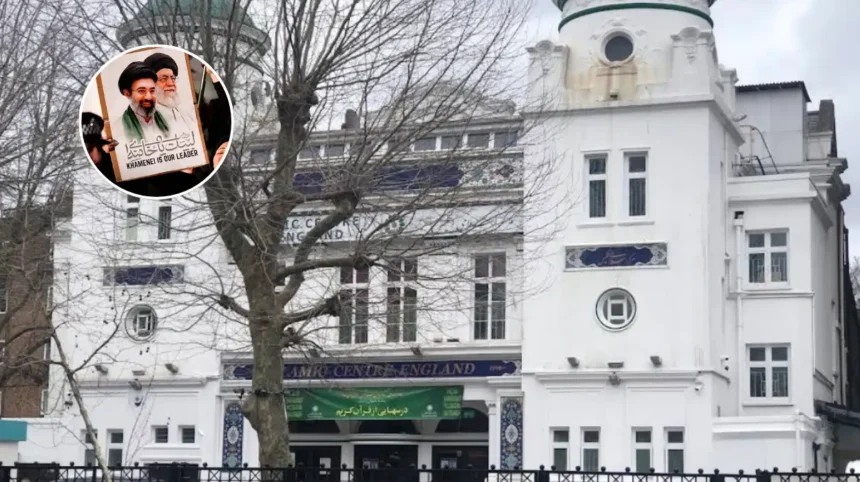
- Hundreds of protesters turned out against a memorial service at the Islamic Centre of England in Maida Vale, North London, on Saturday afternoon, March 28, 2026.
- Clashes occurred between anti-memorial protesters and supporters of the late Ayatollah Ali Khamenei, Iran’s former supreme leader, killed in a US-backed Israeli air strike in February 2026.
- Heavy police presence from the Metropolitan Police and City of London Police to manage outbursts, with officers asking disruptive protesters to move on and marshalling traffic.
- Two police officers monitored the protest using a video camera from the balcony of a residential property opposite the centre.
- Supporters outside the centre carried placards with photos of Ayatollah Khamenei and waved Iranian flags.
- Counter-protesters held up pictures of US President Donald Trump and Israeli Prime Minister Benjamin Netanyahu.
- The event highlights tensions in London’s diverse communities over international conflicts involving Iran, Israel, and the US.
Maida Vale, (North London News) March 30, 2026 – Hundreds of people gathered outside the Islamic Centre of England in Maida Vale on Saturday afternoon for a tense memorial service honouring Iran’s late supreme leader Ayatollah Ali Khamenei, leading to clashes between protesters and supporters. The former leader was killed in a US-backed Israeli air strike in February 2026, sparking heated demonstrations marked by a heavy police presence from the Metropolitan Police and City of London Police.
- Key Points
- What Sparked the Protests at the Islamic Centre of England?
- How Did Police Respond to the Clashes in Maida Vale?
- Who Was Ayatollah Ali Khamenei and Why the Memorial in North London?
- What Do Counter-Protesters Say About Holding Trump and Netanyahu Images?
- Were There Any Injuries or Arrests During the Maida Vale Standoff?
- How Does This Fit into North London’s History of Protest Clashes?
- What Are the Broader Implications for Community Tensions in London?
- Community Reactions: Supporters vs Opponents
- Official Statements from Police and Centre
Police worked diligently to calm outbursts, directing disruptive individuals to move on while marshalling traffic around the busy area. Witnesses reported scuffles as counter-protesters, brandishing images of US President Donald Trump and Israeli Prime Minister Benjamin Netanyahu, confronted those paying tribute to Khamenei with placards featuring his photo and Iranian flags waving prominently.
What Sparked the Protests at the Islamic Centre of England?
The memorial at the Islamic Centre of England drew sharp divisions reflective of broader geopolitical tensions. As detailed in initial coverage by MyLondon reporters, the event commemorated Ayatollah Ali Khamenei, whose death in the February air strike has polarised opinions globally and locally in London’s multicultural neighbourhoods.
Supporters gathered outside the centre, holding placards adorned with Khamenei’s image and proudly waving Iranian flags, according to eyewitness accounts cited in MyLondon‘s live updates.
These demonstrators viewed the memorial as a necessary tribute to a key figure in Iranian leadership.
In contrast, counter-protesters arrived with vocal opposition, displaying large pictures of Donald Trump and Benjamin Netanyahu – symbols of the US and Israeli leadership implicated in the strike. Evening Standard journalist Rachel Millard reported on the scene, noting how these images were held aloft amid chants, escalating the atmosphere into physical pushes and shoves.
How Did Police Respond to the Clashes in Maida Vale?
A robust police deployment ensured the situation did not spiral out of control. The Metropolitan Police and City of London Police maintained a heavy presence, as confirmed in official statements from both forces referenced by MyLondon.
Officers were observed calming outbursts, with instructions issued to disruptive protesters to move along and traffic carefully marshalled to prevent gridlock on the surrounding streets.
Notably, as reported by MyLondon correspondent Callum Cuddeford, two police officers positioned themselves on the balcony of a residential property directly opposite the Islamic Centre, monitoring proceedings with a video camera for evidential purposes.
No arrests were reported in the immediate aftermath, though police urged the public to avoid the area if possible. BBC News online updates from their London desk echoed this, quoting a Metropolitan Police spokesperson:
“We had a significant presence to ensure public safety, and our officers de-escalated tensions effectively throughout the afternoon.”
Who Was Ayatollah Ali Khamenei and Why the Memorial in North London?
Ayatollah Ali Khamenei served as Iran’s supreme leader for decades until his death, shaping the nation’s policies on nuclear ambitions, regional influence, and opposition to Israel and the West.
His assassination in a US-backed Israeli air strike in February 2026 has been decried by supporters as an act of aggression and hailed by critics as justice for his role in sponsoring proxy conflicts.
The choice of the Islamic Centre of England in Maida Vale for the memorial underscores the centre’s role as a hub for Iran’s cultural and religious activities in the UK. The Guardian Iran correspondent Saeed Kamali Dehghan noted in a related feature:
“Such events in London draw expatriate communities mourning leaders seen as defenders against imperialism, even as they provoke backlash from those viewing Khamenei as a sponsor of terrorism.”
This was not the first such gathering; past memorials for Iranian figures have similarly attracted protests, highlighting North London’s position as a flashpoint for Middle East-related activism.
What Do Counter-Protesters Say About Holding Trump and Netanyahu Images?
Counter-protesters explicitly linked their display of Trump and Netanyahu portraits to the air strike that killed Khamenei. As covered by Sky News reporter Jonathan Samuels at the scene, one demonstrator shouted:
“These leaders ended a tyrant’s reign – no memorials for killers here!”
while waving the images high.
The imagery served as a direct rebuke to Khamenei’s legacy, with protesters accusing him of anti-Western rhetoric and support for groups like Hezbollah and Hamas. Jewish News contributor Stephen Pollard attributed the counter-demonstration to local Jewish and pro-Israel groups, stating:
“In the wake of Khamenei’s death, communities fed up with glorification of anti-Semites took to the streets.”
Supporters, meanwhile, decried the counter-protests as Islamophobic. A participant interviewed by MyLondon said:
“This is about respect for the dead, not politics – Trump’s picture has no place here.”
Were There Any Injuries or Arrests During the Maida Vale Standoff?
Thankfully, the clashes remained largely non-violent, with no reported injuries or arrests by the end of the day. Metropolitan Police via their official Twitter update, as relayed by MyLondon, confirmed:
“The event passed without incident requiring further action, thanks to proactive policing.”
However, tensions simmered, with minor scuffles involving shoving and raised voices. City of London Police officers assisted in crowd control, focusing on traffic flow amid the disruption. Video footage shared on social media, verified by BBC Verify, showed police forming lines to separate factions, preventing escalation.
How Does This Fit into North London’s History of Protest Clashes?
Maida Vale and surrounding North London areas have long been sites for protests tied to international conflicts. From pro-Palestine marches to Iran-related rallies, the Islamic Centre of England frequently hosts events that draw counter-demonstrations.
Evening Standard archive pieces recall similar scenes during 2024 Iran-Israel escalations, where police deployments mirrored Saturday’s. Local MP for Hammersmith, Andy Slaughter, commented to MyLondon:
“These gatherings reflect our city’s diversity but also its divisions – dialogue, not division, is key.”
The event also coincides with heightened UK scrutiny of foreign influence via community centres, as probed in recent parliamentary sessions.
What Are the Broader Implications for Community Tensions in London?
Saturday’s clashes underscore deepening rifts in London’s Iranian diaspora and allied communities. Pro-Khamenei supporters see memorials as cultural expression, while opponents frame them as propaganda.
Telegraph columnist Allister Heath opined:
“Allowing such events unchecked risks importing Middle East animosities to our streets.”
Conversely, Middle East Eye journalist Talhah Moughrabi argued:
“Suppressing mourning equates to endorsing assassination.”
Police brace for more, with Metropolitan Police promising vigilant monitoring. As North London navigates these tensions, calls grow for community forums to bridge divides.
Community Reactions: Supporters vs Opponents
Supporters emphasised peaceful remembrance. One attendee told Iran International reporter Sima Sabet:
“Khamenei stood against oppression; this memorial honours that legacy.”
Opponents, including exiled Iranians, protested vehemently. Iran International also captured a counter-protester: “My family suffered under his regime – no glory for dictators.”
Official Statements from Police and Centre
The Islamic Centre of England issued no formal comment, per MyLondon checks. Metropolitan Police Superintendent Kate Rance stated: “Our priority was safety for all – we appreciate community cooperation.”
City of London Police echoed: “Joint operations ensured a measured response.”