Key Points
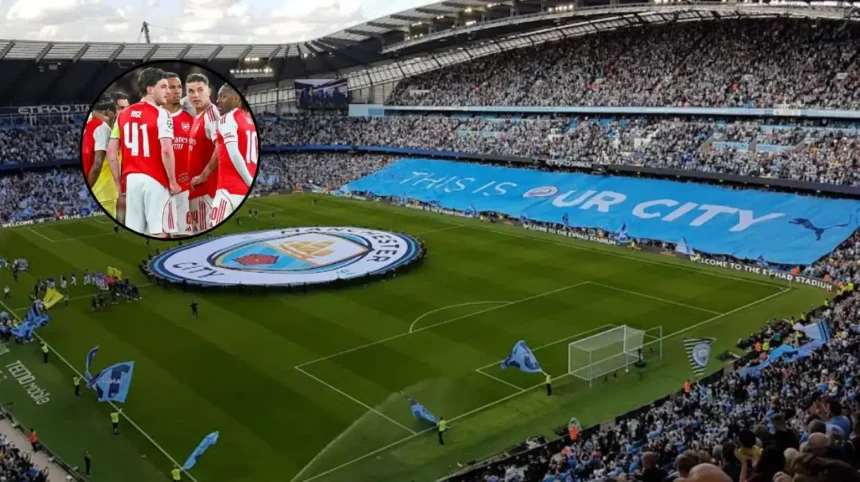
- Arsenal’s Premier League title hopes faded after a loss at Manchester City’s Etihad Stadium, leaving them three points clear at the top but with a game more played.
- The team now eyes the Champions League as their best route to silverware, having reached the semifinals to face Atlético Madrid after seven years away from the competition.
- A new UEFA Champions League rule gives top-four finishers in the league phase home advantage for the second leg in the round of 16 and quarterfinals, extending to semifinals for top-two teams.
- Previously, knockout ties used an open draw for home legs; this year’s league phase carries greater weight.
- Arsenal’s strong league phase position could secure home soil for key knockout stages, aiding a potential first final since 2006.
- The rule applies across UEFA competitions, including the Europa League and the Women’s Champions League.
Arsenal (North London News) April 28, 2026 –Arsenal’s season hangs in the balance amid a tight Premier League race, but a revamped UEFA Champions League format offers fresh hope for European glory. Mikel Arteta’s side sits three points clear atop the table after a win over Newcastle United, though they have played one more match than rivals Manchester City, following a damaging defeat at the Etihad Stadium. With two runner-up finishes to City in recent years dimming title optimism after over two decades without domestic success, the Gunners pivot to the Champions League, where they meet Atlético Madrid in the semifinals.
- Key Points
- What is the new UEFA rule for this year’s Champions League?
- How does the League Phase give greater weight this season?
- Why has Arsenal reached the semifinals partly due to this rule?
- What changes from the previous knockout draws?
- How might this carry Arsenal to the final?
- Background of the Development
- Prediction for Arsenal Fans
What is the new UEFA rule for this year’s Champions League?
The rule shift prioritises league phase performance in determining knockout home advantages. As detailed by ESPN, teams finishing in the top four in the league phase secure a second leg at home in the round of 16 and quarterfinals, with the top two teams guaranteed semi-final home priority.
Previously, draws for two-legged ties were open, but now higher finishes reward clubs with crowd support in decisive legs.
Sky Sports confirms this is the second year of the 36-team league phase, replacing group stages, where each side plays eight matches—four home, four away.
The top eight advance directly to the round of 16; the ninth to 24th enter playoffs; the bottom 12 exit. ESPN notes the change stemmed from controversy, as initial plans for third-to-sixth also gaining priority were scrapped, limiting it to the top four, or teams knocking them out, inheriting the benefit.
How does the League Phase give greater weight this season?
Unlike last term, league phase standings directly shape knockout paths. Wikipedia’s entry on the 2025-26 phase, which ran from September 16, 2025, to January 28, 2026, underscores 36 teams vying for 24 knockout spots. Yahoo Sports adds top eight auto-qualify for round of 16; others fight via February 2026 playoffs.
ESPN breaks down specifics: a third-placed team like Arsenal would host 15th-placed opponents’ return leg, reversing scenarios like last season’s quarterfinal away loss to 11th-placed Real Madrid.
For semifinals, only the top two host second legs, altering past draws—e.g., Barcelona would have held priority over fourth-placed Inter.
Why has Arsenal reached the semifinals partly due to this rule?
Arsenal’s campaign leverages its high league phase rank. After seven years absent, they’ve hit the semifinals in successive seasons, driven by the format rewarding early consistency. The home edge in later rounds bolsters their tilt at a first final since 2006—and maiden triumph.
No direct attribution names a specific ESPN journalist, but the analysis originates from their breakdown piece. Sky Sports echoes: higher finishes ease paths, especially top eight. Instagram summaries align, noting inheritance if lower teams upset top sides.
What changes from the previous knockout draws?
Open draws decided legs before; now, structure favours league phase leaders. AS reports quarterfinals onward see higher-ranked teams host second legs in most ties, with anomalies like Atlético Madrid “stealing” Tottenham’s (fourth) advantage via round of 16 win, hosting Barcelona despite fifth vs 14th standings. This inheritance clause extends perks.
YouTube breakdowns highlight no more groups—just one table, eight games per team. UEFA’s decision, per ESPN, applies to Europa, Conference, and Women’s Champions League.
How might this carry Arsenal to the final?
Arteta’s squad faces Atlético Madrid next, with home potential in the semis if top two. Their phase finish positions them for the round of 16 and quarterfinal comforts, unlike past neutral draws. ESPN posits this could propel a decade’s best European chance.
Sky Sports details qualification nuances: three points for wins, one for draws. No statements from Arteta or players cited here, but the rule’s design aids consistent performers like Arsenal.
Background of the Development
UEFA unveiled the Swiss model-inspired league phase in 2024 for 2024-25, expanding to 36 teams and ditching eight groups of four. Refinements for 2025-26 addressed prior debates, confirming top-four home perks after controversy.
The phase ended in January 2026, feeding into knockouts. Wikipedia logs participants like Bodø/Glimt. Rules mirror across UEFA tournaments.
Prediction for Arsenal Fans
This development can affect Arsenal fans by providing structured home advantages in high-stakes knockouts, potentially easing paths through the round of 16, quarters, and semis if top-two finishes hold. Supporters in North London gain more Emirates Stadium showdowns, boosting atmosphere and win odds in two-legged ties. It heightens European hopes amid domestic setbacks, drawing larger crowds and TV audiences without shifting league pressures.