Key Points
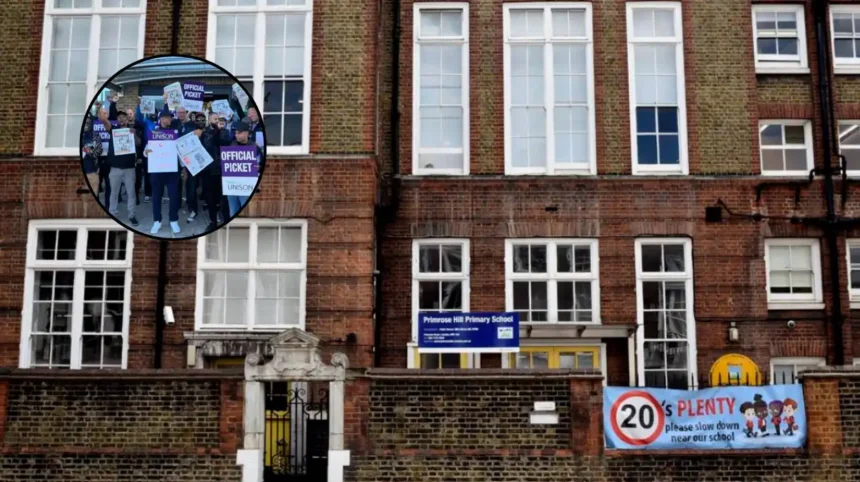
- Unison union members at Primrose Hill Primary School in Camden began four days of strikes on Tuesday over pay regrading.
- Teaching assistants (TAs) demand regrading to receive proper pay for their work, including one-to-one support and planning for children with additional needs.
- TAs are among the lowest-paid council workers, predominantly women, and some work multiple jobs to get by.
- A TA at Primrose Hill told Socialist Worker that strikes have “been a long time coming” due to the workforce’s breaking point.
- Parents, other teachers, and passing cars showed strong support on the first day of picket lines.
- Solidarity visits came from Camden People’s Alliance, Camden NEU, and Camden Trades Council.
- Similar strikes occurred at Richard Cobden Primary School last year and this year over the same regrading issue.
- The regrading dispute affects the whole Camden borough, with TAs calling for pay up to a grade that some schools and London boroughs already offer.
- Liz Wheatley, Camden Unison branch secretary, stated workers at Richard Cobden recently won a reballot to renew their strike mandate.
- Recent updates show Primrose Hill TAs voted 100% yes to strike with 67% turnout, action dates pending; Richard Cobden reballoted, closing 24 April 2026.
- An early years practitioner at Primrose Hill supported the strike, noting she once worked three jobs and blaming Labour for the austerity and cost-of-living crisis.
Primrose Hill Primary School (North London News) April 29, 2026 –
- Key Points
- Why are Primrose Hill teaching assistants striking now?
- What is the history of TA strikes in Camden?
- How widespread is support for the strikers?
- What does regrading mean for Camden TAs?
- Background of the Development
- Prediction: How can this development affect teaching assistants, pupils, and parents in Camden
Teaching assistants at Primrose Hill Primary School in Camden launched four days of strike action on Tuesday, demanding regrading to match their essential role in supporting children’s learning. Unison union members, who are predominantly women and among the lowest-paid council staff, seek pay that reflects their one-to-one work, planning, and supervision of pupils with additional needs. The action follows similar disputes at nearby Richard Cobden Primary School and highlights a borough-wide issue, as reported across multiple outlets.
Why are Primrose Hill teaching assistants striking now?
One unnamed teaching assistant at Primrose Hill Primary School told Socialist Worker that the workforce is at breaking point and strikes have “been a long time coming”. “Some of us are working three, sometimes four jobs to get by,” she said.
“We’re not asking for much. It’s 23p an hour, but it makes a difference. We’re the lowest-paid staff at the school, but we do so much.”
She added that other teachers and parents have shown strong support, with stickers distributed and a petition signed.
“It shows the parents value us and can see what we do at the school for their children and that they’re behind us,” she said.
The first day of picket lines was lively, with support from parents, other education union members, and passing cars beeping in solidarity. The TAs received visits from the Camden People’s Alliance, Camden NEU, and Camden Trades Council.
What is the history of TA strikes in Camden?
TAs at Richard Cobden Primary School in Camden struck last year and this year over the same regrading issue, as detailed in Unison reports. Another TA at Primrose Hill explained to Socialist Worker that “this issue around regrading is a problem going through the whole borough.”
“The pay is not reflected in the work we do. There’s a lot of one-to-one work, and that takes a lot of planning. There are a lot of children who have additional support needs too and require extra supervision. The current pay doesn’t take all the work we do into account,” she said.
At Richard Cobden, more than 30 Unison TAs took multiple rounds of action, including four days from 3-6 February 2026, following a school restructure that cut jobs and increased workloads. Unison London regional organiser Nathan Burns said:
“Teaching assistants provide vital support to pupils every day, including children with special educational needs. They deserve fair pay and proper recognition for the work they do. Despite repeated efforts to resolve the issue through negotiations, the employer hasn’t come up with an acceptable offer. It’s not too late to give staff the proper wage rise they deserve.”
Unison Camden branch secretary Liz Wheatley added:
“Our members love working with pupils and helping them get the best education possible. But that can’t be done on the cheap and by trading on the goodwill of workers – they still have bills to pay. Pupils and staff deserve better, and this strike is to win for all of them.”
How widespread is support for the strikers?
Strikers at Primrose Hill were joined by other school workers before pupils arrived. One early years practitioner spoke to Socialist Worker:
“I’m out in solidarity with my colleagues. I’ve actually worked three jobs myself. Now, if I’m doing that as someone on a larger scale, then how are my colleagues on a scale 3 expected to live on the pay they get?”
She blamed Labour for a spiralling cost-of-living crisis and for implementing austerity across local government.
“We’ve got a government that’s pushing the nation for more money for weapons, but then giving nothing for local councils. So we know there is money there,”
Liz Wheatley, the branch secretary for Camden Unison, stated:
“We’ve got a dispute about regrading all TAs across the borough up to a new pay grade, a grade that some of the schools already pay and some of the London boroughs pay. We believe that Camden council should be paying it.”
“Workers at Richard Cobden school had recently just won a reballot to renew their strike ballot.”
She said.
“We are looking into taking action together in the coming weeks to make sure that we’re sending a really strong, clear message to both the council and the school senior management.”
What does regrading mean for Camden TAs?
Camden Unison has confirmed Primrose Hill TAs achieved 67% turnout with 100% voting yes to strike, mirroring Richard Cobden’s disputes over regrading TAs and early years practitioners to higher scales like NJC Scale 4. The request for strike dates at Primrose Hill was submitted, with updates expected soon. Richard Cobden members are in a reballot, closing 24 April 2026.
Unison pushes for pay that recognises skills and responsibilities, noting TAs are essential yet underpaid amid funding crises. Wheatley noted:
“We know that there’s a funding crisis in schools. However, it’s always the people who are at the bottom of the pay scales who pay the price for that. It’s never the senior management, the headteachers, the executive heads, the senior council officials who pay that price.”
“So we believe, as well as the dispute here to pay TAs properly, that actually the council and the schools should be part of a campaign for increased funding for all schools.”
Related actions include protests outside Camden Council by Richard Cobden and Great Ormond Street Hospital School staff, demanding fair pay. Unison calls the TAs’ work undervalued, especially for special needs support.
Background of the Development
The dispute traces to Camden Council’s school restructures, notably at Richard Cobden, where redundancies increased TA workloads without pay adjustments. Unison evaluated TA roles at NJC Scale 4, rejected by management, leading to ballots with 100% yes votes. Primrose Hill follows suit, with recent ballots succeeding amid national pay claims rejected at 3.3%. Ongoing since 2025, the actions total up to 18 days at Richard Cobden, with solidarity funds raised. Borough-wide efforts aim for coordinated strikes.
Prediction: How can this development affect teaching assistants, pupils, and parents in Camden
Regrading success at Primrose Hill and Richard Cobden could set a precedent for borough-wide TA pay rises, easing financial strain on low-paid women workers reliant on multiple jobs. Prolonged strikes may disrupt pupil support, particularly for those with additional needs, affecting learning continuity. Parents, who have shown support via petitions and picket lines, might face childcare challenges but could benefit from better-funded schools if unions secure increased council funding. Failure to resolve could lead to more coordinated actions, heightening tensions with school management and the council. Overall, outcomes hinge on negotiations, potentially stabilising staff retention and educational quality for Camden families.