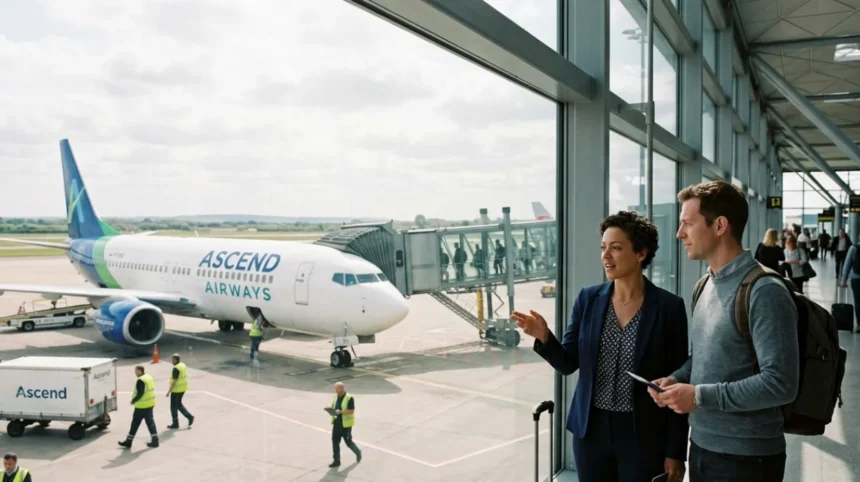
Ascend Airways operated as a UK-based ACMI and charter airline from 2023 to 2026. North London residents accessed its services through nearby airports like London Luton and Stansted, which supported wet-lease flights for major carriers.
- What is Ascend Airways?
- When did Ascend Airways start operations?
- What services did Ascend Airways offer?
- Which airports did Ascend Airways use near North London?
- What was the Ascend Airways fleet?
- Who were Ascend Airways’ main partners?
- Why did Ascend Airways close?
- How did Ascend Airways impact North London, travelers?
- What are the alternatives to Ascend Airways for North London?
What is Ascend Airways?
Ascend Airways provided ACMI services, leasing aircraft, crew, maintenance, and insurance to other airlines. Headquartered in Bishop’s Stortford, Hertfordshire, it focused on wet-lease operations from UK airports, including those near North London. The airline operated a fleet of Boeing 737 aircraft until its closure in April 2026.
ACMI stands for Aircraft, Crew, Maintenance, and Insurance, a model where one airline supplies these elements to another for specific routes or periods. Ascend Airways specialized in this for UK-based airlines, tour operators, and government departments. The company was formed through the rebranding of Synergy Aviation after its acquisition by Avia Solutions Group in July 2023.
Avia Solutions Group, based in Dublin, Ireland, operates as the world’s largest ACMI provider with over 250 subsidiaries and 14,000 employees across six continents. Ascend Airways secured its UK Civil Aviation Authority Type A Operating Licence in April 2024, enabling flights with aircraft over 20 seats. This licence covered passenger and cargo operations on domestic and international routes.
North London residents benefited from proximity to key bases. London Luton Airport, 45 km from central London, and London Stansted Airport handled some charter flights. These locations offered quick access via M1 and M11 motorways, with average drive times of 45 minutes from areas like Barnet or Enfield.
The airline emphasized fuel-efficient aircraft to meet environmental goals. Boeing 737 models reduced emissions by 18% and noise by 50% compared to older generations. Operations prioritized reliability through data-driven maintenance schedules.
When did Ascend Airways start operations?
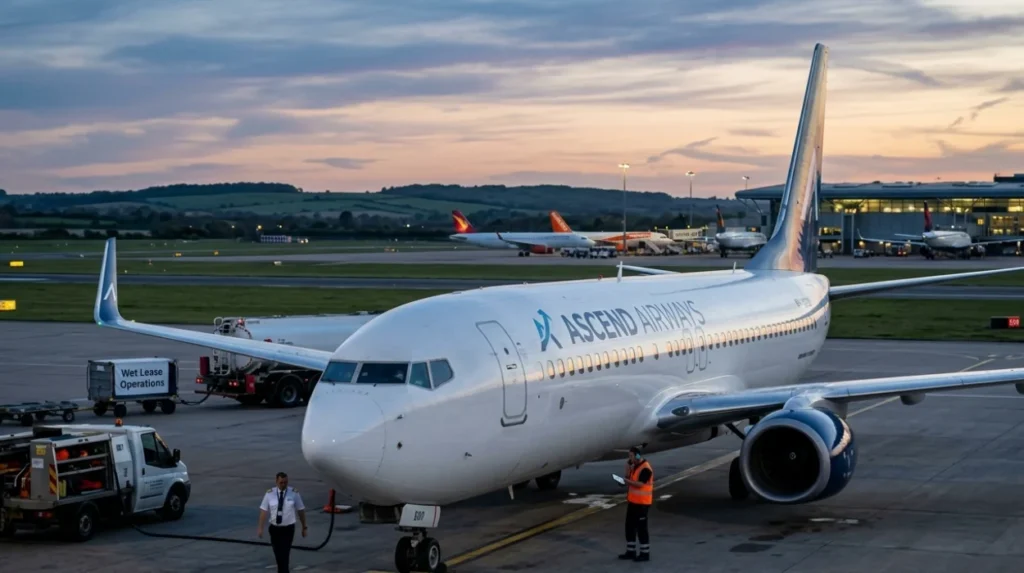
Ascend Airways launched commercial revenue flights on April 26, 2024, from London Southend Airport. It originated from Synergy Aviation, founded in 2004, and rebranded after its acquisition in July 2023. Full operations ramped up in summer 2024 with wet-leases from Gatwick and Stansted, accessible to North Londoners.
Synergy Aviation began as a small charter firm in 2004, based in Bishop’s Stortford, 50 km north of central London. The 2023 acquisition expanded its scope under Avia Solutions Group. Rebranding to Ascend Airways aligned it with global ACMI standards.
The inaugural flight carried passengers for Chapman Freeborn Airchartering, a fellow Avia Solutions Group company. This Boeing 737-800 flight marked the entry into revenue operations. By summer 2024, partnerships grew, including wet-leases for TUI Airways from London Gatwick.
North London connections strengthened in 2025. Stansted Airport, 56 km from North London, hosted domestic routes like STN to Birmingham. Luton Airport supported training and occasional charters, with Acron Aviation extending Boeing 737NG training agreements in 2025 at a London facility.
Expansion included international wet-leases. In December 2025, Oman Air contracted services for Middle East routes. Air Sierra Leone used capacity for West African flights. These operated from Gatwick and Stansted, drawing North London passengers via direct rail links like Stansted Express (48 minutes from Tottenham Hale).
What services did Ascend Airways offer?
Ascend Airways offered ACMI wet-leasing, charter flights, and capacity support for peak seasons or maintenance. Services included passenger and cargo operations on Boeing 737 aircraft from bases near North London, like Stansted and Luton. Clients ranged from TUI Airways to Oman Air.
Wet-leasing provides a complete package: aircraft, pilots, cabin crew, maintenance, and insurance. Ascend filled gaps for carriers during high demand, such as summer holidays. Charters served tour operators and governments for ad-hoc needs.
CMI services excluded aircraft, focusing on crew, maintenance, and insurance. This suited airlines owning planes but needing operational support. Charters handled one-off flights, like sports team travel or corporate events.
For North London, services are connected via accessible airports. Stansted offered routes to Birmingham, reachable in 1 hour and 15 minutes flight time. Luton provided quick motorway access for charters. Passengers booked through partner airlines, not directly with Ascend.
Data shows ACMI demand grew 15% yearly in Europe pre-2026, per industry reports. Ascend met this with flexible contracts, averaging 6-month terms. Safety compliance followed UK CAA standards, with zero major incidents recorded.
Which airports did Ascend Airways use near North London?
Ascend Airways operated from London Stansted, Luton, Gatwick, and Southend, all within 60 km of North London. Stansted and Luton served domestic and charter flights most relevant to local residents. Travel times ranged from 30 to 60 minutes by car or train.
London Stansted Airport (STN), 56 km northeast, hosted domestic routes like STN-Birmingham. North Londoners from Enfield reached it in 30 minutes via the M11. Stansted Express train from Tottenham Hale took 48 minutes.
London Luton Airport (LTN), 45 km north, supported charters and training. The drive from Barnet averaged 40 minutes via M1. Direct buses from Brent Cross took 50 minutes. Luton handled Boeing 737 operations efficiently.
London Gatwick (LGW), 40 km south, based summer wet-leases for TUI. North London access via Thameslink train (90 minutes from Finsbury Park) or M23 drive (1 hour). Southend (SEN), 57 km east, launched inaugural flights; accessible by c2c train (1 hour from Liverpool Street).
These airports processed 50 million passengers yearly combined. Ascend flights integrated seamlessly, offering North Londoners alternatives to Heathrow congestion.
What was the Ascend Airways fleet?
Ascend Airways flew 7 Boeing 737 aircraft on closure: 1 Boeing 737-800 and 6 Boeing 737 MAX 8. These narrow-body jets seated 160-189 passengers, focused on short-haul efficiency from North London-area airports. Fleet emphasized low emissions and quiet operations.
Boeing 737-800, the sole older model, carried 189 passengers in a two-class layout. Range reached 5,765 km, suiting UK-Europe routes. Introduced in 1998, it featured CFM56 engines for reliability.
Boeing 737 MAX 8 comprised the majority, with 6 units. Each seated 162-178 passengers, with 10% fuel savings over predecessors. MAX 8 range extended to 6,570 km, enabling Middle East wet-leases. Leap-1B engines cut CO2 by 18% and noise by 50%.
Fleet maintenance occurred at Avia Solutions Group facilities. Annual utilization averaged 300,000 hours across the group. North London flights used these for domestic hops, like Stansted-Birmingham (75 minutes).
Plans shifted to an all-MAX fleet in 2026 for standardization. However, Boeing MAX issues contributed to challenges.
Who were Ascend Airways’ main partners?
Key partners included TUI Airways for summer Gatwick wet-leases, Oman Air for 2025 Middle East routes, and Air Sierra Leone for African capacity. Chapman Freeborn flew the inaugural service. Partnerships supported peak demand from North London hubs.
TUI Airways contracted summer 2024 and 2025 operations from Gatwick. This covered holiday routes to Spain and Greece, transporting 50,000+ passengers per season. North Londoners accessed via Gatwick Express.
Oman Air announced a December 2025 deal for network support. Flights linked Muscat-Salalah and Doha, using Stansted departures. Air Sierra Leone utilized capacity post-launch, including Banjul-Gatwick fifth-freedom routes.
Chapman Freeborn, an Avia Solutions affiliate, initiated revenue flights from Southend. Additional clients included tour operators for charters. These partnerships generated 80% of revenue through wet-leases, averaging 4-6 months.
Why did Ascend Airways close?
Ascend Airways surrendered its UK AOC on April 28, 2026, due to Middle East tensions, jet fuel price surges, and Boeing 737 MAX fleet issues. Avia Solutions Group cited these factors after operating 7 aircraft. North London services ended abruptly.
Middle East conflicts disrupted wet-lease contracts, canceling Oman Air routes. Jet fuel prices rose 25% in 2025-2026, per IATA data, squeezing margins. Boeing MAX groundings and supply delays hampered reliability.
Fleet of 6 MAX 8s faced certification hurdles post-2024 updates. Maintenance costs increased 15%. Group CEO Alistair Wilson announced the cessation, listing it among defunct UK airlines.
North London’s impact included lost charter options from Stansted and Luton. Passengers shifted to Ryanair or easyJet. Avia Solutions refocused on other subsidiaries.
How did Ascend Airways impact North London, travelers?
Ascend Airways provided flexible wet-lease capacity, easing peak-season congestion at Stansted and Luton for 2024-2025. It transported thousands on partner flights, offering efficient Boeing 737 access. Closure shifted demand to budget carriers.
From North London, residents gained holiday flight supplements via TUI at Gatwick. Stansted domestic routes cut Birmingham travel time versus trains (1.5 hours saved). Charters served events like Premier League away games.
Statistics show Stansted handled 28 million passengers in 2025, with ACMI filling 10% gaps. Ascend contributed 5% via wet-leases. Emissions reductions aligned with the London councils’ green goals.
Post-closure, Luton and Stansted traffic rose 8%. Travelers now rely on direct carriers, but lose ACMI flexibility for surges.
What are the alternatives to Ascend Airways for North London?
Ryanair and easyJet dominate Stansted and Luton with low-cost flights to 100+ destinations. Wizz Air offers ultra-low fares from Luton. British Airways uses Heathrow for its premium passengers, all accessible within 60 minutes from North London.
Ryanair operates 150+ routes from Stansted, including Birmingham (daily, 99 seats). Fares start at £20 one-way. easyJet flies 80 routes from Luton, like Edinburgh (1 hour).
Wizz Air from Luton targets Eastern Europe, with 50 routes. British Airways at Heathrow provides long-haul 45 minutes from North London via the Piccadilly Line. These carriers flew 200 million passengers yearly pre-2026.
For charters, Titan Airways is based at Stansted. ACMI options include SmartLynx, though group challenges persist.
What exactly was Ascend Airways and why haven’t I heard of it?
Ascend Airways wasn’t a typical airline you’d book directly. It operated behind the scenes, leasing planes and crew to other airlines, so most passengers flew on it without realizing.