Key Points
- A 17‑year‑old British male from Brent, north‑west London, has pleaded guilty to arson not endangering life in connection with an attack on Kenton United Synagogue in Harrow on Saturday.
- The incident occurred on Saturday night when a bottle containing an accelerant was thrown through a window at the synagogue, resulting in minor smoke damage and no injuries.
- Footage posted online, and CCTV examined by police, shows a figure in dark clothing climbing a wall, igniting a bottle of liquid, and throwing it through a broken window.
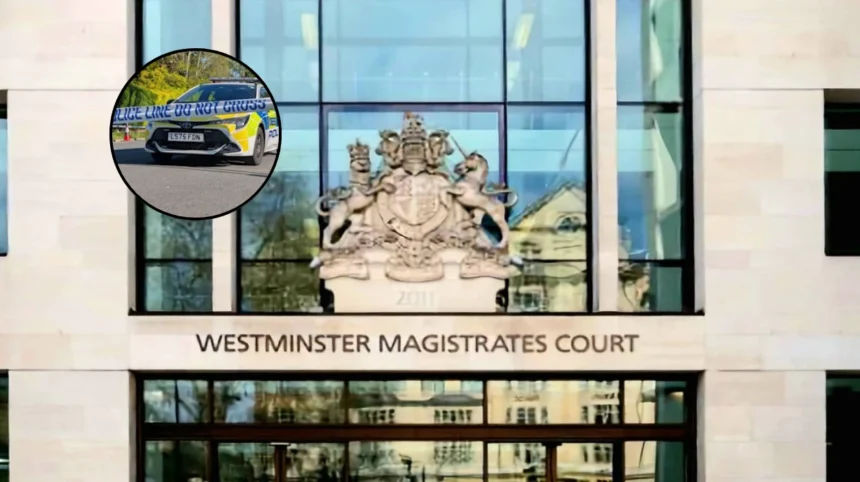
- The teenager, whose identity is protected due to his age, appeared at Westminster Magistrates’ Court on Tuesday and was granted bail with strict conditions, including to live at his home address and not to enter any synagogue.
- District Judge Nina Tempia ordered that if he breaches bail conditions, he will be arrested, and he is due to appear at Willesden Youth Court on June 4.
- A 19‑year‑old man who was also arrested in connection with the attack has been released on bail pending further inquiries, as reported by the Metropolitan Police.
- The Community Security Trust, a Jewish charity monitoring antisemitic incidents, said there was only minor smoke damage to an internal room and no significant structural damage.
- The teenager issued a written statement, as reported by Associated Press and The Times of Israel, saying he did not know the building was a synagogue and that he had “no hate toward the Jewish people” and was “very sorry for [his] actions”.
- Police have indicated that two other suspects are still “outstanding” in the investigation.
- The case comes amid a wider concern over a series of attacks on Jewish institutions in the UK, including arson and other acts, which authorities have described as part of a worrying pattern.
Brent (North London News) May 7, 2026 –
- Key Points
- What happened at Kenton United Synagogue in Harrow?
- What did the teenager say in court and in a statement?
- Who else has been arrested or is still wanted?
- What is the wider context of attacks on Jewish institutions in the UK?
- How has the Jewish community and security groups reacted?
- Background to the development
- Prediction: How this development may affect its audience
What happened at Kenton United Synagogue in Harrow?
A 17‑year‑old British national from Brent, north‑west London, has pleaded guilty to arson not endangering life after an attack on Kenton United Synagogue in Harrow on Saturday night, according to coverage by BBC News, AP and The Independent.
As reported by journalists at BBC News, the boy, whose identity is protected under UK law because of his age, admitted the offence at Westminster Magistrates’ Court on Tuesday, days after the incident.
Footage circulated online and examined by authorities appears to show a person in dark clothing climbing a wall at the synagogue, setting light to a bottle of liquid, and then throwing it through a broken window, the BBC and The Times of Israel both note.
The fire caused only minor smoke damage to an internal room, with no injuries reported and no significant structural harm to the building, the Community Security Trust has stated, as cited by BBC and other outlets. The synagogue, Kenton United Synagogue, is located on Shaftesbury Avenue in Harrow, an area in north‑west London with a sizeable Jewish community, according to local reporting. Metropolitan Police officers were called to the scene following the incident, and the 17‑year‑old was arrested on Sunday on suspicion of arson.
What did the teenager say in court and in a statement?
At the short hearing in Westminster Magistrates’ Court, the teenager, flanked by security officers in the dock, spoke only to confirm his personal details and to enter a guilty plea to the charge of arson not endangering life, as reported by the BBC and The Independent.
District Judge Nina Tempia granted him bail but imposed conditions, including that he live and sleep at his home address and that he not enter any synagogue premises, according to BBC and AP coverage. The judge warned the teenager that any breach of those conditions would result in his immediate arrest.
In a written statement shared with the court and relayed by AP, the teenager said he was unaware that the building he targeted was a synagogue and that he had no animosity toward Jewish people. As reported by AP, he wrote:
“I have no hate toward the Jewish people. I am very sorry for my actions.”
The Times of Israel also highlights this portion of the statement, noting that he claimed he did not intend to cause harm to anyone. The judge has adjourned the case, and the youth is scheduled to appear at Willesden Youth Court on June 4 for sentencing or further proceedings.
Who else has been arrested or is still wanted?
Alongside the teenager, a 19‑year‑old man was also arrested in connection with the incident, the Metropolitan Police has said, as reported by BBC and The Independent. The younger man has been released on bail while police continue their inquiries, according to the force’s statement as cited by the BBC.
Authorities have indicated that two other suspects remain “outstanding” in the investigation, AP and The Times of Israel report, meaning their identities or whereabouts are still being pursued.
The Metropolitan Police have not publicly linked the suspect to any wider organisation or political motive, according to coverage by AP and The Times of Israel, which instead focus on the factual details of the arrest and the charges.
The Community Security Trust has also confirmed it is liaising with police over the incident, as reported by the BBC, and has reiterated that the damage was limited to smoke and did not extend to serious structural harm.
What is the wider context of attacks on Jewish institutions in the UK?
The Harrow synagogue attack comes amid a broader pattern of assaults on Jewish institutions in the UK over recent weeks, with several incidents reported across the country, as noted by AP and other outlets. AP describes this as part of a
“troubling trend of assaults on the Jewish community in the UK,”
listing of the Kenton attack as one of several recent cases. The Times of Israel and Courthouse News also point to a series of arson attacks and other acts against synagogues and Jewish‑related sites since late March, which police and community groups say have heightened concern.
The Metropolitan Police has stated that it is treating antisemitic incidents as a priority, and national bodies, including the Community Security Trust, have warned that the number of reported attacks has risen in recent months.
A separate set of arrests related to a purported plan to commit an arson attack targeting the Jewish community was announced on the same day the teenager entered his guilty plea, according to BBC coverage, underlining the wider security environment.
How has the Jewish community and security groups reacted?
The Kenton United Synagogue itself has not issued a detailed public statement, but the Community Security Trust has provided one of the clearest accounts of the damage. As reported by the BBC, the charity said minor smoke damage affected an internal room, but there were no injuries and no significant structural damage, which has been widely cited by other outlets.
Community leaders interviewed by AP and The Times of Israel have described the incident as distressing but have also emphasised that the lack of physical harm is a relief.
The incident has nonetheless been framed by some community representatives as a sharp reminder of the vulnerability of Jewish institutions, particularly in light of the recent surge in antisemitic attacks and threats. Local councillors and faith‑group leaders in Harrow and Brent have called for increased police visibility and reassurance, as reported by regional outlets, while also urging the public to report any suspicious behaviour around religious sites.
Background to the development
The Kenton United Synagogue in Harrow is one of several Orthodox congregations in north‑west London serving a long‑standing Jewish community, according to local reporting and community sources. The area has seen a mix of protest‑related tensions and more isolated acts of vandalism or fire‑related damage in recent years, which Jewish community security bodies have tracked in their annual reports.
The Community Security Trust, established in the 1980s, has been the primary organisation collating data on antisemitic incidents in the UK, including arson, threats and hate‑crime complaints, and has repeatedly warned policymakers about rising levels of hostility.
The Harrow synagogue attack also emerges against a backdrop of heightened geopolitical tensions linked to the Middle East, which several media outlets, including AP and NPR, have noted may be influencing some extremists or individuals who later commit antisemitic acts. UK police and security services have meanwhile expanded surveillance and liaison work with minority‑faith communities, including Jewish groups, in an effort to pre‑empt attacks and to respond quickly when incidents occur.
The fact that the teenage defendant claimed he did not know he was targeting a synagogue, as reported by AP and The Times of Israel, has also raised questions about how easily such symbolic sites can become targets through online or social‑media‑driven provocation.
Prediction: How this development may affect its audience
For local residents in Harrow and Brent, this incident is likely to heighten concern about the safety of community institutions, particularly places of worship, even though the physical damage was limited. Parents, synagogue‑goers and community leaders may respond by seeking more visible security measures, more frequent police patrols, or stronger ties between local authorities and faith groups, a pattern that has been seen after similar attacks in other UK towns.
For the wider Jewish community across the UK, the case may reinforce existing anxieties about antisemitism and may prompt more families to report suspicious behaviour or to avoid certain public spaces at night, as has been documented in previous spikes of hate‑related incidents. At the same time, the relatively swift arrest, guilty plea and clear statement from the defendant that he bore “no hate toward the Jewish people,” as reported by AP and The Times of Israel, may be used by some community leaders to argue for nuanced responses that balance security with efforts to prevent sweeping generalisations about any particular group.