Key Points
- Over 1 million Arsenal supporters gathered in Islington on 31 May 2026 for the club’s champions’ parade, marking their first English league title in 22 years.
- Just 24 hours earlier, Arsenal lost the UEFA Champions League final 4–3 on penalties to Paris Saint-Germain after a 1–1 draw in Budapest.
- Kai Havertz gave Arsenal an early lead in the 6th minute; Ousmane Dembélé equalised from the penalty spot in the 65th minute.
- Gabriel Magalhães missed the decisive penalty, firing over the crossbar, handing PSG back-to-back Champions League titles.
- PSG became the second club in the Champions League era to win the trophy in successive seasons, the first since Real Madrid in 2018.
- Mikel Arteta’s side recorded just 24.7% possession in the final, the lowest in a Champions League final since Opta data tracking began.
- Luis Enrique won his third Champions League title, joining Bob Paisley, Zinedine Zidane, and Pep Guardiola in an exclusive managerial group.
- Arsenal now hold the unwanted record of most Champions League matches played (226) without ever lifting the trophy.
- Sky Sports’ Rob Harris reported Arsenal fans in Budapest admitting “They played better than us” after the defeat.
- The Islington parade was described as “a vibrant sea of red and white” and “a euphoric release of twenty-two years of anxiety and suffering”.
Islington (North London News) June 3, 2026 – More than one million ecstatic Arsenal supporters flooded the streets of Islington on Saturday afternoon to celebrate the club’s long-awaited English league title, even though the team had suffered agonising Champions League heartbreak in Budapest less than 24 hours earlier. The newly crowned English champions were greeted by a breathtaking homecoming parade that transformed North London into a vibrant sea of red and white, marking the end of a 22-year wait for the ultimate domestic prize.
- Key Points
- What Exactly Happened in the Champions League Final Between Arsenal and PSG?
- How Did the Penalty Shootout Unfold and Who Missed the Decisive Kick?
- Why Was This Match Statistically One of the Most Defensive Finals in Champions League History?
- What Did Arsenal Fans Say in Budapest After the Defeat?
- How Did the Islington Parade Contrast With the Night Before in Budapest?
- What Historical Records Were Set or Extended in the Final and Parade?
- Background of the Particular Development
- Prediction: How Will This Development Affect Arsenal Fans, Players, and the North London Community?
What Exactly Happened in the Champions League Final Between Arsenal and PSG?
As reported by Rediff.com, Paris Saint-Germain retained their Champions League title with a penalty shoot-out victory over Arsenal after a cagey 1–1 draw in the Puskás Arena on Saturday. Kai Havertz gave Arsenal an early lead in the 6th minute after a Marquinhos clearance deflected off Trossard, sending the German forward clear from 40 yards out; he remained perfectly composed to blast it high past keeper Matvei Safonov from a tight angle.
Ousmane Dembélé equalised from the penalty spot in the 65th minute after Khvicha Kvaratskhelia was fouled by Cristhian Mosquera in the box.
A scrappy period of extra time could not separate the sides, and PSG held their nerve in the shootout to become the second club in the Champions League era to win the trophy in successive seasons.
How Did the Penalty Shootout Unfold and Who Missed the Decisive Kick?
According to detailed match breakdowns, PSG went first in the high-stakes shootout under the Budapest night sky:
- PSG – Gonçalo Ramos (Scores, 1–0) | Arsenal – Viktor Gyökeres (Scores, 1–1)
- PSG – Désiré Doué (Scores, 2–1) | Arsenal – Eberechi Eze (Misses wide, 2–1)
- PSG – Nuno Mendes (Saved by Raya, 2–1) | Arsenal – Declan Rice (Scores, 2–2)
- PSG – Achraf Hakimi (Scores, 3–2) | Arsenal – Gabriel Martinelli (Scores, 3–3)
- PSG – Lucas Beraldo (Scores, 4–3) | Arsenal – Gabriel Magalhães (Misses over the bar, 4–3)
Arsenal’s Gabriel Magalhães blazed his penalty over the crossbar to give PSG a 4–3 victory on spot kicks, handing the French giants back-to-back Champions League titles.
Why Was This Match Statistically One of the Most Defensive Finals in Champions League History?
As reported by the match analysis, Mikel Arteta structured a deeply defensive blueprint, recording just 24.7% possession – the lowest recorded in a Champions League final since Opta data tracking began. This deeply limited the open-space efficacy of PSG’s flying fullbacks. Luis Enrique’s side dictated the tempo with 64% possession, but they found incredible resistance breaking through the central block.
Deep into extra time, both clubs substituted their primary attacking options, running on absolute physical exhaustion until the whistle.
At the 103rd minute, Arsenal launched heavy protests for a penalty after Noni Madueke went down under a challenge from Nuno Mendes; referee Daniel Siebert dismissed the claim, and both Declan Rice and Mikel Arteta received yellow cards for their furious reactions.
What Did Arsenal Fans Say in Budapest After the Defeat?
Sky Sports’ Rob Harris spoke to Arsenal fans in Budapest after PSG won the Champions League final on penalties, and many admitted
“They played better than us”.
Videos uploaded to social media showed the moment Arsenal fans’ hearts sank as their team went unbeaten throughout the tournament, only to see the biggest European trophy taken away after five penalty attempts.
This decisive performance shattered Arsenal’s dreams of a historic continental double and forced the North London side to settle for a runner-up finish.
How Did the Islington Parade Contrast With the Night Before in Budapest?
An euphoric afternoon in Islington proved that footballing passion never fades, as the newly crowned English champions received a breathtaking homecoming.
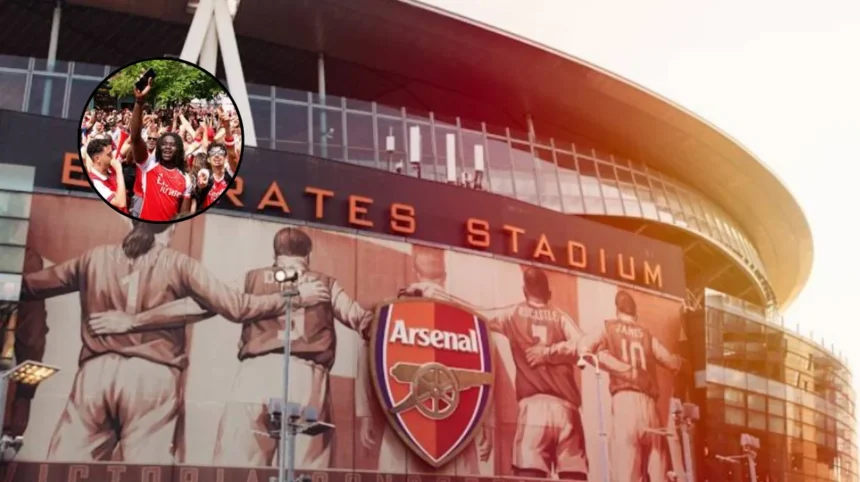
The streets of Islington were transformed into a vibrant sea of red and white on 31 May, as reports of over 1 million ecstatic Arsenal supporters gathered in North London for a historic champions’ parade.
For a club that has spent over two decades chasing English football’s ultimate prize, the afternoon was a euphoric release of twenty-two years of anxiety and suffering.
Yet, the event was also an extraordinary display of emotional resilience, coming less than twenty-four hours after an agonising European heartbreak.
What Historical Records Were Set or Extended in the Final and Parade?
Kai Havertz became just the third player in football history to score in a Champions League final for two different clubs (previously with Chelsea in 2021), alongside Cristiano Ronaldo and Mario Mandžukić. Luis Enrique earned his 3rd Champions League title, joining an exclusive group alongside Bob Paisley, Zinedine Zidane, and Pep Guardiola.
Arsenal now extend their heartbreak as the club with the most matches played in the competition (226) without ever lifting the trophy.
The parade themselves marked the end of a 22-year wait for the English league title, a moment long anticipated by generations of North London supporters.
Background of the Particular Development
The 2025–26 UEFA Champions League final was held on 30 May 2026 at the Puskás Aréna in Budapest, Hungary, with an attendance of 61,035. Daniel Siebert (Germany) served as referee, and Vitinha (PSG) was named Player of the Match. PSG became the first team since Real Madrid in 2018 to successfully defend the Champions League title.
Arsenal’s bid to win the Champions League for the first time in their 140-year history ended in heartbreak after the penalty shootout defeat.
The club had gone unbeaten throughout the tournament until the final, making the loss even more painful for fans and players alike.
The Islington parade on 31 May 2026 came after Arsenal secured the English league title, their first in 22 years, ending a long period of domestic frustration despite consistent challenges in recent seasons.
The juxtaposition of European failure and domestic triumph created a unique emotional landscape for fans, who celebrated fiercely while still processing the pain of Budapest.
Prediction: How Will This Development Affect Arsenal Fans, Players, and the North London Community?
This dual outcome – European heartbreak followed by domestic euphoria – is likely to deepen emotional attachment among Arsenal supporters while intensifying pressure on the club’s management to deliverEuropean success in coming seasons. Fans who travelled to Budapest and then immediately joined the Islington parade have demonstrated extraordinary resilience, suggesting that loyalty will remain strong regardless of future outcomes.
For Mikel Arteta and the playing squad, the contrast between the 22-year league drought finally ending and the Champions League loss will likely fuel motivation to close the European gap. The statistical dominance in defensive organisation (24.7% possession, lowest in final history) shows a tactical approach that can be refined rather than abandoned.
The North London community, particularly in Islington, has reaffirmed its identity as a home of unwavering footballing passion. The turnout of over 1 million people indicates that Arsenal’s cultural and economic impact on the area will continue growing, with local businesses and community organisations likely benefiting from sustained engagement.
In the longer term, this development may shift expectations: Arsenal fans now know they can celebrate major trophies again, but the Champions League final loss will keep the demand for European glory alive. The club’s record of 226 matches without a Champions League title may finally become a story of eventual triumph rather than perpetual near-miss, but only if the squad builds on the lessons from Budapest.