Key Points
- Licence Review: Recanto Kings, a Brazilian bar and restaurant in Willesden, faces a potential licence revocation by Brent Council following a Home Office application.
- Illegal Employment: A March 2025 raid by Immigration, Compliance and Enforcement (ICE) officers discovered two individuals working at the venue illegally.
- Unpaid Penalty: The business was issued a £40,000 civil penalty for the immigration breaches, which remains completely unpaid.
- Police Intervention: The Metropolitan Police has formally backed the licence review, citing a history of fights, open drug use, and persistent loud music.
- Protracted Complaints: Local authorities and residents have lodged numerous complaints against the venue and its management over a two-year period.
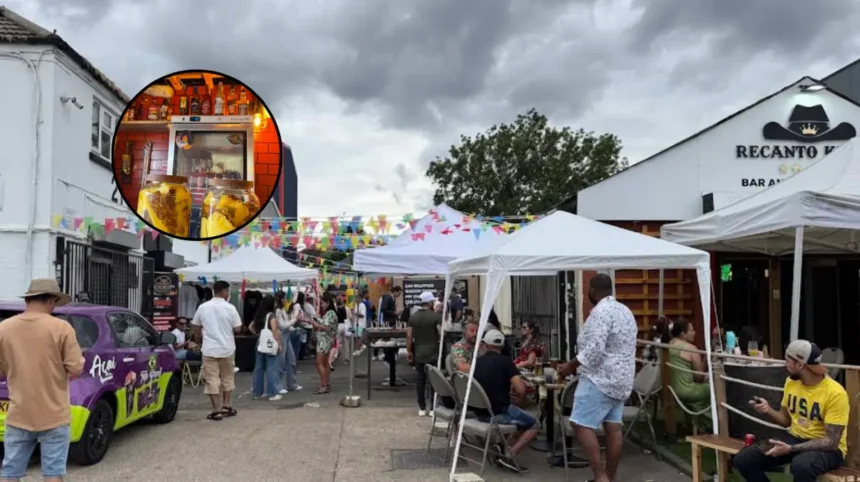
Willesden (North London News) June 5, 2026 – A north London hospitality venue is fighting to retain its premises licence after a coordinated enforcement effort by central government and local law enforcement exposed systemic regulatory failures. Recanto Kings, an established Brazilian bar and restaurant operating out of Unit 2 in the Sapcote Trading Centre on High Road, Willesden, has been put forward for a comprehensive licensing review before Brent Council’s Licensing Sub-Committee.
- Key Points
- Why is the Home Office Calling for Recanto Kings to Lose Its Licence?
- What Evidence Has the Metropolitan Police Submitted Regarding Anti-Social Behaviour?
- How Have Brent Council and Local Residents Responded to the Venue Over the Past Two Years?
- Background of the Licensing and Immigration Enforcement Framework
- Prediction: How This Development Can Affect North London Business Operators and the Local Community
- Impact on the Local Community
The review, scheduled for next week, follows an explicit demand from the Home Office to strip the establishment of its operating rights after immigration officials discovered undocumented personnel working on the premises.
The application to revoke the licence has received formal reinforcement from the Metropolitan Police Service. Law enforcement authorities submitted supporting evidence detailing a pattern of anti-social behaviour, including physical altercations, suspected narcotics consumption, and severe noise pollution emanating from the property over the last twenty-four months.
The dual pressure from immigration enforcement and local police has placed the restaurant’s management under intense legal scrutiny, with local regulatory bodies possessing the direct statutory power to permanently close the venue.
Why is the Home Office Calling for Recanto Kings to Lose Its Licence?
The institutional push to revoke the premises licence of Recanto Kings stems directly from an intelligence-led operation executed by central government personnel. In March 2025, officers from the Home Office’s
Immigration, Compliance and Enforcement (ICE) team conducted a targeted raid on the Willesden property. The operation was initiated after federal authorities received specific information alleging that the business owner was actively employing staff members who lacked the legal right to work within the United Kingdom.
During the search of the commercial kitchen and public floor spaces, ICE officers positively identified two staff members engaged in illegal employment. Following the operational protocol for right-to-work violations, the Home Office subsequently issued a £40,000 civil penalty notice to the business entity governing Recanto Kings.
According to official enforcement records submitted to Brent Council, this financial penalty remains entirely unpaid by the proprietors, further compounding the legal infractions cited by the Home Office in their formal review application.
What Evidence Has the Metropolitan Police Submitted Regarding Anti-Social Behaviour?
In addition to the statutory breaches identified by federal immigration authorities, the Metropolitan Police Service has compiled a substantial evidentiary dossier detailing chronic public safety failures at the Sapcote Trading Centre location.
Police licensing officers have confirmed that the force was repeatedly dispatched to respond to emergency calls at the venue regarding large-scale physical fights breaking out among patrons, open illicit drug use inside and immediately outside the premises, and recurring incidents of excessively loud music violating local environmental health thresholds.
The police have officially classified the venue as a persistent source of local disorder. In their formal submission to Brent Council’s Licensing Sub-Committee, police representatives stated that the management of Recanto Kings has consistently failed to uphold the core licensing objectives mandated under the Licensing Act 2003, specifically the prevention of crime and disorder, and the prevention of public nuisance.
The law enforcement documentation details a cumulative two-year timeline of community complaints and emergency call-outs that police argue can only be remedied by an immediate and total revocation of the establishment’s licence.
How Have Brent Council and Local Residents Responded to the Venue Over the Past Two Years?
The upcoming regulatory hearing is the culmination of a protracted friction point between the operators of Recanto Kings, local residents, and Brent Council’s environmental health teams.
Local administrative records indicate that a series of formal complaints have been steadily logged against the venue and its direct owners since mid-2024. Neighbors residing near the Sapcote Trading Centre have frequently cited sleeplessness and distress caused by late-night crowd dispersal, bass heavy vibrations, and structural spillover from the bar’s entertainment activities.
Brent Council’s Licensing Sub-Committee has confirmed that next week’s formal review will systematically weigh the testimonies of local residents alongside the statutory declarations provided by the Home Office and the Metropolitan Police.
The committee holds the legal mandate to choose from several regulatory pathways: they may choose to take no action, modify the conditions of the current licence, exclude a specific licensable activity, remove the designated premises supervisor, or permanently revoke the licence entirely, rendering all commercial alcohol sales and late-night entertainment at the venue illegal.
Background of the Licensing and Immigration Enforcement Framework
The enforcement action brought against Recanto Kings occurs within a broader, highly intensified regulatory environment regarding employment compliance in the United Kingdom’s hospitality sector. Under statutory frameworks reinforced by the Home Office, all UK business owners are legally required to conduct rigorous “Right to Work” verification checks before allowing employees to undertake shifts.
Failure to properly execute these checks or willfully hiring undocumented workers carries a maximum civil penalty of up to £20,000 per illegal worker for a first-time offence, a threshold that explains the £40,000 fine levied against the Willesden venue for its two undocumented workers.
Historically, immigration enforcement and local alcohol licensing operated as largely distinct legal tracks. However, modern revisions to the Licensing Act 2003 have tightly integrated the two systems.
The Home Office is now legally designated as a “Responsible Authority” in all licensing matters across England and Wales. This statutory status gives immigration officials the explicit right to trigger a complete review of a venue’s premises licence if they believe the business is being used to further immigration crime.
Concurrently, local councils and police forces have increasingly shared intelligence to clamp down on venues where minor compliance failures mask wider criminal activity or severe community disruption. When a civil penalty for illegal working goes unpaid, as is currently the case with the management of Recanto Kings, it is standard practice for the Home Office to collaborate with local police services to initiate a fast-track licence review, arguing that an unpaid fine demonstrates a fundamental refusal to cooperate with British regulatory authorities.
Prediction: How This Development Can Affect North London Business Operators and the Local Community
This high-profile regulatory action against Recanto Kings is highly likely to trigger immediate and tangible ripple effects across two specific audiences: the wider independent hospitality network in North London and the immediate residential community in Willesden.
For independent restaurant owners, pub managers, and bar proprietors operating throughout Brent and neighboring boroughs, the potential closure of Recanto Kings serves as an explicit warning regarding compliance vulnerabilities.
Business operators can expect a sharp increase in localized, unannounced inspections by both ICE teams and Brent Council licensing officers over the next twelve months.
Because the Home Office has demonstrated a willingness to pursue total licence revocation for outstanding civil penalties, local business owners will likely face much stricter scrutiny from their landlords and insurance providers.
Commercial landlords in North London may introduce harsher lease clauses regarding immigration compliance to protect their properties from being tied to high-profile closures. Furthermore, businesses that rely heavily on part-time, transient, or international staff will be forced to dedicate more administrative resources to formal electronic right-to-work verification systems to insulate themselves from devastating financial and operational penalties.
Impact on the Local Community
For the residential population of Willesden, the outcome of next week’s licensing sub-committee hearing will directly alter the local night-time economy and neighborhood safety dynamics. If the sub-committee follows the recommendations of the Home Office and the Metropolitan Police and revokes the licence, residents living adjacent to the Sapcote Trading Centre will experience an immediate drop in late-night noise pollution, public disturbance, and associated anti-social behavior.
However, the complete closure of an established ethnic business could also create a temporary commercial void within the local Brazilian diaspora community, which uses the venue as a cultural and social hub. Conversely, if the venue avoids total revocation and is instead subjected to stricter operating conditions—such as reduced operating hours, mandatory professional security personnel at the doors, and strict identity-checking protocols—the community may see a compromised outcome where the venue remains open but operates under a highly controlled, less disruptive business model.