Key Points
- Massive Seizure: Authorities have confiscated more than 10,000 counterfeit football jerseys from rogue traders operating in Camden.
- Substantial Valuation: The total estimated loss to the legitimate sports merchandise industry stands at over £775,000.
- Border Control Interventions: In the lead-up to the World Cup, the UK Border Force successfully intercepted thousands of suspected phony items, which included more than 800 replica England shirts.
- Severe Toxic Risk: Campaigners and intellectual property experts have warned that these illicit garments are frequently manufactured without regulatory oversight and may contain dangerous levels of harmful toxins.
- Financing Organized Crime: Anti-counterfeiting officials emphasized that criminals are heavily cashing in on seasonal football enthusiasm, with profits directly funding modern slavery, human exploitation, and international syndicates.
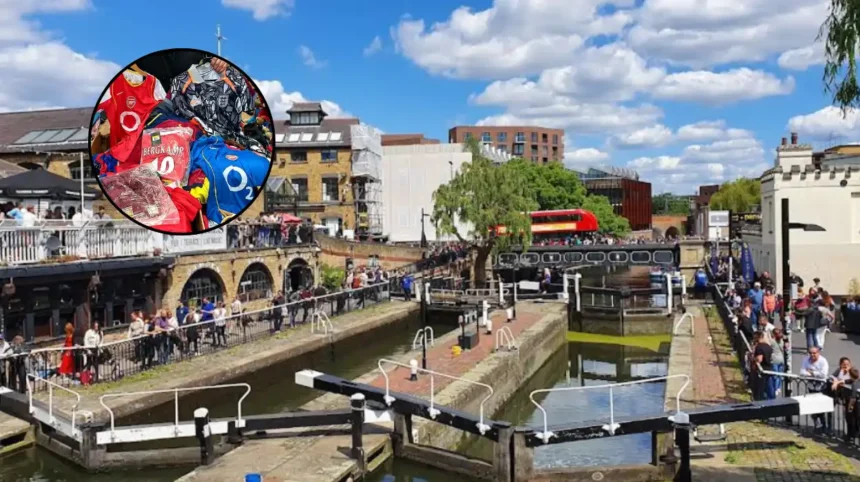
Camden (North London News) June 18, 2026 – Law enforcement agencies and trading standards officers have executed a series of major coordinated raids in North London, resulting in the seizure of over 10,000 counterfeit football kits valued at more than £775,000 from illicit traders, June 18, 2026.
- Key Points
- How Did Authorities Uncover the £775,000 Fake Football Shirt Ring in Camden?
- Why Are Officials Warning Fans That Fake Kits Pose Serious Health Risks?
- Who Is Benefiting Legally and Financially From the Sale of Counterfeit Sportswear?
- What Stance Are Intellectual Property Experts and Police Units Taking Against This Illicit Trade?
- Background of This Particular Development
- Prediction: How This Development Can Affect Football Consumers and Local Communities
- Potential Price Adjustments from Major Athletic Brands
- Enhanced Public Health Screenings and Consumer Anxiety
How Did Authorities Uncover the £775,000 Fake Football Shirt Ring in Camden?
The massive enforcement operation targeted prominent retail spaces and storage hubs across Camden following an influx of low-grade replicas entering the domestic market.
Intellectual property investigators, working alongside local authorities, identified an organized network of rogue sellers exploiting the surge in football enthusiasm ahead of major summer tournament cycles.
The physical crackdowns in Camden led to the direct confiscation of thousands of replica jerseys meticulously designed to mimic elite Premier League and international club kits. Simmering alongside municipal enforcement, a parallel border operation was carried out by the UK Border Force.
Border agents intercepted shipping consignments bound for distribution hubs, uncovering thousands of additional replica items.
Among these intercepted packages, customs officers identified more than 800 high-demand England national team shirts fabricated to deceive consumers looking for tournament merchandise.
Why Are Officials Warning Fans That Fake Kits Pose Serious Health Risks?
While consumers frequently view knockoff sportswear as a victimless financial shortcut to combat rising kit prices, safety campaigners are raising alarms regarding the physical composition of the garments.
Legitimate sportswear brands must comply with stringent textile regulations governing chemical dyes, heavy metals, and flame retardants. Conversely, counterfeit rings rely on unregulated production pipelines completely detached from health and safety inspections.
As reported by investigative journalists at Metro, modern testing on similar illicit textile hauls has routinely revealed traces of severe chemical irritants and industrial elements.
Campaigners warn that when these cheap synthetic fibers rub against sweating skin during athletic performance, the risk of dermal absorption increases significantly.
This chemical exposure can trigger severe dermatological reactions, toxic poisoning, or chronic skin conditions, transforming a budget purchase into a distinct health hazard.
Who Is Benefiting Legally and Financially From the Sale of Counterfeit Sportswear?
The financial infrastructure behind the illicit garment trade extends far beyond small-scale street peddlers in tourist markets. Intellectual property specialists stress that the highly organized nature of counterfeit manufacturing indicates that the primary beneficiaries are international criminal syndicates.
These entities minimize production costs by operating hidden factories that bypass standard labor laws, environmental regulations, and corporate tax structures.
As documented in comprehensive multi-agency reports by the City of London Police and the Intellectual Property Office (IPO), the counterfeit market is structurally intertwined with severe human rights violations. Experts have verified that the cheap labor required to churn out thousands of fake shirts is frequently sourced via forced labor, modern-day slavery, and the exploitation of vulnerable undocumented workforces.
The revenue generated from these retail operations is subsequently funneled into broader criminal enterprises, including drug trafficking, underground firearms distribution, and complex money laundering networks.
What Stance Are Intellectual Property Experts and Police Units Taking Against This Illicit Trade?
Anti-counterfeiting organizations and specialist police divisions are rapidly escalating their enforcement models, shifting from occasional market raids to tracking complex global supply networks.
The Police Intellectual Property Crime Unit (PIPCU) has continually expanded its oversight to target both physical storefronts and digital marketplaces that serve as primary portals for unauthorized goods.
As reported by senior reporters detailing the joint taskforce actions, law enforcement leaders emphasize that purchasing these items contributes directly to an economic drain on domestic communities.
Commenting on the structural impact of these seizures, Phillip Holliday, the Regional Director of Border Force Central, stated that:
“Counterfeit goods fund serious crime and harm legitimate businesses, and we will take concerted action to stop them crossing our borders by detecting and seizing them.”
Furthermore, intellectual property specialists note that the counterfeit trade actively dismantles legitimate jobs within retail and manufacturing sectors across the United Kingdom, dealing a substantial blow to the domestic economy.
Background of This Particular Development
The sprawling raid in Camden is part of a long-standing, structural battle between municipal enforcement bodies and highly organized intellectual property crime rings. Camden High Street and its historic surrounding markets have historically served as a primary battleground for trading standards officers due to the high volume of international foot traffic and dense commercial layouts.
Historically, counterfeit operations primarily revolved around luxury leather goods, watches, and high-end fashion items. However, the economic landscape shifted dramatically as major athletic brands and top-tier football clubs steadily increased the retail prices of authentic replica shirts. With official player-spec kits regularly retailing between £80 and £125, an aggressive secondary demand emerged from budget-conscious fans.
Sensing a lucrative window, specialized manufacturing syndicates shifted their infrastructure to mass-produce sports apparel. Over the past five years, the technological capabilities of these criminal rings advanced rapidly, allowing them to replicate complex holographic tags, branded embroidery, and performance fabrics with frightening accuracy.
This evolution triggered a coordinated response from the Home Office, Border Force, and private brand investigators, culminating in multi-million-pound initiatives such as Operation Vulcan in Northern distribution hubs.
The recent raid confirms that as enforcement intensifies in transit hubs and northern manufacturing centers, illicit supply chains are shifting their localized distribution models right back into major metropolitan commercial zones like North London.
Prediction: How This Development Can Affect Football Consumers and Local Communities
This major enforcement action will likely trigger a wave of direct consequences for regular sports consumers, local economies, and the broader retail ecosystem.
In the immediate future, everyday consumers will encounter significantly heightened security protocols when attempting to buy sportswear from third-party platforms. Digital marketplaces, social media selling portals, and independent street traders will face intense monitoring from automated copyright tracking systems and undercover trading standards agents.
For consumers, this means that finding low-cost, alternative merchandise options will become far more difficult as legitimate brands use these legal precedents to aggressively remove unauthorized listings.
Potential Price Adjustments from Major Athletic Brands
As the sheer scale of the counterfeit market becomes impossible to ignore—with single raids netting close to a million pounds in street value—major sporting brands face immense pressure to re-evaluate their pricing structures. While clubs will continue to pursue legal crackdowns, industry analysts suggest that the long-term solution must address the consumer demand driving the illicit trade.
To protect their market share, clubs may introduce tiered merchandise lines, making official, basic-tier replica shirts financially accessible to working-class families and younger demographic bases.
Enhanced Public Health Screenings and Consumer Anxiety
The explicit revelation that confiscated kits contain potential chemical toxins will introduce a layer of consumer anxiety into the market. Parents purchasing kits for children are expected to be far more cautious, moving away from unauthorized vendors entirely to avoid dermatological risks.
This will result in a polarized consumer base: one segment willing to absorb the premium cost of official merchandise for guaranteed safety, and another pushed further into hidden, dark-web digital channels to source affordable gear despite the highlighted health hazards.