Key Points
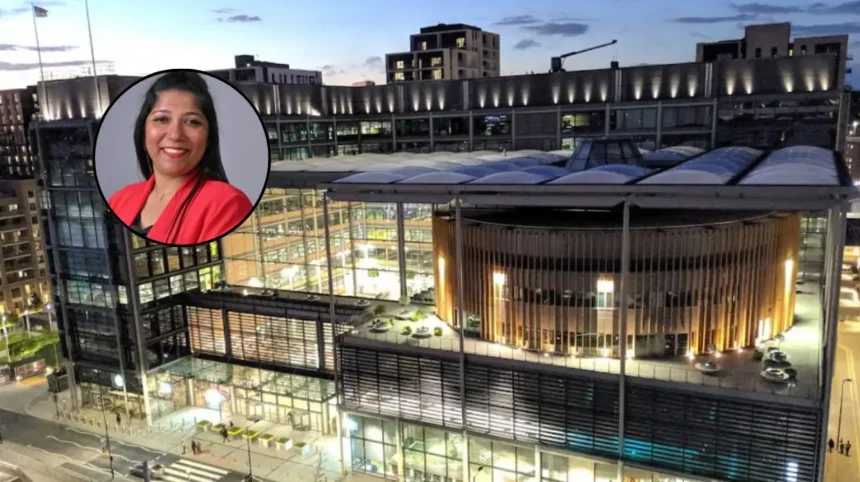
- New Appointments: Newly elected Labour Party Councillor for Wembley Hill, Angela Joyce de Souza, has been formally appointed to multiple crucial committees and sub-committees within Brent Council.
- Core Committee Roles: De Souza has assumed full membership roles on the Community & Wellbeing Scrutiny Committee, the Brent Pension Fund Sub-Committee, the Fostering Panel, and the Edward Harvist Fund.
- Substitute Positions: In addition to her permanent seats, she will act as a substitute member on the Audit & Standards Committee, the Audit & Standards Advisory Committee, and the Resources & Public Realm Committee.
- Strategic Priorities: Key focus areas highlighted by the councillor include accelerating safe foster care placements, securing ethical yet high-yield pension investments, and ensuring equitable distribution of charitable grant funding.
- Overcoming Community Barriers: Representing the Goan community, de Souza pledged to dismantle language and cultural barriers that historically prevent eligible families from accessing council support or participating in fostering programmes.
- Local Ward Focus: For her immediate constituents in Wembley Hill, de Souza committed to direct casework addressing anti-social behaviour, fly-tipping, housing access, and ongoing cost-of-living challenges.
Wembley (North London News) June 20, 2026 — Newly elected Labour Party Councillor Angela Joyce de Souza, representing the Wembley Hill Ward, has officially secured multiple strategic committee appointments within Brent Council, positioning her to directly influence public services, local government finance, and community welfare initiatives across the borough. June 20, 2026 —
- Key Points
- Which Committees Has Councillor Joyce de Souza Been Appointed To?
- What Are the Councillor’s Core Priorities for Children’s Social Care and Fostering?
- How Will local Pension Funds and Grants Be Managed Under Her Oversight?
- How Does Councillor de Souza Intend to Overcome Local Authority Challenges?
- What Steps Are Being Taken to Address Cultural and Language Barriers in Brent?
- What Are the Immediate Casework Priorities for Wembley Hill Ward?
- Background of the Brent Council Structural Oversight Development
- Prediction: How This Development Can Affect Wembley Hill Residents and the Broader Brent Electorate
Which Committees Has Councillor Joyce de Souza Been Appointed To?
In an official statement detailing her expanded legislative responsibilities, Councillor Angela Joyce de Souza confirmed her assignment to a diverse portfolio of oversight and panel seats. As reported by the political correspondent of The Goan, de Souza stated that:
“I’m honoured to serve Wembley Hill Ward and have been appointed to the Community & Wellbeing Scrutiny Committee, Brent Pension Fund Sub-Committee, Fostering Panel and Edward Harvist Fund.”
Beyond these primary assignments, the newly elected representative will also serve in a contingency capacity across the local authority’s primary financial oversight bodies. De Souza further clarified her dual responsibilities to The Goan, stating that:
“I’m also a substitute member of the Audits and Standards Advisory committee, Audit & Standards Committee and Resources & Public Realm Committee. These roles let me focus on children’s social care, local pensions, support for residents in need and holding the council to account on wellbeing, finances and public services.”
The combination of full scrutiny roles and secondary audit responsibilities grants the Wembley Hill representative significant leverage over both policy formulation and back-end fiscal management within the civic center.
What Are the Councillor’s Core Priorities for Children’s Social Care and Fostering?
The administration of local child welfare services forms a core pillar of de Souza’s new brief. Appointed to the specialist Fostering Panel, the councillor outlined a clear policy direction aimed at reducing administrative delays and enhancing support structures for domestic caretakers. As documented by The Goan, de Souza stated that:
“My priority on the ‘Fostering Panel’ is to get children in care matched with safe, supportive families as quickly as possible and make sure foster carers get the training and backing they deserve.”
The focus on matching efficiency addresses a broader, systemic issue facing local authorities nationwide: the rising time metrics involved in transitioning vulnerable children out of temporary state accommodation and into long-term, stable domestic environments.
By emphasizing robust training frameworks, de Souza aims to address retention issues among registered foster families within Brent.
How Will local Pension Funds and Grants Be Managed Under Her Oversight?
In addition to social welfare, de Souza’s position on the Brent Pension Fund Sub-Committee moves her into the sphere of local government finance and fiduciary responsibility.
Managing public pension pots requires balancing the generation of stable fiscal returns against shifting ethical demands. Outlining her strategy for the fund, de Souza told The Goan that she would:
“…push for responsible management, strong returns for members and more ethical, sustainable investment choices.”
Simultaneously, her appointment to the Edward Harvist Fund—a historical charitable trust administered by local authorities to benefit residents across specified boroughs—shifts her focus toward micro-level community funding.
De Souza emphasized the need for structural reform regarding how these resources are distributed. As reported by The Goan, de Souza stated that:
“Through the ‘Edward Harvist Fund’, I want grants to reach organisations dealing with vulnerable residents, with a fair application process that doesn’t put people off.”
How Does Councillor de Souza Intend to Overcome Local Authority Challenges?
Navigating the contemporary local government landscape requires addressing severe macroeconomic constraints.
The Wembley Hill councillor acknowledged that her appointments come at a time of heightened operational strain for Brent Council. According to the reporting by The Goan, de Souza stated that:
“I know the challenges we face: rising demand for fostering placements, pension funds dealing with market volatility and limited charitable funds that must be targeted fairly.”
To mitigate these pressures, de Souza outlined an operational methodology focused on transparency and cross-departmental collaboration rather than siloed bureaucratic decision-making. As published by The Goan, de Souza stated that:
“I’ll address these by working closely with officers, listening to carers, beneficiaries & residents and demanding transparency in every decision. As a substitute on Audit and Resources committees, I’ll keep a close eye on value for money.”
What Steps Are Being Taken to Address Cultural and Language Barriers in Brent?
Brent is historically recognized as one of the most ethnically diverse boroughs in the United Kingdom. However, structural diversity can present distinct communication challenges between the civic center and its residents.
As a visible representative of the Goan diaspora, de Souza highlighted how systemic communication failures often alienate specific demographics. As reported by The Goan, de Souza stated that:
“…she understands how language and cultural barriers can stop families from fostering or claiming support they’re entitled to.”
To resolve this gap in service delivery, the councillor pledged to use her platform to democratize access to council services, ensuring that minority communities are neither overlooked nor intimidated by administrative processes. De Souza committed to The Goan that:
“I’ll make sure residents know their options and feel welcome engaging with the council and I’ll follow up in committee till we get an update.”
What Are the Immediate Casework Priorities for Wembley Hill Ward?
While committee assignments dictate broader borough-wide policies, de Souza emphasized that localized constituent needs remain her foundational mandate.
Turning her attention to the specific environmental and economic pressures impacting the Wembley Hill constituency, she mapped out an immediate operational plan. As detailed by The Goan, de Souza stated that:
“…her focus is making the ward a cleaner, safer, and more affordable place to live.”
The councillor confirmed that she has already established active intake pipelines for local grievances, moving past campaign rhetoric into active municipal intervention. De Souza stated to The Goan that:
“I’m already receiving, reporting, and acting on resident casework, from fly-tipping and anti-social behaviour to housing and cost-of-living issues. Alongside this, my wider priorities are community safety, supporting families and young people and building stronger links between the council and residents. Brent is home and I’m here to make it better for the next generation.”
Background of the Brent Council Structural Oversight Development
The appointment of Councillor Angela Joyce de Souza to this specific matrix of committees occurs during an era of significant structural transformation for the London Borough of Brent. Over the past decade, local authorities across Greater London have faced compounding fiscal pressures resulting from reductions in direct central government funding, forcing councils to heavily rely on localized council tax and business rates.
Consequently, internal scrutiny bodies like the Community & Wellbeing Scrutiny Committee have taken on vastly expanded roles, shifting from purely advisory panels to essential defense mechanisms against municipal financial insolvency.
The management of the Brent Pension Fund has similarly entered a highly scrutinized phase. Historically, local authority pension funds operated on conservative, long-term bond-heavy strategies.
However, the combination of global market shifts and a growing mandate from electorate blocks to divest from ecologically damaging or socially irresponsible corporations has forced councils to re-engineer their portfolios.
The inclusion of newly elected, reform-minded councillors on these sub-committees reflects a broader institutional effort within Brent to modernize its financial assets while attempting to maintain high yields to cover long-term liabilities for retired municipal workers.
Concurrently, the demand for children’s social care services—particularly within the fostering ecosystem—has escalated significantly across urban centers.
The rising costs of residential care placements have forced councils to aggressively expand their network of domestic foster carers.
This background explains the acute urgency behind de Souza’s assignment to the Fostering Panel, where municipal efficiency directly correlates with both budgetary containment and statutory child welfare compliance.
Prediction: How This Development Can Affect Wembley Hill Residents and the Broader Brent Electorate
The concentration of Councillor de Souza’s committee and substitute seats will likely yield distinct, measurable impacts for her direct target audience: the residents of Wembley Hill and the diverse demographic communities across Brent.
For the immediate local electorate in Wembley Hill, de Souza’s strategic placement on both the Audit and Scrutiny committees means their localized issues—such as fly-tipping and neighborhood anti-social behaviour—will have a direct, unmediated pipeline to senior council officers. Residents can expect an increase in the speed of casework resolution.
Her focus on value for money implies that local ward budgets will face tighter efficiency audits, potentially translating into better-maintained public spaces and targeted cost-of-living support initiatives without a corresponding drop in basic municipal services.
For the wider, multi-cultural demographic of Brent—particularly the Goan and South Asian diasporas—this development is predicted to alter how marginalized groups interact with local governance.
De Souza’s explicit mandate to dismantle language and cultural barriers will likely manifest in tailored outreach programs. This is expected to cause a quantifiable uptick in the number of minority families applying for fostering licenses, which would simultaneously reduce the council’s reliance on expensive private care agencies.
Furthermore, local community groups and non-profit organizations seeking financial assistance can anticipate a streamlined, less intimidating application framework for the Edward Harvist Fund.
If her push for simplified processes succeeds, grassroots organizations addressing food poverty, youth marginalization, and elderly isolation will secure critical funding more rapidly, shifting the landscape of social support across the borough.