Key Points
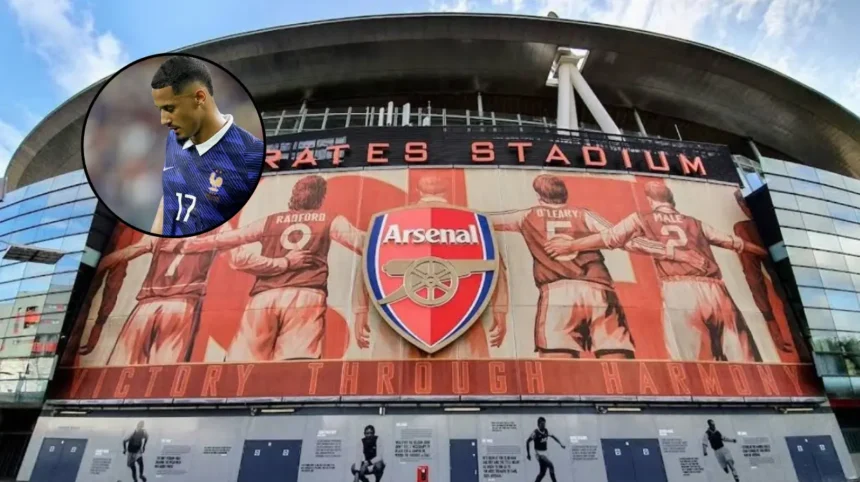
- Injury status: Arsenal defender William Saliba has been ruled out for an “extended period” after sustaining a back injury.
- World Cup impact: The 25-year-old center-back returned from international duty in North America with the injury, which forced him off during France’s semi-final match.
- No surgery required: Following consultations with a specialist in London, it was confirmed that Saliba will not undergo surgery, but must adhere to a strict recovery program.
- Player context: Saliba admitted to playing through “minor niggles” during the latter stages of the club season due to Arsenal’s high-stakes campaign and the approaching tournament.
- Heavy workload: The French international was a mainstay for both club and country over the past year, making 50 appearances for Arsenal last season.
Arsenal (North London News) July 23, 2026 – has been dealt a significant setback ahead of the upcoming campaign as key defender William Saliba has been ruled out for an extended period due to a back injury sustained while representing France at the World Cup in North America. Following his return to London for comprehensive medical evaluations, specialists confirmed that the 25-year-old center-back will not require surgery. However, he must undergo a structured rehabilitation program, leaving his return timeline uncertain as Mikel Arteta’s side prepares for domestic and European action.
- Key Points
- What lead to William Saliba’s back injury during the World Cup?
- How did medical specialists evaluate the extent of Saliba’s injury?
- How heavy was William Saliba’s workload prior to the injury?
- Background of the particular development
- Prediction: How this development can affect Arsenal Football Club and its supporters
What lead to William Saliba’s back injury during the World Cup?
As reported by football journalists covering the national team’s run in North America, Saliba sustained the injury during the international tournament, which ultimately cut his participation short.
The defender was forced off just 30 minutes into France’s high-stakes semi-final encounter against Spain after feeling severe discomfort in his back.
The issue had been building over a prolonged period. Speaking on the circumstances surrounding the injury, Saliba disclosed that he had been managing “minor niggles” for several months leading up to the summer. The defender explained that he felt nervous about stepping back from match action due to Arsenal’s intense dual pursuit of the Premier League and UEFA Champions League titles, which was immediately followed by his international commitments with France.
How did medical specialists evaluate the extent of Saliba’s injury?
Upon returning to England, Saliba underwent detailed assessments by medical specialists in London to determine the full extent of the damage to his back.
The medical advice concluded that conservative treatment rather than surgical intervention would be the safest pathway for long-term recovery.
While the decision to avoid surgery provides a positive outlook for the player’s long-term career, club medical staff have emphasized that Saliba will be sidelined for an “extended period.”
A precise return date has not been set, as the recovery schedule will depend entirely on how his back responds to the prescribed rehabilitation protocol over the coming weeks.
Explore More Arsenal FC News
Arsenal Push Record Morgan Rogers Bid After Tzolis Deal, North London 2026
Arsenal Plan Massive Squad Overhaul to Fund Transfers: London 2026
How heavy was William Saliba’s workload prior to the injury?
Saliba’s physical strain highlights the heavy fixture schedules faced by top-level players competing across multiple elite competitions.
During the previous club season, the French international was one of Arsenal’s most heavily utilized players, accumulating 50 appearances across all competitions as the club pushed deep into domestic and European title races.
That physical load continued directly into the summer tournament in North America. Saliba remained a central figure for national team manager Didier Deschamps, starting in all but one of France’s World Cup fixtures prior to his injury in the semi-finals.
Background of the particular development
William Saliba’s rise to becoming a cornerstone of Arsenal’s defense has been defined by consistency and high appearance counts since establishing himself in the starting lineup.
Since returning to North London following loan spells in France, the center-back has developed into one of the premier defenders in English football, forming a vital partnership at the heart of Arsenal’s backline.
Back injuries are not entirely unprecedented in Saliba’s career history at Arsenal. During the 2022–23 Premier League season, Saliba suffered a back injury during a UEFA Europa League fixture against Sporting CP in March 2023.
That particular injury forced him to miss the final 11 matches of the Premier League season, a period in which Arsenal ultimately conceded ground in the title race. Managing workload and physical strain has consequently been a focus for both the player and the club’s medical team, particularly given the expanding football calendar.
Prediction: How this development can affect Arsenal Football Club and its supporters
The temporary loss of William Saliba presents structural and tactical considerations for manager Mikel Arteta and Arsenal supporters as the season approaches:
- Defensive reorganisation: Arsenal’s coaching staff will need to adjust the central defensive setup. This may require shifting versatile defenders into central roles or relying on secondary defensive partnerships to maintain the team’s defensive stability.
- Squad depth and transfer strategy: Depending on the exact duration of Saliba’s rehabilitation, the club’s hierarchy may reassess their transfer market priorities or squad depth to ensure adequate coverage across the Premier League, Champions League, and domestic cup competitions.
- Managing player recovery: The medical team is expected to exercise caution regarding Saliba’s reintegration into full training to prevent any recurrence of back issues, potentially leading to a gradual reintroduction once he is fully cleared.