Key Points
- Planning Approval Granted: Camden Council’s local planning authority approved proposals to demolish the former Blitz Club site and redevelop the adjacent property.
- Location and Site History: Located at 4 Great Queen Street in Covent Garden, the building hosted the famous Blitz Club between 1979 and 1980, serving as the birthplace of the New Romantic movement.
- New Development Details: The former nightclub building will be knocked down, while the adjacent eight-storey Edwardian building, Kingsway House, will undergo refurbishment.
- Aparthotel Operator: The integrated site will feature an 80-room complex operated by Beyond Aparthotels, catering to medium-term stays ranging from one to three weeks.
- Condition of the Building: Following its closure as a nightclub, the venue operated as a strip club before falling vacant in 2022 and subsequently suffering severe fire and water damage.
- Local Opposition: The Kingsway Conservation Area Advisory Committee lodged formal objections regarding the scale and height of the replacement structure.
- Council Justification: Planning officers concluded that the “low-level” heritage harm was outweighed by the public benefit of bringing a derelict, damaged site back into active use.
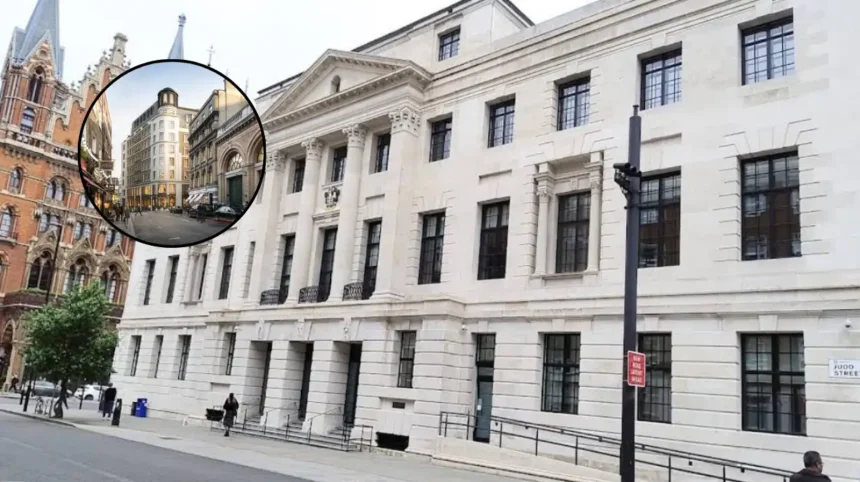
Camden (North London News) August 1, 2026 – A disused Covent Garden building that once housed the Blitz Club—the legendary birthplace of the 1980s New Romantic movement that launched the careers of Spandau Ballet and Boy George—is set to be demolished following approval from Camden Council. As reported by Local Democracy Reporter Josef Steen of MyLondon, the local planning authority greenlit proposals on Thursday, July 30, 2026, to clear the former club premises at 4 Great Queen Street and redevelop the location into a multi-room aparthotel complex. The decision marks the final chapter for a physical structure that played a pivotal role in modern British youth culture, music, and fashion.
- Key Points
- What Has Camden Council Approved for the Historic Blitz Club Site?
- What Are the Architectural and Accommodation Plans for the New Aparthotel?
- Why Did Local Conservation Groups Object to the Demolition?
- How Did the Blitz Club Shape 1980s British Music and Fashion Culture?
- What Is the Background of the Blitz Club Building and Its Development?
- How Will the Demolition and Aparthotel Development Affect Local Residents, Businesses, and Heritage Enthusiasts?
What Has Camden Council Approved for the Historic Blitz Club Site?
As reported by Local Democracy Reporter Josef Steen of MyLondon, Camden Council’s planning committee has formally granted permission for the total demolition of the former nightclub premises. The approved planning application encompasses both the demolition of the derelict club structure and the complete refurbishment of the adjoining eight-storey Edwardian building, known as Kingsway House.
According to planning documentation cited by Josef Steen of MyLondon, both structures will be combined into a single, unified development. The consolidated complex will feature 80 self-contained units operated by commercial provider Beyond Aparthotels.
The site has sat empty since 2022. Before falling completely disused, the building had transitioned from its original wine bar and nightclub identity into a strip club. Over recent years, the structure suffered extensive fire and water damage, leaving the interior in a severe state of repair and decay.
What Are the Architectural and Accommodation Plans for the New Aparthotel?
As detailed by Josef Steen of MyLondon, the approved scheme introduces an “aparthotel” model to the Covent Garden location. This commercial accommodation format provides fully furnished, self-contained apartment units equipped with individual kitchenettes alongside standard hotel amenities and guest services.
According to statements from the site operator referenced in the planning filings, the accommodation is specifically designed to target visitors seeking longer stays than those accommodated by traditional, transient hotels. Beyond Aparthotels projects that the primary commercial demand for the venue will consist of medium-term bookings lasting between one and three weeks, particularly over weekend periods.
The local planning authority clarified that while the units closely resemble standard residential apartments, the complex remains designated strictly as commercial visitor accommodation and will not contain permanent residential housing.
Why Did Local Conservation Groups Object to the Demolition?
As reported by Josef Steen of MyLondon, the planning proposal faced formal opposition from local community representatives prior to council approval. The Kingsway Conservation Area Advisory Committee submitted official objections to Camden Council regarding the proposed teardown and rebuild.
In their formal submission, representatives from the advisory committee argued that the proposed replacement building was excessive in scale, mass, and height for the immediate surrounding streetscape. The committee further maintained that despite its deteriorated physical condition, the historic club structure made a positive contribution to the character and appearance of the conservation area.
However, as highlighted by Josef Steen of MyLondon, planning officers at Camden Council concluded that any heritage impact caused by the replacement structure’s height and bulk constituted “low-level” harm. The council ruled that this harm was sufficient to be counterbalanced and outweighed by the practical benefits of regenerating a vacant, fire-damaged derelict site and returning it to active economic use.
How Did the Blitz Club Shape 1980s British Music and Fashion Culture?
As documented by curators at the Design Museum, the Blitz Club is widely recognized as the location “where 1980s style began”. Operating as an exclusive Tuesday night event between 1979 and 1980 at 4 Great Queen Street, the club was co-founded by Steve Strange and DJ Rusty Egan. Inspired by David Bowie, cabaret culture, punk, and soul music, the venue fostered the rise of the New Romantic subculture.
According to historical records from the London Museum, the venue was famously selective regarding entry. Co-founder Steve Strange strictly enforced a door policy that rejected anyone who was not dressed as “a walking piece of art,” famously holding up a hand mirror to prospective patrons in line.
During its 18-month operational lifespan, the venue acted as an incubator for premier British creative talent:
- Musical Acts: Pop group Spandau Ballet performed their first live show at the venue, while artist Boy George worked as the coat check attendant before reaching international stardom. Band Visage also launched directly out of the scene.
- Fashion and Design: The club became a crucial proving ground for fashion designers, including Stephen Linard and the founders of the influential 1980s label BodyMap.
- Regular Patrons: Frequent visitors—known collectively as the “Blitz Kids”—included musicians Marilyn, Siobhan Fahey, milliner Stephen Jones, and broadcaster Robert Elms.
What Is the Background of the Blitz Club Building and Its Development?
Originally constructed in the heart of Covent Garden within the London Borough of Camden, 4 Great Queen Street initially functioned as a World War II-themed wine bar before being hired out on Tuesday evenings by Steve Strange and Rusty Egan in 1979. The venue’s dark, atmospheric interior provided an accessible, low-cost platform for art and fashion students from nearby institutions, including Saint Martin’s School of Art and Central School of Art and Design, to display experimental attire.
Following the end of the Tuesday night events in 1980, the location shifted away from mainstream cultural prominence. Over the subsequent decades, the building underwent various commercial operational changes, eventually functioning as an adult entertainment venue and strip club. By 2022, operations at the address ceased entirely, leaving both 4 Great Queen Street and the neighboring Edwardian office building, Kingsway House, completely unoccupied.
During its vacancy between 2022 and 2026, the unprotected building suffered significant degradation due to internal fires and environmental exposure. Water damage further compromised the structural integrity of the interior framework. With the site falling into advanced dereliction, commercial property developers submitted redevelopment plans to Camden Council to clear the degraded structure, refurbish Kingsway House, and repurpose the land for modern commercial tourism accommodation.
Explore More Camden Council News
Camden High Street car‑free plan consultation in Camden Town 2026
Camden Planning: Tottenham Court Road Hotel & British Museum Upgrades, London 2026
How Will the Demolition and Aparthotel Development Affect Local Residents, Businesses, and Heritage Enthusiasts?
The redevelopment of 4 Great Queen Street is expected to exert distinct impacts across different local interest groups within the Camden and Covent Garden area:
1. Local Residents and Neighborhood Character
For residents living in the immediate vicinity of Great Queen Street and Kingsway, the replacement of a fire-damaged derelict building removes an urban eyesore and potential public safety hazard. However, as highlighted by the Kingsway Conservation Area Advisory Committee, residents may experience spatial changes due to the increased height and massing of the new structure. The transition from an unoccupied venue to an 80-room commercial facility will also lead to an increase in foot traffic and delivery vehicle movements in the surrounding streets.
2. Local Business and Tourism Economy
The introduction of Beyond Aparthotels is anticipated to generate positive economic spillovers for surrounding commercial enterprises. Because aparthotels cater to guests staying between one and three weeks, local businesses—including restaurants, retail stores, theaters, and transport services—are likely to see increased regular patronage from medium-term visitors residing on the street.
3. Pop Culture and Cultural Heritage Enthusiasts
For music historians, fashion researchers, and pop culture enthusiasts, the physical demolition of the Blitz Club venue represents the permanent loss of a key tangible landmark associated with post-punk and New Romantic history. While physical artifacts and recorded media from the Blitz era remain preserved in institutions such as the Design Museum and London Museum, the removal of the original building closes a physical connection to the 1980s cultural revolution in London.