Key Points
- Laura Johnson, a former director of housing at the Royal Borough of Kensington and Chelsea when the 2017 Grenfell Tower fire occurred, has taken a permanent senior role at The Barnet Group.
- Johnson is now group director of development and property at The Barnet Group, the council-owned arms-length management organisation that operates Barnet Homes.
- The role was advertised through Guardian Jobs with a salary of up to £157,078, depending on experience. More than 100 applicants clicked to apply.
- The Grenfell Tower Inquiry found that Johnson had previously called for works to be retendered on cost grounds, which led to combustible cladding being installed, and had delayed the installation of fire door self-closing mechanisms.
- Barnet Council said Johnson was appointed “on merit as the strongest candidate” and pointed to her role in securing a C1 rating from the Regulator of Social Housing in 2025.
- Grenfell survivors’ group Grenfell United criticised the continued employment of officials linked to the disaster in housing organisations, describing it as a “slap in the face”.
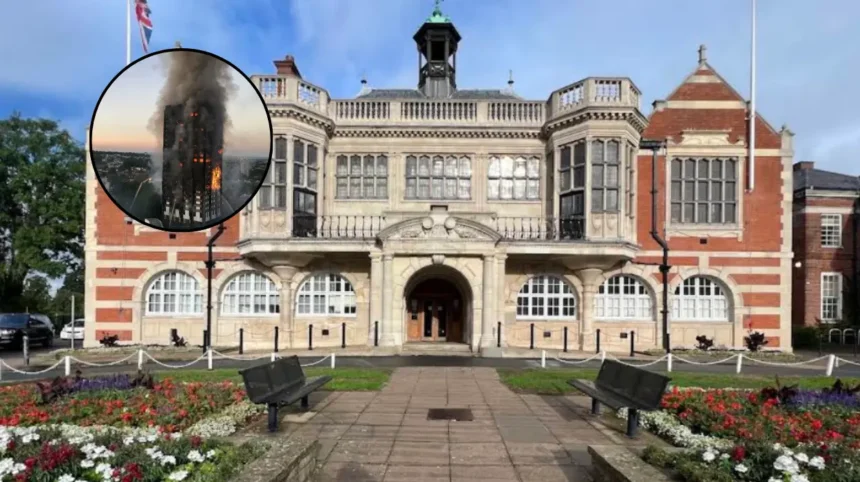
Barnet (North London News) August 25, 2026 – A former housing director criticised for her role in the lead-up to the 2017 Grenfell Tower fire disaster has been permanently appointed to a high-profile executive role by Barnet Council, following an initial temporary placement. As reported by Joe Ives, Local Democracy Reporter, Laura Johnson has secured the position of group director of development and property at The Barnet Group, the local authority’s wholly owned parent company managing more than 14,000 residential council properties across the borough through Barnet Homes. Johnson, who previously served as director of housing at the Royal Borough of Kensington and Chelsea (RBKC) from 2009 until after the incident, was appointed permanently after serving as an interim senior housing officer since June 2024.
- Key Points
- Why Has the Permanent Appointment of Laura Johnson Caused Controversy?
- How Was the Recruitment Process for the £157,000 Role Conducted?
- How Have Grenfell Survivors and Barnet Council Responded?
- Background of the Grenfell Tower Inquiry and Council Housing Governance
- Prediction: How This Development May Affect Social Housing Tenants and Local Governance
Why Has the Permanent Appointment of Laura Johnson Caused Controversy?
The decision to install Laura Johnson permanently into a senior executive housing position has attracted significant scrutiny due to her previous tenure at Kensington and Chelsea during the Grenfell Tower tragedy. On 14 June 2017, a high-rise fire at the North Kensington tower block resulted in the deaths of 72 residents.
Findings from the official Grenfell Tower Inquiry established that Johnson played a pivotal administrative role in the refurbishments preceding the disaster. As reported by Joe Ives of the Local Democracy Reporting Service (LDRS), the inquiry revealed that Johnson intervened to demand that original refurbishment works at Grenfell Tower be retendered due to high financial costs. The retendering process was subsequently awarded to a contractor on a “value for money” basis, which ultimately led to replacing original metal cladding specifications with cheaper, highly combustible plastic aluminium composite panels that accelerated the spread of the flame.
Furthermore, evidence presented to the public inquiry demonstrated that Johnson slowed down the installation of self-closing mechanisms on fire doors throughout Grenfell Tower, citing “financial and practical reasons”. The inquiry also noted that prior to the tragedy, Johnson “failed to give sufficient weight” to critical fire safety guidance issued by the London Fire Brigade.
How Was the Recruitment Process for the £157,000 Role Conducted?
According to investigation details gathered by LDRS reporter Joe Ives, the post was publicly listed via Guardian Jobs prior to Johnson securing the permanent title. The recruitment listing advertised an annual salary package reaching up to £157,078 based on qualifications and experience.
The advert highlighted that “over 100 people clicked apply” for the vacant executive position, which had a application deadline of 7th June and held final candidate interviews on 1st July. Promotional materials attached to the advert stated: “This is an exciting time to join The Barnet Group,” adding that the council-run organisation had “blazed a trail” in innovation and expansion across regional care, housing, and property development sectors.
Despite the formal conclusion of the interview process, no official public announcement detailing Johnson’s appointment was posted on The Barnet Group’s public website at the time of reporting or when LDRS journalists requested clarification from local authority officials.
How Have Grenfell Survivors and Barnet Council Responded?
The broader ongoing employment of former Kensington and Chelsea housing officials across municipal housing authorities has drawn criticism from advocacy groups representing those affected by the 2017 fire.
As reported by The Guardian, a spokesperson for advocacy organisation Grenfell United previously condemned the systemic lack of accountability across local government sectors, stating: “The fact that some of the people involved are still working in housing is a slap in the face to every survivor and bereaved family.” The group further highlighted what they termed a “deep and bitter injustice” that multiple senior personnel criticised during official inquiry proceedings continue to obtain senior sector roles with “no consequences for decisions that cost lives”.
In response to direct inquiries from reporter Joe Ives regarding Johnson’s suitability and selection process, a spokesperson for Barnet Council stated:
“The role of group director of development and property at The Barnet Group was publicly advertised and attracted a competitive field of candidates. A robust recruitment process was undertaken to assess applicants against the requirements of the role, and Laura Johnson was appointed on merit as the strongest candidate, and she has subsequently been appointed to the role on a permanent basis. Barnet Homes and Barnet Council will not discuss matters relating to members of staff which took place during previous employment.”
The council spokesperson further emphasised the borough’s current safety performance metrics, adding:
“Our thoughts remain with the survivors and family and friends of all those affected by the tragic Grenfell Tower fire. The safety and wellbeing of our residents is our top priority. Following an inspection in 2025, Barnet Council received a C1 grading from the Regulator of Social Housing, the highest possible rating for landlords of social housing. Laura Johnson played an intrinsic role in securing this rating, placing Barnet Homes among the top tier of social housing providers in the capital.”
The spokesperson concluded that regulatory assessors found the council and Barnet Homes maintained a complete understanding of overall property conditions while taking necessary steps to meet statutory health and safety rules.
Background of the Grenfell Tower Inquiry and Council Housing Governance
The official Grenfell Tower Inquiry was established by the UK government to investigate the physical, managerial, and regulatory circumstances surrounding the fire on 14 June 2017. Over several years of hearings, the Phase 1 and Phase 2 reports examined systemic failures across local government management, tenant communication failures, testing standards, and contractor cost-cutting measures.
The Royal Borough of Kensington and Chelsea (RBKC) and its Tenant Management Organisation (KCTMO) faced criticism throughout the proceedings regarding their oversight of tenant safety warnings and asset management. The inquiry documented how procurement decisions aimed at cost containment directly influenced material choices, including the selection of combustible rainscreen cladding and insulation products.
Following the disaster, arms-length management organisations (Almos) and local authorities across the United Kingdom underwent structural reforms under the Regulator of Social Housing and the Building Safety Act. These regulatory frameworks introduced stricter oversight standards, leading to inspection rankings such as the C1 grade awarded to top-performing social landlords.
Explore More Barnet News
Man Admits Arson Attack on Memorial Wall in Golders Green 2026
Barnet Council Validates New Local Planning Applications, Barnet 2026
Prediction: How This Development May Affect Social Housing Tenants and Local Governance
The permanent appointment of Laura Johnson to a senior executive role overseeing 14,000 properties in Barnet is likely to have notable impacts on key stakeholder groups, particularly local council tenants, social housing advocacy groups, and municipal housing administrators.
- Impact on Social Housing Tenants and Resident Associations: For council tenants within the Borough of Barnet, the appointment may cause apprehension regarding oversight and safety prioritization, given the historical context established by the Grenfell Tower Inquiry. While Barnet Council maintains a high C1 regulatory grading, resident advocacy groups may increase their independent scrutiny of building management contracts, fire door maintenance schedules, and procurement decisions to ensure safety standards remain uncompromised by cost considerations.
- Impact on Local Government Recruitment and Public Policy: The decision to appoint high-profile officials criticised in public inquiries based strictly on technical “merit” and post-disaster performance metrics highlights an ongoing policy debate within British public administration. Other municipal councils and public service bodies may face heightened pressure from housing activists and parliamentarians to institute formal vetting criteria or ethical employment frameworks regarding senior appointments following major public inquiries.