Key Points
- Industrial Action Resolved: Approximately 1,500 bus drivers across eight depots in North London and Essex voted to accept a new deal, officially calling off planned strike action set to begin on 7 September 2026.
- Air Conditioning Retrofit: Operator Arriva North London and Transport for London (TfL) confirmed they will install full cab air-conditioning across the fleet of around 730 buses by May 2027, replacing inadequate air-cooling units.
- The 35-Minute Rule: Pending retrofits, diesel and hybrid buses with non-functioning temperature controls must return to the garage after a maximum of 35 minutes of driving.
- Mandatory Defect Repairs: Defective heating or cooling systems must be fully repaired before a vehicle can be reallocated, ending the practice of passing faulty buses to other drivers.
- Active Strike Mandate: Union Unite will maintain its industrial action mandate active for 11 months to ensure Arriva and TfL stick to the timetable and audit commitments.
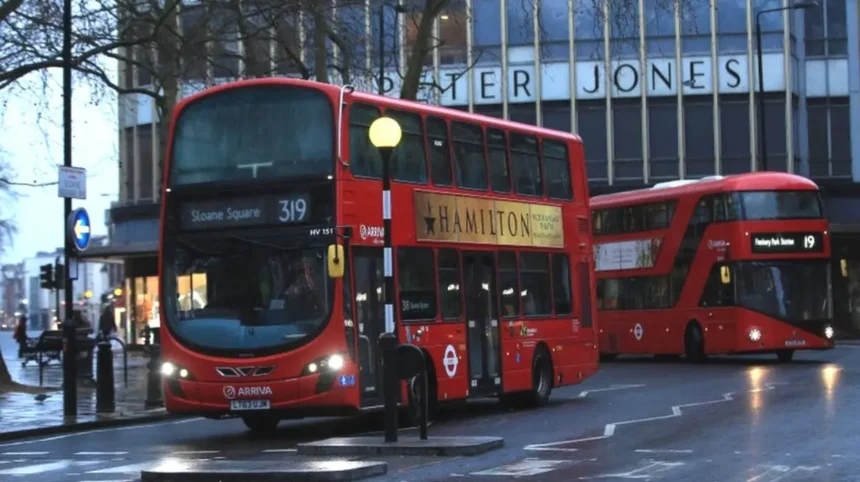
North London (North London News) September 8, 2026 — As reported by Joanna Partridge of The Guardian, approximately 1,500 bus drivers represented by trade union Unite across North London and Essex have called off planned strike action after voting to accept a deal with operator Arriva North London. The dispute centered on dangerous working conditions caused by excessive heat inside driver cabs, where temperatures reportedly exceeded 30°C and reached as high as 48.5°C to 50°C during heatwaves. Industrial action had previously impacted 42 bus routes across eight depots, including Barking, Edmonton, Enfield, Grays, Palmers Green, Stamford Hill, Tottenham, and Wood Green.
Following intensive negotiations between Unite, Arriva, and Transport for London (TfL), drivers approved the package, which includes both long-term fleet upgrades and immediate protective measures. The agreement averts further rolling walkouts scheduled through September and October 2026.
What Are the Key Terms of the Arriva and TfL Agreement?
As detailed in an official press release published by Unite the Union, the cornerstone of the agreement is a joint commitment by Arriva and TfL to replace existing air-cooling systems with full air-conditioning units across Arriva London North’s fleet by May 2027.
As noted by The Guardian‘s Joanna Partridge, existing air-cooling systems were only capable of lowering cab temperatures by 2°C to 3°C, leaving drivers exposed to severe thermal stress, dehydration, heat exhaustion, and fatigue.
According to additional details published by The Daily Express, the agreement introduces an immediate operational change known as the “35-minute rule”. Under these terms, if a diesel or hybrid bus has a non-functioning cooling or heating system, the driver is only required to complete up to 35 minutes of their route before returning the vehicle to the depot. This standard replaces the prior practice requiring drivers to remain on duty for up to an hour in freezing conditions, or to “sweat it out” during extreme heatwaves. For electric vehicles, the 35-minute grace period does not apply, as EV climate systems reach effective temperatures within minutes.
Furthermore, as stated by Onay Kasab, National Lead Officer at Unite, the deal addresses historical maintenance failures:
“The agreement stipulates that any vehicle with a defect on the cooling or heating system must be repaired before returning to service. This will end the current situation where defective buses are returned only to be allocated to another driver.”
What Have Union Leaders and Arriva Said About the Settlement?
As quoted by MyLondon, Sharon Graham, General Secretary of Unite the Union, hailed the agreement as a significant milestone for public transport safety:
“Unite will leave no stone unturned to fight for workers. Thank you to all our members at Arriva North who stood together to achieve this landmark win. Unite is determined that the conditions of bus drivers are improved in London and beyond. We expect bus operators to treat workers with dignity and respect and will be ensuring that this happens.”
Onay Kasab added in statements published by Enfield Dispatch:
“This is an excellent win for our members, who stood together on picket lines to fight for and win an agreement that means that drivers are not simply expected to sweat it out. We have secured an agreement with concrete immediate measures, ongoing action to ensure repairs are carried out in a timely fashion and a target for fitting all buses with air conditioning.”
As reported by Dag Tirsén for The Militant, union branch representatives highlighted how large, slanted glass windscreens in modern buses act as greenhouses, trapping solar radiation and driving cab temperatures to dangerous heights. Tara Nash, secretary for the Unite branch at the Enfield depot, noted:
“Some drivers have faced 48.5 degrees Celsius on the bus, and in the winter there is poor heating. The bosses have got away with this too long, but not anymore. There has been massive support for our fight. Passengers know that we are fighting for them as well—they are suffering from the same heat as us.”
An official spokesperson for Arriva London previously maintained that worker health remains a top priority, stating during earlier balloting:
“The safety and wellbeing of our colleagues and customers will always be our highest priority and measures have been introduced this summer to help drivers cope with extreme heat, while we are also investing in air conditioning upgrades for driver cabs across our London fleet.”
Background of the North London Bus Dispute
The dispute began following rising temperatures across the UK, which exposed severe deficiencies in public transport ventilation systems. In August 2026, 1,500 drivers across eight garages voted by a 96 percent majority to authorize industrial action over occupational health concerns.
As chronicled by the World Socialist Web Site (WSWS), initial strikes took place on 14 and 18 August 2026, disrupting dozens of London bus routes. A provisional offer put forward by Arriva in mid-August was rejected by 587 votes to 501 after drivers expressed concern that promised retrofits lacked binding completion dates. Strikes resumed between 25 and 28 August, with further industrial action scheduled through October 2026 before the latest agreement was reached.
Prediction: How Will This Development Affect London Passengers and the Transport Sector?
This agreement carries implications for public transport workers, transport operators, and the commuting public across Greater London and the broader United Kingdom:
- For Bus Passengers: Commuters across North London and Essex gain immediate relief from service disruptions following the cancellation of planned autumn strikes. However, passengers may see temporary, minor service interruptions when diesel or hybrid buses trigger the “35-minute rule” and return to garages mid-route due to climate control failures. In the longer term, fleet-wide air conditioning will improve cabin comfort for passengers as well as drivers.
- For Transport Operators: The settlement sets a legal and operational precedent for bus operators across the UK. Private firms operating within TfL’s franchised network—such as Go-Ahead, Stagecoach, and Metroline—face increased pressure to upgrade their driver cabs to full air conditioning rather than relying on basic air-cooling units.
- For Industrial Relations and Climate Policy: By retaining an active strike mandate for 11 months, Unite maintains leverage over Arriva to ensure compliance with bi-weekly audit checks. Furthermore, as climate change increases the frequency of summer heatwaves in the UK, union strategies are shifting toward establishing high temperature limits under health and safety legislation, forcing transport authorities to adapt working conditions to extreme weather.