Key Points
- Kilburn High Road station experienced an emergency structural collapse resulting in the closure of the station.
- One section of the station front and ceiling fell into the pavement outside.
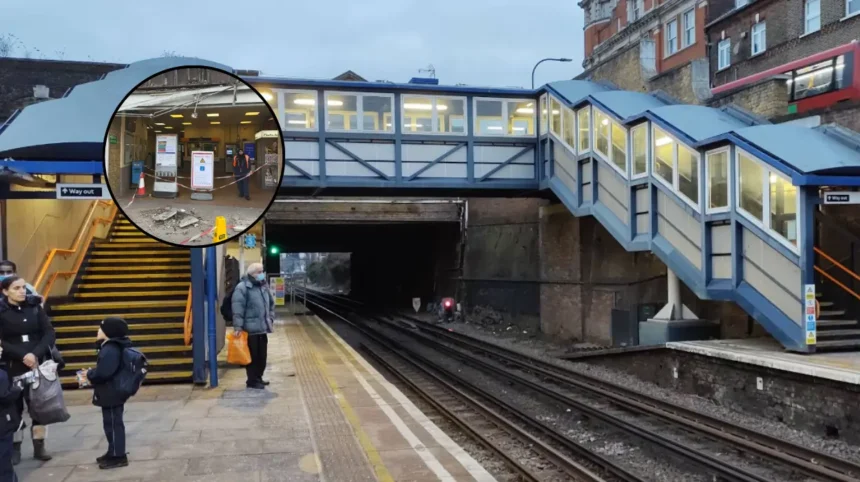
- Debris was evident in the area of the entrance, necessitating a safety cordon.
- Transport for London made arrangements to accept tickets on the local buses.
- The station was finally reopened around 12:00 pm.
Kilburn (North London News) September 16, 2026 – As reported by Grant Williams of the Kilburn Times, an emergency ceiling and frontage collapse forced the temporary closure of Kilburn High Road station. The incident took place during the morning, leading to visible debris and structural damage directly outside the main entrance, which was subsequently cordoned off while maintenance crews and emergency repairs were carried out.
The station facade, which according to local reports had been shrouded in scaffolding for several months prior to the incident, suffered a sudden structural failure that dropped materials onto the pavement below. Transport for London (TfL) confirmed that emergency travel measures were activated swiftly, allowing passenger tickets to be accepted on local London Buses while access to the station platforms remained unsafe.
Local community media group @LifeInKilburn on X (formerly Twitter) shared updates from the scene, stating that “Kilburn High Road station closed after the collapse of some of its frontage onto the pavement”. The social media post highlighted that the building frontage had been under scaffolding for months prior to the sudden failure. Following safety inspections and the clearing of fallen structural materials, the station was officially cleared to reopen to rail passengers at approximately 12:00 pm. Transport for London was approached by reporters for further detail on the cause of the failure.
What is the historical background of infrastructure works at Kilburn High Road?
Kilburn High Road station serves as a key stop on the London Overground network between Euston and Watford Junction. The facility occupies a dense urban location surrounded by Victorian-era architecture and high-density commercial properties along the main thoroughfare of North West London.
Due to the age of the building stock across the railway corridor, ongoing maintenance works and temporary scaffolding setups have been a common feature at the site. The presence of scaffolding around the frontage in the months leading up to September 2026 formed part of routine upkeep and structural monitoring programs designed to preserve historic transit buildings across London’s transport infrastructure network.
How will this structural collapse affect North London commuters and local businesses?
This unexpected infrastructure failure and temporary closure directly affect several primary stakeholder groups in North London:
- Daily Commuters: Passengers who rely on the London Overground service between Euston and Watford Junction face potential uncertainty regarding station reliability. Whilst alternative travel via TfL buses managed the immediate disruption, ongoing works or secondary inspections may impact peak-time travel schedules.
- Local High Street Merchants: Businesses operating immediately adjacent to Kilburn High Road station rely heavily on steady footfall from rail commuters. Cordoned entrances and maintenance barriers can temporarily restrict pedestrian flow along the pavement, reducing foot traffic to nearby retail units.
- Property Owners and Transport Managers: Property managers overseeing older, heritage transport assets along North London’s rail lines will likely face increased scrutiny regarding long-term scaffolding installations and structural integrity assessments. The event highlights the necessity of thorough safety audits during ongoing external building works.