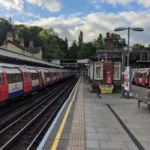
Barnet is one of north London’s largest boroughs and has an extensive London Underground network. The London Borough of Barnet has 13 Underground stations, and every one of them is served by the Northern line. These stations connect different parts of the borough with central London and neighbouring districts.
- How many Underground stations are in the London Borough of Barnet?
- Which Underground station is closest to Barnet town?
- Which Northern line stations serve the High Barnet branch?
- Which Underground station serves Mill Hill?
- Which Underground stations serve the western side of Barnet?
- How does the Northern line connect Barnet with central London?
- Which Barnet Underground stations are useful for tourists?
- Are Barnet Underground stations connected to other London transport?
- What should visitors know before using the Tube in Barnet?
- Why is Barnet’s Underground network important for the borough?
The stations are distributed across three Northern line branches. The High Barnet branch serves the central and eastern parts of the borough. The Mill Hill East branch provides a single Underground station at Mill Hill East. The Edgware branch serves the western side of Barnet.
This distinction matters because High Barnet Underground Station is the station directly associated with Barnet town, while many other stations serve different Barnet neighbourhoods. A visitor searching for transport to Barnet therefore needs to identify both the destination and the surrounding neighbourhood.
How many Underground stations are in the London Borough of Barnet?
The London Borough of Barnet has 13 London Underground stations, all served by the Northern line. They cover High Barnet, Mill Hill, Finchley, Hendon, Colindale, Burnt Oak, Edgware, Golders Green and Brent Cross, creating extensive north London connections.
Barnet Council identifies 13 London Underground stations within the borough. The network is entirely part of the Northern line, although the stations are spread across different branches.
The 13 stations are:
High Barnet, Totteridge & Whetstone, Woodside Park, West Finchley, Finchley Central, East Finchley, Mill Hill East, Golders Green, Brent Cross, Hendon Central, Colindale, Burnt Oak and Edgware.
This makes the Underground an important part of Barnet’s transport structure. The stations connect residential districts, town centres, employment areas, shopping destinations and leisure locations with central London.
The Northern line provides direct routes towards major destinations including Camden Town, Euston, King’s Cross St Pancras, Tottenham Court Road, Leicester Square, Charing Cross, Embankment and Waterloo.
For tourists, the network provides several ways to enter Barnet depending on the attraction or neighbourhood being visited. For residents, it provides access to central London without requiring a change for many destinations.
Barnet’s Underground network also has a strong relationship with local bus services. Buses provide onward connections from stations into residential streets and areas located farther from the Tube.
Which Underground station is closest to Barnet town?
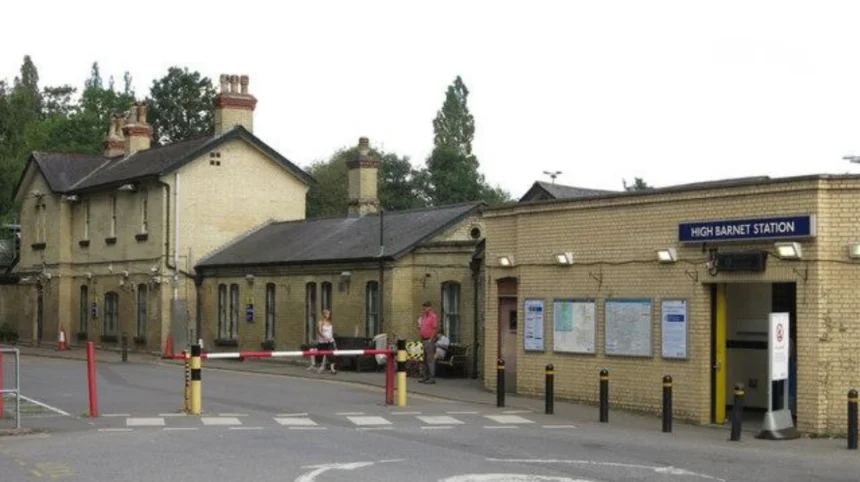
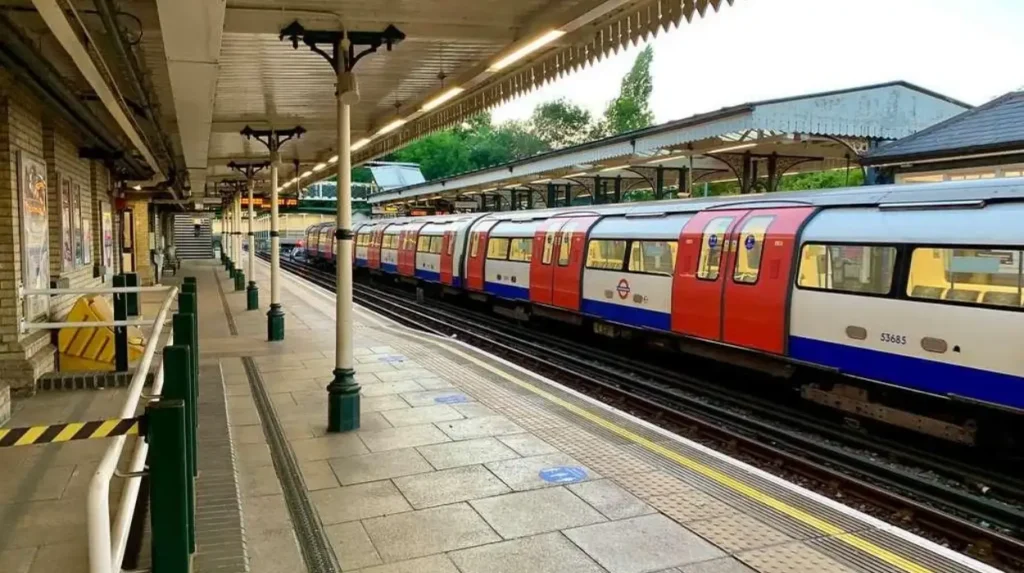
High Barnet Underground Station is the principal Tube station for Barnet town. It stands on Barnet Hill and forms the northern terminus of the High Barnet branch of the Northern line, serving central Barnet and surrounding neighbourhoods.
High Barnet Underground Station is the most relevant station when a journey is described simply as travelling to Barnet.
Transport for London lists the station address as Barnet Hill, Barnet, Hertfordshire, EN5 5RP. The station is the northern terminus of this Northern line branch.
The station provides direct southbound services towards central London. Trains travel through Totteridge & Whetstone, Woodside Park, West Finchley, Finchley Central and East Finchley before continuing towards Highgate and central London.
High Barnet is also close to Barnet town centre and the historic commercial core around High Street. Visitors using the station can therefore combine Underground travel with walking around the town centre.
The station is particularly useful for visitors exploring Barnet’s historic streets, independent shops, restaurants, cafés and local cultural attractions.
The location also makes High Barnet a practical starting point for exploring the wider area. Bus connections extend the reach of the station into surrounding neighbourhoods.
As you explore the modern transport network, you are crossing an area with centuries of local heritage. Read about the full [Insert Anchor Text for Barnet History Article Here] to understand its origins.
Which Northern line stations serve the High Barnet branch?
The High Barnet branch includes High Barnet, Totteridge & Whetstone, Woodside Park, West Finchley, Finchley Central and East Finchley. These stations form a continuous Northern line corridor through several established north London neighbourhoods within Barnet.
The High Barnet branch is one of the principal Northern line routes through the borough.
Travelling south from High Barnet, the sequence is:
High Barnet → Totteridge & Whetstone → Woodside Park → West Finchley → Finchley Central → East Finchley.
Transport for London’s timetable information confirms this station sequence on services travelling from High Barnet towards central London.
High Barnet
High Barnet is the northern terminus and the principal Underground station for Barnet town. Its position makes it particularly relevant to visitors searching for the historic Barnet area.
Totteridge & Whetstone
Totteridge & Whetstone serves the Whetstone and Totteridge area. The station is located on Totteridge Lane and has direct Northern line services towards High Barnet and central London.
The surrounding area includes Whetstone High Road, local shops and services. It also provides access to the wider Totteridge area.
Woodside Park
Woodside Park station serves Woodside Park and nearby parts of North Finchley. Transport for London lists its address as Woodside Park Road, London, N12 8SE.
The station has a car park, waiting facilities, ticket halls and Wi-Fi. It is also connected to local bus services.
West Finchley
West Finchley station is positioned on Nether Street and serves the West Finchley area. It sits between Finchley Central and Woodside Park on the High Barnet branch.
Its location makes it useful for local residential areas and North Finchley connections.
Finchley Central
Finchley Central is an important interchange point within the northern part of the Northern line because the route divides towards High Barnet and Mill Hill East.
Transport for London lists the station on Regents Park Road, N3 2RY.
East Finchley
East Finchley is the southernmost of the six stations on this Barnet branch before the route continues towards Highgate and central London. The station is on High Road, N2 0NW.
The area combines residential streets, local businesses and access to north London destinations.
Which Underground station serves Mill Hill?
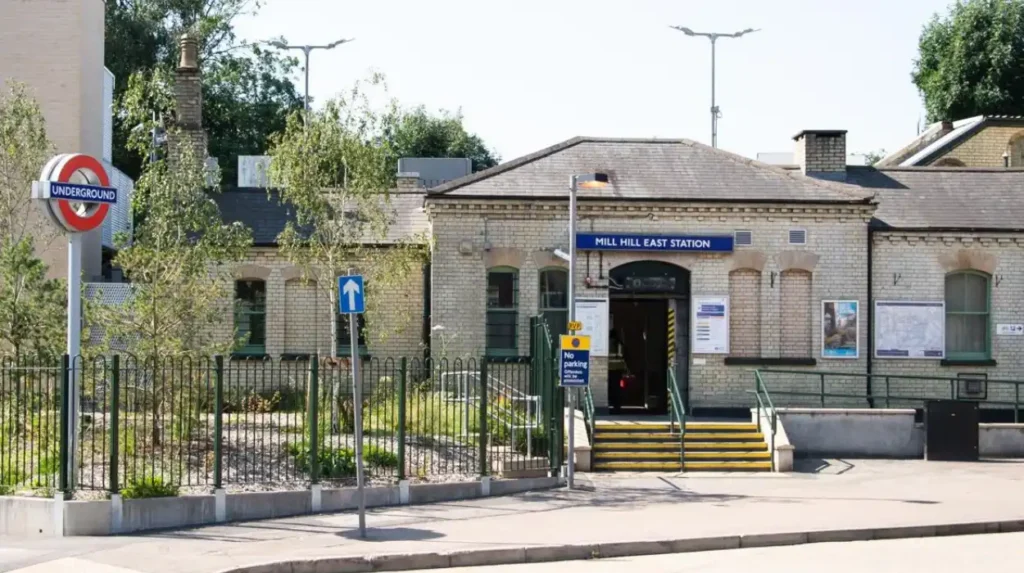
Mill Hill East Underground Station is the only Underground station on the Mill Hill East branch and serves the Mill Hill area of Barnet. It connects with the Northern line through Finchley Central, providing access to High Barnet and central London.
Mill Hill East is unusual within Barnet’s Underground network because it forms a short branch from Finchley Central.
Passengers travelling from central London can use a northbound Northern line service towards Finchley Central and then transfer to a Mill Hill East service when required.
Transport for London’s timetable information shows Mill Hill East as a branch destination from Finchley Central.
This arrangement is important when planning journeys because a train travelling through the Northern line does not automatically continue to Mill Hill East.
Mill Hill East provides transport access for the surrounding Mill Hill community and connects the area to the wider Barnet network.
For visitors, the station is useful when the destination lies specifically around Mill Hill rather than Barnet town. High Barnet is not the appropriate station for every destination within the borough.
The distinction between branch services is therefore important when reading station displays. Passengers should check the destination shown on the train before boarding.
Which Underground stations serve the western side of Barnet?
The western side of Barnet is served by six Northern line stations: Golders Green, Brent Cross, Hendon Central, Colindale, Burnt Oak and Edgware. Together, they form the Edgware branch and connect western Barnet with central London.
Barnet Council identifies six Underground stations on the Edgware branch serving the western side of the borough.
The stations form a northbound sequence from central London:
Golders Green → Brent Cross → Hendon Central → Colindale → Burnt Oak → Edgware.
Transport for London’s Northern line information confirms this sequence on services operating between central London and Edgware.
Golders Green
Golders Green is an important local centre with shops, restaurants, cafés and bus connections. It provides a major transport point for southern Barnet.
Brent Cross
Brent Cross serves the Brent Cross area and provides access to the commercial and retail district around Brent Cross.
Hendon Central
Hendon Central serves the Hendon area and provides a direct Northern line connection towards central London and Edgware.
Colindale
Colindale is an important transport point for the north-western part of the borough. The area has experienced significant residential development and contains major local destinations.
Burnt Oak
Burnt Oak station serves the Burnt Oak area around Watling Avenue. Transport for London identifies it as a Northern line station with northbound services towards Edgware.
Edgware
Edgware is the northern terminus of the Edgware branch. The station serves the Edgware area and provides access to the surrounding town centre.
The six-station branch therefore provides a separate transport corridor from the High Barnet branch. A visitor heading to Edgware should not travel to High Barnet simply because both destinations are within the same borough.
How does the Northern line connect Barnet with central London?
The Northern line connects Barnet directly with major central London destinations including Camden Town, Euston, King’s Cross St Pancras, Tottenham Court Road, Leicester Square, Charing Cross, Embankment and Waterloo, depending on the branch and service pattern.
The Northern line is the main Underground connection between Barnet and central London.
Services from High Barnet travel through the northern suburbs before reaching Highgate, Archway, Tufnell Park, Kentish Town, Camden Town and Euston. Transport for London’s timetable shows these stations in sequence.
Further south, services reach major central London destinations including King’s Cross St Pancras, Tottenham Court Road, Leicester Square, Charing Cross, Embankment and Waterloo.
This creates several useful transport patterns for visitors.
A traveller visiting central London from High Barnet can remain on the same Northern line service for much of the journey. A traveller from Mill Hill East needs to consider the branch connection at Finchley Central.
Travellers using the Edgware branch have a different northern starting point but share the same central London corridor.
The Northern line also connects Barnet with major railway and transport hubs. Euston and King’s Cross St Pancras provide connections with National Rail services and other Underground lines.
These connections make Barnet practical for domestic business travellers and leisure visitors who need to reach central London during a short stay.
Which Barnet Underground stations are useful for tourists?
Tourists should choose a Barnet Underground station according to their exact destination. High Barnet suits Barnet town, Golders Green suits southern Barnet, and Edgware suits the north-west. Finchley Central, Woodside Park and Mill Hill serve central Barnet districts.
There is no single Tube station that provides the best access to every part of Barnet.
For Barnet town, High Barnet is the most relevant station.
For Whetstone and Totteridge, Totteridge & Whetstone provides the direct Underground connection.
For Woodside Park and nearby North Finchley, Woodside Park is useful.
For Finchley, visitors can use Finchley Central or West Finchley depending on the exact destination.
For Mill Hill, Mill Hill East is the dedicated Underground station.
For Golders Green, Golders Green provides direct Northern line access.
For Brent Cross, Brent Cross is the relevant station.
For Hendon, Hendon Central serves the central Hendon area.
For Colindale, Colindale station provides the direct Northern line connection.
For Burnt Oak, Burnt Oak is the appropriate station.
For Edgware, Edgware is the northern terminus of the Edgware branch.
The station name therefore provides an important geographical clue. Searching for “Barnet Underground station” without checking the exact destination can produce a less efficient journey.
Tourists should also consider the final walking distance and local bus connections. London Underground stations often serve broad neighbourhoods rather than individual attractions.
Are Barnet Underground stations connected to other London transport?
Barnet Underground stations connect with London buses and, at selected locations, wider rail and Underground networks. These connections extend access beyond the immediate station area and help travellers reach neighbourhoods, employment centres, attractions and railway stations.
The Underground is only one part of Barnet’s public transport network.
London buses provide local connections from Tube stations into surrounding residential and commercial districts. This is particularly important in a large borough where destinations are distributed across a wide area.
Finchley Central provides a key branch point for Northern line services towards both High Barnet and Mill Hill East.
Central London connections are also significant. Northern line services from Barnet reach Euston and King’s Cross St Pancras, where passengers can connect with other Underground and National Rail services.
Transport for London also provides station-specific information covering facilities, accessibility, first and last services and live departures. Travellers should check current service information before making a journey because engineering works, closures and temporary disruptions change over time.
Accessibility also varies between stations. Barnet Council transport planning documents identify differences in step-free access across the borough’s Underground network.
Travellers who require step-free access should therefore check the specific station before travelling rather than assuming that every Barnet Underground station has identical facilities.
Explore More Area Guide
ARTA Awards Curry Oscars Shortlist Four Restaurants in North London 2026
Best Barnet Neighbourhoods for a First Visit
What should visitors know before using the Tube in Barnet?
Visitors should identify the exact Barnet neighbourhood before choosing a Tube station, check the Northern line branch and verify live TfL information before travelling. High Barnet, Mill Hill East and Edgware serve different branches and require different journey planning.
The most important practical point is the distinction between Barnet borough and Barnet town.
Barnet borough covers a large area of north London. Its Underground network contains 13 stations, but those stations serve numerous distinct neighbourhoods.
High Barnet is the station associated most directly with Barnet town. It is not the only Underground station within the borough.
The Northern line structure also requires attention. High Barnet, Mill Hill East and Edgware are different northern destinations. Finchley Central is particularly important because Mill Hill East branches from the main Northern line route there.
Transport for London’s timetable information demonstrates the separate High Barnet and Mill Hill East destinations.
Visitors should also check the direction of travel. A southbound train travels towards central and south London, while northbound services terminate at different northern destinations depending on the branch.
Night-time travel requires additional checking because service patterns and engineering works change. TfL publishes current Northern line service information and station information.
For digital nomads, the Underground network provides practical access to different Barnet neighbourhoods and central London. For business travellers, direct Northern line services reduce the need for multiple changes on many journeys.
For leisure visitors, selecting the station closest to the actual destination reduces unnecessary walking and bus changes.
Why is Barnet’s Underground network important for the borough?
Barnet’s Underground network supports movement across one of London’s largest boroughs by connecting 13 stations with central London. Its three Northern line branches serve distinct communities, town centres, employment areas, shopping districts and residential neighbourhoods.
Barnet’s Underground network has a clear geographical structure.
The High Barnet branch provides six stations through the central and eastern parts of the borough.
The Mill Hill East branch provides one station.
The Edgware branch provides six stations across the western side.
Together, these branches create 13 Underground stations within Barnet.
This structure supports different forms of travel. Residents use the network for commuting. Tourists use it to reach local destinations. Business travellers use it to access central London and commercial districts. Visitors staying elsewhere in London can use the Northern line to enter Barnet without relying exclusively on road transport.
The network also supports local town centres. Stations such as High Barnet, Finchley Central, Golders Green, Hendon Central and Edgware sit within established urban areas with shops, services and community facilities.
The transport network therefore forms part of Barnet’s wider spatial structure rather than operating only as a commuter service.
For anyone researching Barnet travel, the central fact is simple: the borough has 13 Underground stations, all on the Northern line. High Barnet is the key station for Barnet town, while the remaining stations serve other distinct parts of the borough.
Understanding that difference makes Tube planning more accurate and helps visitors choose the station that matches their actual destination.
How many Underground stations are in Barnet?
The London Borough of Barnet has 13 London Underground stations. All 13 stations are served by the Northern line, covering areas including High Barnet, Finchley, Mill Hill, Golders Green, Hendon, Colindale, Burnt Oak and Edgware.