Key Points
- Historical Significance: Crouch End station originally opened in 1867 under the Great Northern Railway as part of a suburban branch line connecting Finsbury Park to Alexandra Palace.
- The Abandoned “Northern Heights” Scheme: In 1935, the London Passenger Transport Board devised an ambitious plan to integrate the line into the Northern line. Electrification and platform rebuilds began but were halted permanently by the outbreak of the Second World War in 1939.
- Withdrawal of Rail Services: Passenger services dwindled post-war, eventually ending in July 1954. Freight and light operations persisted in limited form until complete track removal in 1972.
- Transformation into Nature Reserve: Haringey Council formally incorporated sections of the corridor into the Parkland Walk during the late 1970s and 1980s. Officially opening in 1984, the 3.9-mile continuous path is currently London’s longest local nature reserve.
- Modern Impact on Crouch End: The absence of an Underground link helped Crouch End preserve a distinct, village-like character, defined by independent shops, local arts festivals, and historic commuter green spaces.
Crouch End (North London News) September 19, 2026 – Crouch End regularly tops polls evaluating London’s best neighbourhoods, boasting a notable geographical feature: it has no Tube station. But what if a pre-war plan to upgrade its transport connections had been fully realised? Might the cluster of independent shops, local cinemas, and multiple community arts festivals be the same if residents could whizz down to Finsbury Park and on into central London instead of catching the W7 bus?
- How Did a Victorian Steam Line Shape Crouch End’s Early Transport Links?
- What Was the “Northern Heights” Plan and Why Was It Abandoned?
- How Did the Train Line Transition into the Parkland Walk Nature Reserve?
- Background of the Particular Development
- Prediction: How This Historic Transport Absence Continues to Affect Crouch End Residents and Property Owners
As reported by media sources tracking London’s transport history, including detailed accounts covered by Ham & High, the stretch of green space now known as the Parkland Walk was once set to become a vital artery of the London Underground network. The 3.9-mile (6.3 km) walkway and cycleway between Finsbury Park and Alexandra Palace serves as the capital’s longest local nature reserve, but its origins lie in a nineteenth-century steam railway that was later promised a major subterranean makeover.
How Did a Victorian Steam Line Shape Crouch End’s Early Transport Links?
The story of the lost railway began in the mid-nineteenth century. The Edgware, Highgate and London Railway originally planned the track in the 1860s to bridge northern rural settlements with central railway terminals. Before operations officially commenced on August 22, 1867, the line was acquired by the Great Northern Railway (GNR).
Crouch End station opened on the east side of Crouch End Hill, operating steam trains that transported passengers between Alexandra Palace, Highgate, and Finsbury Park. With its distinctive clock tower, the station quickly established itself as a focal landmark for commuters traveling into the City and the West End.
As highlighted in archival summaries published by the Friends of the Parkland Walk, the line experienced intense suburban demand during the late Victorian and Edwardian eras. However, the post-First World War rise of motorbus routes and competing underground branches gradually eroded passenger volumes.
What Was the “Northern Heights” Plan and Why Was It Abandoned?
In 1935, the London Passenger Transport Board unveiled its ambitious “New Works Programme,” which featured a sweeping transformation known as the “Northern Heights” plan. The objective was to integrate several surface steam railways—operated at the time by the London and North Eastern Railway (LNER)—directly into the London Underground’s Northern line.
Under this scheme, the branch running from Finsbury Park through Stroud Green, Crouch End, Highgate, Cranley Gardens, and Muswell Hill to Alexandra Palace was to be fully electrified. Electric trains would provide high-frequency, direct connections to central London via Finsbury Park and Highbury & Islington.
Physical engineering work began across the route in the late 1930s. At Crouch End station, existing timber platforms were partially demolished and rebuilt using concrete and brick, designed to accommodate both standard surface stock and Underground tube trains.
However, work came to a abrupt halt in September 1939 following the outbreak of the Second World War. Although post-war London Transport maps continued to display the extension as “under construction” until as late as 1950, postwar financial constraints, coal shortages, and the establishment of the Metropolitan Green Belt—which limited further suburban expansion north of Edgware—ultimately led to the project’s cancellation.
How Did the Train Line Transition into the Parkland Walk Nature Reserve?
With the electrification project discarded, train services on the line dwindled rapidly. Operates relied on aging Victorian steam rolling stock, and passenger numbers plummeted.
The last scheduled passenger train departed Crouch End station on July 3, 1954. Freight trains continued to navigate portions of the line until 1964, and empty London Underground tube stock was occasionally shuttled along the tracks between depots until 1970. By 1972, deteriorating bridge infrastructure prompted the complete lifting of the tracks.
Following a decade of abandonment during which local residents used the derelict trackbed as an informal shortcut, local conservation efforts gathered momentum.
- 1976: Haringey Council formally adopted the section between Cranley Gardens and Alexandra Park for environmental recreation.
- 1980s: Resurfacing, safety modifications, and access improvements were executed along the southern section linking Highgate to Finsbury Park.
- 1984: The combined route officially opened as the Parkland Walk.
- 1990: The corridor was officially declared a Local Nature Reserve, eventually becoming London’s longest linear green sanctuary.
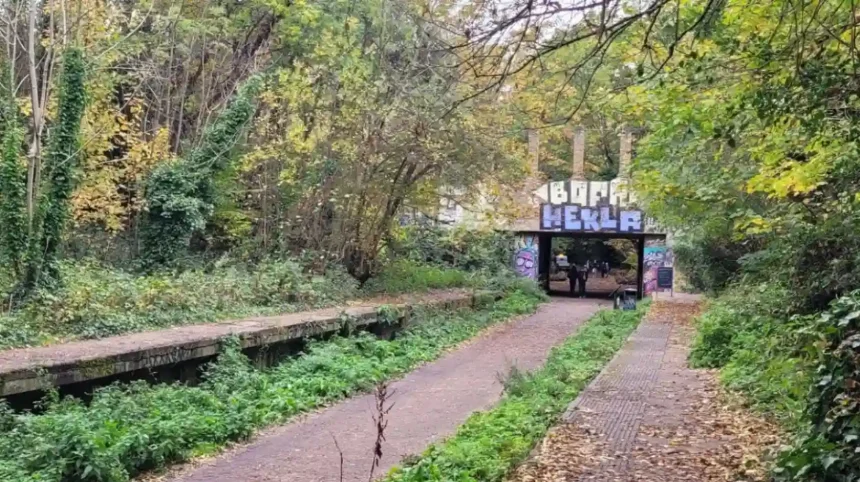
Today, the old brick platforms of Crouch End station remain visible alongside the path, swallowed by ivy and woodland growth.
Background of the Particular Development
The preservation of the Northern Heights railway corridor represents one of London’s most historic urban planning pivots. During the mid-20th century, many disused railway corridors across Greater London were earmarked for highway construction or urban re-development. The Parkland Walk survived largely due to persistent community activism in the 1970s and 1980s, led by local residents and supported by the London Boroughs of Haringey and Islington.
Over the last four decades, the linear park has evolved into a vital ecological corridor. The route supports over 60 species of birds, several rare bat colonies, and extensive populations of wild flora, while also forming part of the Capital Ring strategic walking trail. Beyond ecological conservation, the abandoned trackbed has embedded itself in pop culture; it inspired Stephen King’s 1980 short story Crouch End and features Marilyn Collins’ famous “Spriggan” sculpture, installed within a disused railway wall in 1993.
Prediction: How This Historic Transport Absence Continues to Affect Crouch End Residents and Property Owners
The permanent absence of a direct Underground connection will continue to shape the demographic and socio-economic identity of Crouch End in several distinct ways:
- Sustained Village Identity: Without a busy Tube interchange driving dense high-rise developments, Crouch End is likely to maintain its distinct “urban village” feel. The reliance on bus corridors (such as the W7 to Finsbury Park or the 41 to Archway) acts as a natural buffer against transit-adjacent commercial oversaturation, preserving the high density of independent boutiques, cafes, and community arts festivals.
- Impact on Local Real Estate Values: While the lack of a railway station historically lowered accessibility ratings on paper, Crouch End’s proximity to the Parkland Walk has inverted this dynamic. Properties backing onto or situated near the green corridor command significant premiums, appealing directly to families and professionals seeking quiet, green urban living over immediate station access.
- Pressure on Nearby Bus Infrastructure: As commuter demands evolve, local transport pressure will remain concentrated on feeder bus lines and cycling corridors connecting residents to the Victoria, Piccadilly, and Great Northern rail services at Finsbury Park. Active travel along the Parkland Walk itself will likely see increased usage from daily commuters seeking green walking and cycling routes into central transit hubs.