Key Points
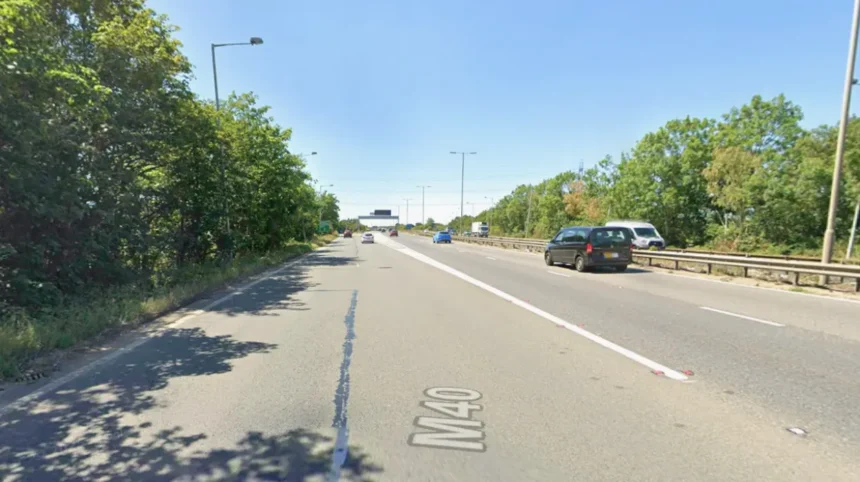
- Incident location: The crash occurred on the M40 Western Avenue Southbound stretch operating between Junction 1A (Denham Interchange) and Junction 1 (Denham Roundabout).
- Vehicles involved: A total of seven vehicles were involved in the multi-car collision.
- Emergency response: Emergency services attended the scene, where at least one of the vehicles required fire suppression and extinguishing following the impact.
- Lanes blocked: Lane one of three was temporarily blocked to handle vehicle recovery, debris clearance, and emergency responses.
- Traffic impact: Heavy congestion and long traffic queues immediately built up across the arterial northern and western London corridor.
North London (North London News) September 22, 2026 – Heavy traffic congestion and severe delays built up across key arterial routes following a multi-vehicle road traffic collision on the M40 Western Avenue. As reported by Anna Highfield of MyLondon, seven cars were involved in a major road traffic collision on the southbound carriageway between Junction 1A at the Denham Interchange and Junction 1 at the Denham Roundabout.
As reported by reporter Anna Highfield of MyLondon, traffic monitoring service Inrix confirmed that the collision initially caused one of three lanes to become completely blocked, triggering long queues of queuing traffic during peak hours. In addition to police and medical personnel responding to the scene, firefighters were called after one of the vehicles involved in the pile-up caught fire and needed to be extinguished.
How Did Emergency Services Respond to the Scene?
As reported by journalist Anna Highfield of MyLondon, traffic monitoring data from Inrix highlighted that “Lane one (of three) is blocked” while emergency services contained the situation. Fire services worked to safely put out the vehicle fire and ensure no hazardous leaks remained on the carriageway, while emergency recovery teams prepared to tow the damaged cars away.
As reported by Anna Highfield of MyLondon, local authority representatives and emergency service units were contacted to assess casualties and manage traffic control. Following emergency crew interventions and vehicle clearance, lane one was reopened, allowing traffic to gradually ease across the Denham stretch.
Background of the Particular Development
The M40 corridor and its connection to the A40 Western Avenue form one of the primary transport arteries connecting central and West London to Buckinghamshire, Oxfordshire, and the wider Midlands highway network. Junction 1 and Junction 1A near Denham serve as major interchanges connecting commuters to the M25 orbital motorway, London airports, and key borough routes across Ealing, Hanger Lane, and Uxbridge.
Because this section of road carries thousands of heavy goods vehicles, public transit routes, and private passenger cars daily, even minor lane blockages rapidly escalate into significant tailbacks. Traffic bottlenecks frequently occur where high-speed motorway traffic transitions into urban A-road systems. Multi-vehicle collisions in this zone regularly necessitate multi-agency emergency responses involving National Highways, the Metropolitan Police, regional ambulance services, and London Fire Brigade units.
Prediction: How This Development Can Affect Motorists and Local Residents
1. Commuters and Everyday Road Users
Motorists traveling along the M40 southbound into Greater London can expect residual delays and intermittent speed restrictions while recovery operations complete. Commuters relying on fixed schedules during peak morning and evening travel windows face increased journey times, missing transport links, and secondary delays on connected arterial corridors such as the A40, A406 North Circular, and local routes through Uxbridge and Denham.
2. Local Residents and Urban Communities
As primary carriageways experience lane blockages or closures, satellite navigation systems automatically divert traffic onto residential side roads. Nearby neighborhoods in North and West London may experience heightened traffic volume, increased local noise, higher vehicular emissions, and temporary delays to municipal services such as local bus routes and emergency response access.
3. Transport Operations and Commercial Logistics
Freight operators, delivery fleets, and regional logistics services operating along the M40 and M25 junction networks face disrupted delivery schedules and increased fuel costs caused by idling in prolonged traffic queues. Transport managers will need to adjust route planning to avoid recurrent congestion around major interchanges.