Key Points
- Transformation of Lordship Rec: Lordship Recreation Ground in Haringey, Tottenham’s largest park, has been converted from a neglected, derelict space into a flourishing £7 million nature haven.
- Community Leadership: The revitalization effort was initiated and driven by the Friends of Lordship Rec, a local community group established in 2001 to address safety, environmental degradation, and park management issues.
- Multi-Million Pound Funding: Major funding totaling £7 million was secured through the Heritage Lottery Fund and other financial partners to restore the landscape, waterways, and park facilities.
- Biodiversity and Habitat Creation: The traditional, tightly mown lawn was converted into a diverse ecosystem featuring meadows, restored woodland, an orchard, a community food-growing garden, and a rejuvenated river channel.
- Infrastructure Improvements: The park now includes a community-managed hub, children’s play areas, multi-use sports facilities, and an upgraded eco-friendly building to serve local residents.
- Strategic Urban Conservation: The project aligns with broader conservation efforts across London to ensure nature is directly accessible to urban communities and areas facing high levels of social deprivation.
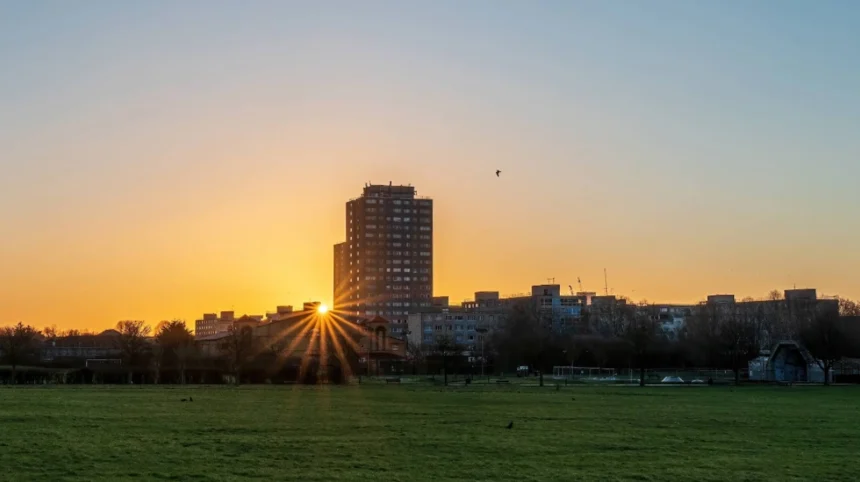
Tottenham (North London News) September 28, 2026 – A major environmental and community regeneration effort in Haringey has successfully turned Lordship Recreation Ground—Tottenham’s largest public park—from a neglected and unsafe area into a £7 million biodiversity haven and community asset. Situated adjacent to the Broadwater Farm estate in a dense urban environment marked by high levels of social deprivation, the park was previously plagued by severe infrastructure decline and a lack of ecological variety. Through a sustained initiative led by local residents alongside substantial funding from lottery and municipal grants, the 26-hectare site has been completely redeveloped to feature vibrant natural habitats, modern sports amenities, and a community-run hub.
What Was the Historical Condition of Lordship Recreation Ground Prior to Restoration?
As reported by local community advocates and documented in regional records, Lordship Recreation Ground suffered decades of severe underinvestment, infrastructure failure, and widespread safety concerns prior to the restoration scheme.
Speaking on the conditions that prompted local action, David Morris, Chairman of the Friends of Lordship Rec, stated that when the group officially formed in 2001, the park was a “neglected, unsafe eyesore.” As detailed by Morris,
“The buildings were derelict, there was no biodiversity in what was a very traditional, tightly mown recreation ground, and the council was considering cutting down the woodland to stop antisocial behaviour.”
During this period, the park contained extensive areas of damaged tarmac, defunct park buildings, and minimal wildlife infrastructure. The land was maintained primarily through repetitive grass-cutting routines that left little room for biological variety. In addition, the Moselle River, which flows through the park ground, was enclosed in concrete channels, heavily polluted, and structurally separated from the surrounding landscape.
How Was the £7 Million Regeneration Project Financed and Executed?
As reported by environment correspondents and urban planning reports covering the Haringey restoration project, the comprehensive regeneration was made possible by securing approximately £7 million in funding, including a substantial £5 million grant from the Heritage Lottery Fund (HLF) alongside contributions from Haringey Council and additional grant-making bodies.
The financial package enabled the implementation of a comprehensive park master plan designed by landscape architects and environmental consultants in close consultation with local residents.
Key capital works included:
- Deculverting and River Restoration: Uncovering and naturalising the culverted stretches of the River Moselle, establishing natural riverbanks, reed beds, and wetland zones to absorb floodwaters and attract aquatic life.
- Eco-Hub Construction: Building a straw-bale, solar-powered community centre featuring a café, public toilets, classroom spaces, and offices for park workers and local organisations.
- Landscape and Habitat Diversification: Establishing wild flower meadows, planting native trees, constructing a woodland trail, and setting up an orchard alongside a community-managed food-growing garden.
- Recreational Facility Upgrades: Restoring the historic model traffic area (a miniature road system for children), rebuilding play spaces, upgrading sports courts, and constructing a modern BMX tracks facility.
Why Are Urban Nature Spaces Crucial for Densely Populated Areas?
As reported by conservation professionals and environmental journalists assessing urban green infrastructure, conservationists across the UK are leading a major national push to ensure nature is established “right next to where people live.”
Environmental researchers highlight that access to quality green spaces directly mitigates urban heat island effects, improves local air quality, and provides essential physical and mental health benefits to urban populations. In heavily built-up locations such as Tottenham, where private garden access is significantly lower than the national average, public parks act as primary environmental filters and vital recreational outlets.
The ecological enhancement of Lordship Recreation Ground has successfully introduced diverse avian species, invertebrates, amphibians, and native plant life back into the heart of Haringey, demonstrating how traditional urban parks can be re-engineered to support wild ecology while continuing to meet human social requirements.
Background
Lordship Recreation Ground was originally acquired and opened as a public space by the local municipality in the 1930s to serve the expanding working-class suburb of Tottenham. Over the decades, municipal budget constraints and shifting local government priorities led to reduced maintenance schedules across the borough’s park networks. By the late 20th century, the park faced severe deterioration, deteriorating physical security, and a drop in overall visitor numbers.
The creation of the Friends of Lordship Rec in 2001 marked a critical turning point in the park’s history. Recognizing that municipal resources alone were insufficient to reverse the decline, the community group partnered directly with Haringey Council, local youth organisations, and environmental charities. Together, they established a co-management structure that empowered local residents to take an active, legal role in park planning, maintenance, and event coordination, setting a benchmark for community-led urban regeneration across London.
Prediction
How Will This Development Impact the Local Community and Future Urban Policy?
The successful transformation and long-term community management of Lordship Recreation Ground will affect local residents, municipal authorities, and urban planners in several concrete ways:
- Local Residents and Families: Residents surrounding the park—particularly those residing on the Broadwater Farm estate—will benefit from continued access to high-quality public space, improved air quality, and free recreational facilities. The inclusion of community food gardens and educational spaces will continue to provide educational opportunities and foster community cohesion in an economically disadvantaged area.
- Municipal Councils and Policy Makers: The co-management model pioneered by Haringey Council and the Friends of Lordship Rec serves as a practical blueprint for other local authorities facing financial constraints. Municipal councils are increasingly likely to adopt similar public-community partnerships to secure external lottery grants and preserve municipal park assets without incurring unmanageable ongoing operational costs.
- Urban Wildlife and Conservation Frameworks: As urban planning guidelines incorporate stricter Biodiversity Net Gain (BNG) mandates, the conversion of tightly mown grass fields into wetland and meadow habitats will influence future urban design strategies. Other metropolitan councils are expected to replicate the river deculverting and meadow-creation methods used at Lordship Rec to meet municipal climate adaptation and nature recovery targets.