Key Points:
- The former Parkway Odeon in Camden Town, originally opened in 1937 as the Gaumont Palace Regent’s Park, is reopening as a cultural and arts centre named Plaza Camden.
- The venue was previously shuttered in February and earmarked for potential demolition before being saved by new founders.
- The founding team comprises Paul Saunders, Lee Bennett, and Ivor Wilkins, who bring extensive background experience across music, hospitality, events, and fine art.
- The revitalised centre will feature fringe theatre, live music events, DJ nights, filmmaker Q&As, art exhibitions, classic film screenings, and movie singalongs.
- Community-focused provisions include an independent café, spaces for daytime meetings/remote working, and a free Sunday morning film club dedicated to local families.
- Founders emphasize that the project aims to serve as an accessible neighbourhood hub and “Camden’s living room” rather than a late-night drinking establishment.
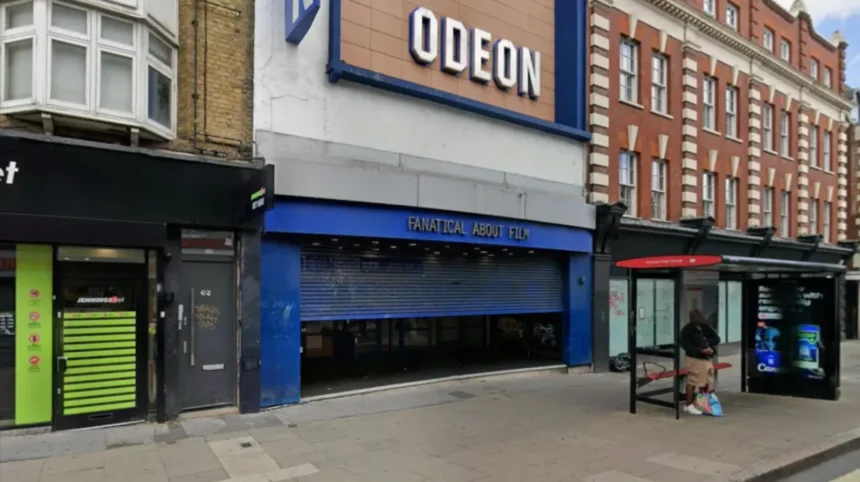
Camden (North London News) October 17, 2026 – The iconic 90-year-old former Odeon cinema located on Parkway in Camden Town has officially been saved from impending demolition and will reopen as a multi-purpose cultural and community hub named Plaza Camden. The historical venue, which originally welcomed audiences in 1937 under the title Gaumont Palace Regent’s Park, ceased operations earlier this year in February. While initial projections indicated the site would face permanent closure and eventual demolition, a newly established leadership team has secured the building to reinstate it as an active neighbourhood landmark.
As detailed by local cultural reporters covering the reopening, founders Paul Saunders, Lee Bennett, and Ivor Wilkins bring multi-decade operational experience across music, hospitality, event production, and visual arts to the venture. The operational model shifts the space away from a standard multiplex setup toward a diversified community arts facility.
What Activities, Events, and Amenities Will Plaza Camden Offer to Visitors?
The operational layout for Plaza Camden encompasses a broad, multi-disciplinary entertainment schedule designed to engage diverse demographics throughout the day and evening. The primary scheduled offerings include:
- Film and Screenings: Presentation of classic cinema, singalong movie sessions, and interactive Q&A discussions featuring independent filmmakers.
- Live Performance and Arts: A rotation of fringe theatre productions, live musical performances, comedy sets, and dedicated gallery spaces for visual art exhibitions.
- Community Features: A free Sunday morning film club specifically tailored for local families and children.
- Hospitality and Workspace: An independent on-site café providing food and beverage service from morning hours through the evening, alongside dedicated areas configured for daytime remote working, local business meetings, and private corporate hires.
Addressing the target audience and overall operational ethos of the revitalised space, founder Paul Saunders stated:
“We are opening Camden’s living room, not another late-night bar. This is a cultural and arts centre for the whole neighbourhood, from a free children’s film club on a Sunday morning to live theatre, art gallery, events and classic film at night. A place that is open and accessible to everyone.”
Highlighting the historic resonance and civic role of the location, co-founder Lee Bennett noted:
“Camden has walked past this building for generations. It was created for people to come together in 1937, and that is what we want it to do again. The Plaza is for the whole neighbourhood. The lights are back on.”
Background of the Particular Development
The venue at Parkway has held a prominent place in North London’s architectural and cultural landscape since its initial inauguration during the golden era of British cinema construction. Opening in 1937 as the Gaumont Palace Regent’s Park, the building was designed to accommodate mass audiences seeking affordable theatrical and cinematic entertainment during the interwar period. Over subsequent decades, the site underwent several operational transitions, eventually operating under the national Odeon brand banner.
In recent years, traditional single-screen and historic picture palaces across the United Kingdom have faced severe financial pressures due to shifting audience consumption habits, the expansion of commercial multiplexes, rising operational overheads, and the growth of digital streaming platforms. When the Parkway Odeon shuttered its doors in February, it joined a growing list of historic UK picture houses facing permanent site redevelopment or demolition. The intervention by Saunders, Bennett, and Wilkins reflects a broader contemporary movement in urban preservation, where historic cinema structures are repurposed into flexible, hybrid community spaces to maintain economic viability while preserving architectural heritage.
Prediction: How Will This Development Affect Local Residents, Businesses, and the Broader Arts Community?
The successful reopening and strategic reorientation of Plaza Camden are expected to yield several measurable impacts across distinct community segments:
For Local Residents and Families
The inclusion of accessible daytime working spaces, an independent café, and fully subsidised offerings such as the free Sunday morning children’s film club provides immediate utility for local households. Residents gain a non-alcohol-centric social venue that fosters intergenerational community engagement.
For North London’s Creative and Performing Artists
The venue restores a crucial physical platform for grassroots creators. By hosting fringe theatre, live music, comedy, and visual art exhibitions, Plaza Camden fills a vital gap for emerging talent and independent filmmakers seeking affordable, high-visibility venues within Inner London.
For Camden’s Commercial and Night-time Economy
By positioning itself as an all-day venue rather than purely a late-night drinking spot, Plaza Camden will generate steady footfall along Parkway throughout daytime and early evening hours. Surrounding retail, dining, and hospitality businesses stand to benefit from sustained, multi-hour visitor traffic, reinforcing Camden Town’s broader reputation as a vibrant, cultural destination.