Key Points
- Redundancies Announced: Telegraph Media Group (TMG) staff were officially issued notice of an impending round of job cuts on Friday, 23 October 2026.
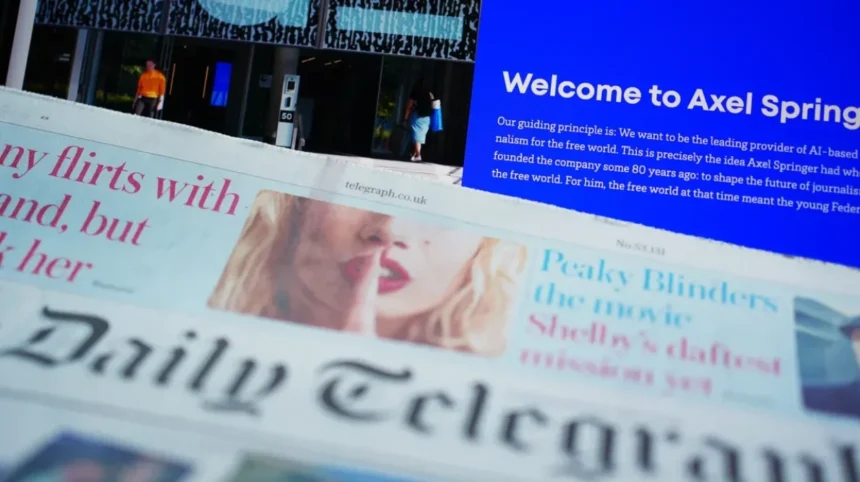
- Axel Springer Ownership: The structural restructuring comes merely months after German media conglomerate Axel Springer completed its £575 million ($766 million) buyout of TMG.
- Internal Consultation: TMG Chief Executive Carolin Hulshoff Pol and Editor Chris Evans informed staff via email that a formal consultation period is beginning for affected employees.
- Broken Investment Promises: The staff cutbacks signal a swift shift in operational direction despite Axel Springer’s initial pledges to invest heavily and expand the right-leaning news brand globally.
- Regulatory Clearance: The announcement follows the formal closure of UK government regulatory probes into prior bidding consortia by Culture Secretary Lisa Nandy earlier in October 2026.
London, UK (North London News) October 23, 2026 – Staff at Telegraph Media Group (TMG) received formal notice on Friday of a round of job cuts, just months after German media publishing power Axel Springer SE assumed full ownership of the UK business. The news publisher was acquired earlier this year following promises of substantial fresh capital investment; however, after conducting an operational review of TMG’s financial standing, management confirmed the company will begin a formal employee consultation process.
As reported by Bloomberg News, personnel whose roles are placed at risk were notified by midday on Friday via a joint internal memo issued by The Daily Telegraph Editor Chris Evans and TMG Chief Executive Officer Carolin Hulshoff Pol. Writing to staff, Ms Hulshoff Pol stated:
“These are difficult choices that we believe are necessary for the future of the business.”
The official internal communication did not specify the exact total number of redundancies planned across the company’s editorial and commercial divisions.
Why Is Axel Springer Restructuring The Telegraph Business Model?
How does this strategic pivot alter the outlook for TMG under its new German parent company? The job cut announcement marks a distinct operational shift for the prominent British newspaper group following its £575 million ($766 million) acquisition by Axel Springer in June. In April, Axel Springer executed the purchase of the publisher of The Daily Telegraph and The Sunday Telegraph by exercising a call option held by Abu Dhabi-backed consortium RedBird IMI in a transaction formally notified to the UK government.
As detailed in reporting by Bloomberg News, RedBird IMI originally acquired the Telegraph publications and The Spectator magazine in late 2023. However, a retrospective amendment to British legislation restricting foreign state ownership in UK news outlets forced the consortium to abandon its plans and seek an alternative commercial buyer. The subsequent sale united two of Europe’s most prominent right-leaning news brands.
The buyout was spearheaded by Axel Springer’s billionaire Chief Executive, Mathias Doepfner. At the time of the transaction, the Berlin-headquartered media organization—which also counts international titles Politico and Business Insider within its publishing portfolio—committed to underwriting an extensive investment programme designed “to grow and expand the business to enable it to become the leading centre-right media outlet in the English-speaking world”.
What Is the Background of the Telegraph Media Group Ownership Saga?
The path leading to Axel Springer’s acquisition of Telegraph Media Group represents one of the most complex corporate ownership sagas in modern British journalism. In late 2023, TMG was forced into receivership by Lloyds Banking Group due to unpaid debts exceeding £1 billion accumulated by its long-term owners, the Barclay family.
To regain control, the Barclay family partnered with RedBird IMI—a joint venture funded predominantly by Sheikh Mansour bin Zayed Al Nahyan, Vice President of the United Arab Emirates—to pay off the outstanding debt. However, the prospect of foreign state ownership of an influential UK broadsheet triggered widespread political pushback, leading the UK government to introduce strict legislation banning foreign states from owning British news publications.
Concurrently, The Spectator magazine was severed from the Telegraph parent group and sold separately to British hedge fund manager Sir Paul Marshall. RedBird IMI subsequently initiated an auction for TMG, culminating in Axel Springer securing an option to acquire the group for £575 million. In mid-October 2026, UK Culture Secretary Lisa Nandy formally closed all outstanding public-interest intervention notices related to prior bidding attempts by rival suitors, confirming that regulatory scrutiny was complete and cementing Axel Springer’s full control.
What Is the Prediction for How This Development Will Affect British Media and Journalism?
This development will directly affect media industry personnel, UK newsroom workers, conservative readers, and the broader digital media market.
Impact on UK Journalists and Media Professionals
For editorial and commercial staff across The Daily Telegraph and The Sunday Telegraph, the initiation of redundancies creates immediate career instability and heightened workload pressures. The transition to a leaner workforce reflects a broader trend within legacy print organizations attempting to adjust to rising paper production costs and changing digital revenue models. Staff facing consultation will likely experience heightened union activity and potential pushback regarding severance packages and working conditions.
Impact on Readers and the Centre-Right Media Landscape
For the newspaper’s core reader demographic and the UK conservative political landscape, cost-cutting measures could lead to structural shifts in editorial output. While Axel Springer has publicly pledged to preserve the publication’s independent broadsheet identity, corporate streamlining often results in a reliance on syndicated content and centralized digital desks. Readers may observe an accelerated push toward aggressive digital subscription models, greater integration of artificial intelligence tools in content management, and expanded coverage tailored toward an international—particularly American—audience.