Key Points
- Public Meeting Organised: Campaign group ‘Our North Finchley’ convened a public meeting at St Alban’s Catholic Church following City Hall’s decision to grant planning permission for the Great North Leisure Park (GNLP) regeneration project.
- Planning Permission Granted: Greater London Authority (GLA) Deputy Mayor for Planning Jules Pipe overturned Barnet Council’s original refusal, granting permission to developer Arada in principle.
- Legal Challenge Pending: Campaigners are awaiting the official written decision from the GLA—conditional on Section 106 agreement details—and plan to challenge its legality within a six-week statutory deadline once published.
- Local Democratic Concerns: Local residents and elected councillors expressed strong disapproval, arguing that City Hall’s intervention and proposed national planning reforms undermine local democracy and elected council oversight.
- Planning Policy and Housing Targets: Discussions highlighted national shifts toward delegating planning decisions to officers, alongside Barnet’s increased 10-year housing target of 32,730 homes (a 39% increase), including proposed development on Green Belt land.
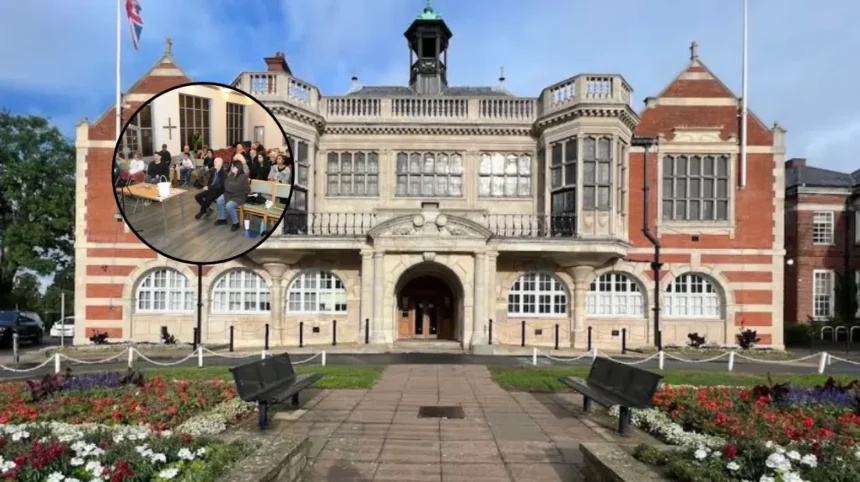
North Finchley (North London News) October 24, 2026 — In a decisive response to City Hall’s intervention, community advocates and local representatives gathered in North Finchley to outline their legal strategy against the controversial redevelopment of the Great North Leisure Park (GNLP). The public meeting, convened by the campaign group ‘Our North Finchley’ at St Alban’s Catholic Church in Nether Street, followed the decision by Greater London Authority (GLA) Deputy Mayor for Planning Jules Pipe to overturn Barnet Council’s initial refusal of planning permission for developer Arada’s regeneration scheme. Despite the overturn, campaigners confirmed they are preparing to challenge the legal validity of the decision as soon as the final written documentation is released.
- Key Points
- What are the immediate legal next steps for the Our North Finchley campaign group?
- How have local residents and community members reacted to City Hall’s intervention?
- What concerns do local councillors raise regarding national planning policy changes?
- How do housing targets impact outer London boroughs like Barnet?
- What is the background of the Great North Leisure Park development dispute?
- What is the prediction for how this development will affect local residents and planning processes?
What are the immediate legal next steps for the Our North Finchley campaign group?
As reported by journalist Leïla Davaud of Barnet Post, the Our North Finchley campaign group is currently preparing for formal legal action while awaiting the final written planning permission from the GLA. The approval remains conditional upon the finalisation of Section 106 agreement details between Barnet Council and the developer, Arada.
Speaking to attendees at the public meeting, Jed Holloway, planning solicitor for Our North Finchley, detailed the procedural timeframe and legal strategy:
“The ongoing delay is frustrating. We are in limbo, but it is not necessarily a bad thing. When the decision drops, we will be challenging its legality. We can’t tell you much more right now, but believe that we are pursuing every angle.”
Holloway further emphasized the procedural window available to the group once official documentation is issued:
“But once the final decision is made, we will have six weeks to make our move.”
Commending the effort of the local residents involved in the opposition campaign, Holloway added:
“You can still make a difference. This is the most effectively organised campaign I have seen. What you are doing takes a lot of free time and intense work from all of you. It is very inspiring.”
How have local residents and community members reacted to City Hall’s intervention?
The decision to override the decision of local elected representatives has drawn criticism from community members who rely on the existing facilities at the Great North Leisure Park.
As reported by Leïla Davaud of Barnet Post, local resident Helen Searby voiced concern regarding both the loss of community infrastructure and the erosion of local governance:
“To be completely honest, I am disgusted. It is not just a place on a map. We live here, we use the facilities; this is our life. Even my 16-year-old daughter is wondering why the leisure park has to disappear. It’s the only affordable and safe place she can go around here.”
Searby further challenged the rationale provided by regional authorities regarding youth facilities and democratic representation:
“City Hall said it is doing this for young people, but apparently, they have no idea what the kids need. More than that, by overturning the council’s decision, they make it clear that local democracy is being dismissed, thrown out of the window. Jules Pipe acted as if our local councillors don’t have a say any more. It’s shocking!”
In addition to social and community concerns, other campaigners addressed environmental considerations. As reported by Leïla Davaud of Barnet Post, speakers including Amy Fox, a mother of a Northside Primary School student, and Filip Spelak presented contributions focusing specifically on the ecological impact of Arada’s proposed development plan.
What concerns do local councillors raise regarding national planning policy changes?
Elected members across political parties voiced concern over broader structural shifts within the national planning framework and their impact on local decision-making power.
As reported by Leïla Davaud of Barnet Post, Green Party councillor Charli Thompson, representing the Woodhouse ward where the leisure park is located, outlined her involvement and ongoing opposition:
“One of my first major pieces of work as a councillor was opposing this development. I worked alongside many people here, submitted objections and spoke against the scheme at the GLA hearing.”
Councillor Thompson noted that despite the GLA’s approval in principle, statutory oversight must remain rigorous:
“Although the scheme has now been approved in principle, that doesn’t mean the work ends. Approval doesn’t mean they get a free pass on everything that was promised.”
Addressing national policy directives regarding delegated authority, Councillor Thompson remarked:
“The government is introducing a national scheme for delegation, meaning more applications will be decided by officers rather than elected councillors. There will also be changes to councillors’ ability to call in applications for committee consideration. I find that really concerning.”
She continued on the topic of democratic oversight:
“Communities already struggle to have a meaningful say in developments that fundamentally change where we live. We need more democratic involvement, not less. At full council, we passed a cross-party motion, which I was really pleased about, calling for planning to be more democratic.”
How do housing targets impact outer London boroughs like Barnet?
Cross-party concerns were also raised regarding rising regional housing allocation targets imposed on outer London authorities.
As reported by Leïla Davaud of Barnet Post, Conservative councillor for Finchley Church End Josh Mastin-Lee expressed concern over the diminishing statutory authority of local planning committees:
“The planning committee becomes a sort of shadowy committee. It is there in person, but it is not there in power. It’s excluded from smaller and medium-sized applications, but then gets steamrollered on the largest ones. I do not think we could credibly be called a local planning authority any more after this legal change.”
Councillor Mastin-Lee provided specific metrics regarding Barnet’s revised housing requirements:
“Meanwhile, Barnet has been given the highest housing target in London by some margin, representing a rise of 39% on our already considerable current target and bringing it to 32,730 homes over 10 years.”
He elaborated on the geographical distribution and national directives driving these requirements:
“We have been told to build 7,000 of those homes on our Green Belt. The government wants to build, baby, build: 850,000 homes in London over the next 10 years, and the burden falls on the outer boroughs. These boroughs, the donut, need to unite more than ever.”
What is the background of the Great North Leisure Park development dispute?
The dispute surrounding the Great North Leisure Park (GNLP) stems from developer Arada’s comprehensive regeneration proposal for the North Finchley site. Barnet Council originally considered the application and formally voted to refuse planning permission, citing concerns over local suitability, infrastructure density, loss of existing public amenities, and environmental impacts.
Following the council’s refusal, developer Arada appealed to the Greater London Authority under mayoral call-in powers. Deputy Mayor for Planning Jules Pipe subsequently presided over the GLA hearing and decided to grant planning permission, overturning the local decision. To formalize the grant, the GLA requires the finalisation of a Section 106 legal agreement between Barnet Council and Arada to secure developer contributions and community planning obligations. The final written determination from the GLA is expected to be published by late December, which will trigger the formal statutory six-week window for judicial review challenges.
What is the prediction for how this development will affect local residents and planning processes?
If the GLA’s decision stands following the anticipated judicial review challenge, the implementation of the Great North Leisure Park regeneration project will directly alter the local amenity landscape for residents in North Finchley and the Woodhouse ward. Families and young residents who currently utilize the existing leisure facilities will experience a loss of established community space during the redevelopment period, requiring them to seek alternative facilities.
From a governance perspective, the overturning of Barnet Council’s refusal—combined with national reforms expanding delegated powers to planning officers—signals a broader shift toward centralized planning decisions for large-scale urban developments. For residents and local elected representatives in outer London boroughs, this precedent indicates that local committee decisions on major housing schemes may increasingly be superseded by strategic regional and national housing targets.