Key Points
- £432 Million Budget Allocation: The UK government has announced a further £432 million in funding to double its financial support for tackling rough sleeping across England, bringing total expenditure behind the commitment to £874 million.
- Long-Term Financial Security: The additional funding, to be detailed by Chancellor John Healey in Wednesday’s Budget, extends operational support beyond March 2027 through to the end of the current Parliament in 2029.
- Immediate Target by Christmas: The central initiative aims to ensure every rough sleeper in England is provided with a route off the streets or a direct offer of preventative support before Christmas.
- Phased Regional Rollout: Specialist outreach teams and bed spaces are already operating in Coventry, with services rolling out to Plymouth and the London borough of Camden over the coming weeks.
- Downing Street Summit: Prime Minister Andy Burnham and Chancellor John Healey hosted the first Rough Sleeping Summit at 10 Downing Street on Monday, bringing together over 30 businesses, charities, housing providers, and municipal leaders.
- Housing Association Pledges: The National Housing Federation is working alongside housing associations to identify at least 2,000 potential homes and emergency bed spaces, including empty properties.
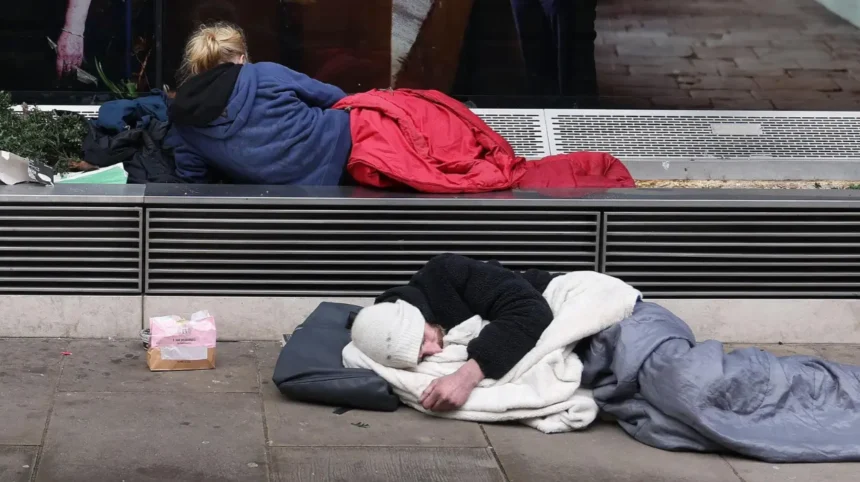
- Scale of Need: The latest autumn 2025 national estimate recorded 4,793 individuals sleeping rough on a single night in England.
Camden (North London News) October 26, 2026 — The UK government has set out plans to allocate a further £432 million to bolster its nationwide strategy to provide every rough sleeper in England with a route off the streets by Christmas. The additional commitment, expected to be set out in detail during Chancellor John Healey’s Budget statement on Wednesday, brings total funding behind the initiative to £874 million. The multi-year strategy extends financial support beyond March 2027 through to the end of the current Parliament in 2029. Early provision has already enabled specialist outreach teams and emergency bed spaces to begin operating in Coventry, with expansion scheduled for Plymouth and the London borough of Camden over the coming weeks.
- Key Points
- What are the main details of the government’s £432m rough-sleeping plan?
- How will local outreach and accommodation be rolled out in Camden and other regions?
- How does the funding compare to current estimates of homelessness in England?
- What is the background of this rough-sleeping policy development?
- How will this development affect local authorities, homeless individuals, and local communities?
What are the main details of the government’s £432m rough-sleeping plan?
How the funding will be distributed and sustained forms the cornerstone of the government’s strategy. As reported by Rowena Mason of The Guardian, Prime Minister Andy Burnham stated that:
“Rough sleeping isn’t a fact of life. It’s a thing governments either choose to accept or don’t… Well, I don’t accept it.”
As reported by Iram Ramzan of the Manchester Evening News, the additional £432 million ensures that local authority outreach programmes and specialized services will not face a funding cliff-edge after the winter months, extending operational guarantees until 2029.
While the commitment has been publicly announced, it does not confirm that all accommodation or services covered under the strategy are immediately operational. The upcoming Budget will formally clarify the multi-year allocation mechanisms for local councils across England.
The primary objective of the policy goes beyond increasing temporary bed counts. The stated pledge dictates that individuals sleeping rough should either be enabled to move into physical accommodation by Christmas or receive tailored intervention aimed at preventing continued life on the streets. Because individuals retain the right to decline offered accommodation, ministers emphasize that the initiative represents a guaranteed offer of assistance rather than a mandatory clearance of public spaces.
How will local outreach and accommodation be rolled out in Camden and other regions?
Regional implementation is already underway in select focus areas. In Coventry, initial funding has already established new bed spaces alongside active outreach teams. Over the next few weeks, similar structures are scheduled to open in Plymouth and Camden.
The inclusion of Camden establishes a direct connection between the national policy and London’s urban rough-sleeping challenges. However, no specific funding sub-allocation or total target bed count has yet been announced specifically for Camden Borough Council.
To secure the physical infrastructure needed for the policy, Prime Minister Andy Burnham and Chancellor John Healey convened the first-ever Rough Sleeping Summit at 10 Downing Street on Monday. The summit brought together more than 30 charities, private sector businesses, housing associations, and local municipal leaders.
As reported by London Daily News, the National Housing Federation confirmed it is coordinating with housing associations to locate at least 2,000 potential homes and emergency bed spaces, which includes bringing empty, disused properties back into functional use. Official figures clarify that this 2,000-unit pledge serves as a contribution toward the wider effort rather than a confirmed total count of self-contained properties. A distinction remains between self-contained individual apartments and shared accommodation bed spaces capable of housing multiple individuals, a factor that will determine how quickly properties can be adapted for winter occupancy.
How does the funding compare to current estimates of homelessness in England?
The scale of the initiative directly targets official metrics recorded across the country. The most recent national single-night snapshot, conducted in autumn 2025, recorded 4,793 people sleeping rough in England. Although single-night counts do not reflect the full breadth of hidden homelessness—such as sofa surfing or temporary hostel stays—they define the immediate core demographic the government’s Christmas plan intends to reach.
The government’s dual approach pairs rapid emergency shelter provision with long-term outreach, healthcare links, and economic integration support. Housing charities, including Shelter, have welcomed the sustained multi-year funding commitment while stressing that short-term emergency beds must be coupled with structural solutions to the broader housing crisis, such as addressing high private sector rents, benefit rate caps, and the overall supply of affordable social housing.
What is the background of this rough-sleeping policy development?
Rough sleeping and street homelessness have remained central social policy challenges in England over the past decade, driven by rising private rent costs, inflationary pressures on household incomes, and systemic shortages in local social housing stock.
In July 2026, upon taking office at 10 Downing Street, Prime Minister Andy Burnham made ending rough sleeping a core priority of his administration, drawing on his previous experience addressing homelessness as Mayor of Greater Manchester. Initial emergency funding allocations allowed local authorities to establish rapid-response units in targeted areas like Coventry earlier in the year.
However, local authorities and third-sector organizations consistently warned that short-term funding cycles—often ending with the fiscal year in March—created operational instability, forcing outreach services to dismantle teams just as long-term progress was being made. The decision to commit an additional £432 million in the upcoming Budget, bringing total funding to £874 million through 2029, represents a structural shift toward multi-year funding security designed to give local councils, such as Camden and Plymouth, the financial certainty needed to sign longer-term property leases and employ permanent support staff.
How will this development affect local authorities, homeless individuals, and local communities?
The expansion of funding and provision will significantly impact several key groups across England:
- For Individuals Experiencing Rough Sleeping: The immediate effect is a substantial increase in the availability of emergency bed spaces and outreach interventions ahead of the winter weather. Over the longer term through 2029, individuals will have access to sustained support networks—including mental health services, addiction support, and employment resources—reducing the likelihood of returning to the streets once temporary shelter is provided.
- For Local Councils and Service Providers (e.g., Camden and Plymouth): Local authorities receive long-term fiscal visibility. Instead of relying on emergency single-year grants, housing departments can build stable partnerships with charities and private landlords, refurbish vacant properties, and maintain dedicated outreach teams without fear of abrupt budget cuts in March 2027.
- For Local Communities and Businesses: Increased outreach and shelter capacity in urban centers like Camden are expected to reduce public rough sleeping, easing pressure on emergency health services, local policing, and town centre management. Furthermore, local businesses participating in the Downing Street summit may find structured pathways to offer employment and training opportunities to formerly homeless individuals.