Key Points
- Camden Council has confirmed that the trial pedestrianisation of Camden High Street will be made permanent.
- The pedestrianised section spans from Britannia Junction to the junction with Jamestown Road and Hawley Crescent.
- Public consultation revealed narrow support, with 51% of local respondents and 57% of the wider population backing the permanent closure.
- Local traders reported business disruption, while diverted road traffic caused congestion and delays for surrounding bus routes.
- Overall visitor footfall remained stable rather than increasing during the trial period.
- Mitigation measures include permanent entry barriers early next year, enhanced security, increased cleaning, and a trial bus lane on Kentish Town Road.
Camden (North London News) October 27, 2026 – Camden Council has officially resolved to make the trial pedestrianisation of Camden High Street permanent, establishing a dedicated car-free zone along one of London’s busiest commercial corridors following an extensive review of trial data and public feedback.
What Are the Key Details of the Camden High Street Pedestrianisation Decision?
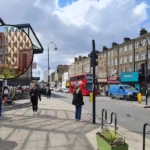
The local authority originally closed the busiest section of Camden High Street to motor traffic in May 2025 as an experimental traffic order. The permanent zone covers the stretch extending from Britannia Junction to the junction with Jamestown Road and Hawley Crescent. As part of the permanent implementation, permanent entry barriers will replace the existing temporary structures early next year.
To address issues raised during the experimental phase, Camden Council announced accompanying infrastructure and operational adjustments. These measures include increased expenditure on street cleaning and an enhanced security presence within the pedestrian area. Furthermore, to mitigate traffic disruption on surrounding transport networks, the council plans to introduce a trial bus lane on Kentish Town Road intended to improve northbound bus journey times.
What Did the Public Consultation and Footfall Data Reveal?
Results from the public consultation conducted earlier this year demonstrated a narrow margin of support across the community. Among local respondents directly affected by the changes, 51% voted in favour of keeping Camden High Street car-free. Across the broader population surveyed, approval stood slightly higher at 57%.
A primary source of concern during the trial period was the impact on local commerce and transport efficiency. Local traders reported that the removal of vehicle access adversely affected business operations. In addition, data indicated that while the pedestrianised layout offered a more spacious environment for visitors, overall footfall remained stable rather than experiencing a post-implementation increase.
Traffic management reviews noted that using the car-free carriageway for temporary events frequently redirected pedestrian traffic back onto pavements, reducing the available walking area. Meanwhile, the diversion of motor vehicles increased traffic congestion on adjoining streets, causing knock-on delays for local bus services.
Background
Camden High Street is a critical thoroughfare and economic hub within the London Borough of Camden, internationally recognized for its markets, retail outlets, and cultural venues. The trial pedestrianisation launched in May 2025 was designed to enhance pedestrian safety, reduce air pollution, and improve the streetscape environment in response to high footfall density near Camden Town station.
Throughout the mid-2020s, several London boroughs have explored low-emission zones and active travel schemes to reduce reliance on private motor vehicles. The Camden High Street experiment formed part of this broader regional transport strategy, aiming to balance commercial vitality with sustainable urban planning. However, similar schemes across Greater London have consistently sparked debates regarding the balance between pedestrian space and the operational requirements of local businesses and public transport networks.
Prediction
How Will This Development Affect Local Businesses, Residents, and Commuters?
The permanent closure of Camden High Street to vehicular traffic is expected to shape the local operational and urban environment in several distinct ways:
- For Local Merchants and Retailers: Business owners along the High Street will need to adjust long-term inventory and delivery logistics to fit the permanent vehicle restrictions. While the stabilized footfall provides a consistent consumer base, the success of retail businesses may depend heavily on how effectively council-managed street events and enhanced cleaning routines maintain an accessible shopping environment.
- For Nearby Residents and Motorists: Residents living on adjacent diversion routes may continue to experience heightened traffic volumes during peak hours. The long-term impact on surrounding residential roads will largely depend on whether traffic-calming adjustments and signal alterations successfully redistribute motor vehicle flow.
- For Public Transport Users: Commuters relying on northbound bus routes near Kentish Town Road could see improved journey times if the upcoming trial bus lane effectively offsets the congestion caused by diverted traffic.