Key Points
- Unannounced Road Changes: Transport for London (TfL) has laid double red lines over a long-standing loading area on Pancras Road outside King’s Cross Station, restricting access exclusively to emergency vehicles.
- Impact on Local Businesses: Market traders at Station Square state they have lost their only viable delivery spot after relying on the ad-hoc pavement bay for over a decade.
- Severe Financial Risk: Business owners report facing potential parking fines of up to £800 each month simply for unloading inventory required to keep their stalls open.
- TfL’s Official Stance: TfL asserts that the loading bay was “never officially authorised through a traffic order” and that the section of road has merely reverted to its original status as a red route.
- Traders Demand Action: Affected stallholders dispute TfL’s history of the site, alleging a total absence of consultation or advance notice before the road markings were changed on or around September 11.
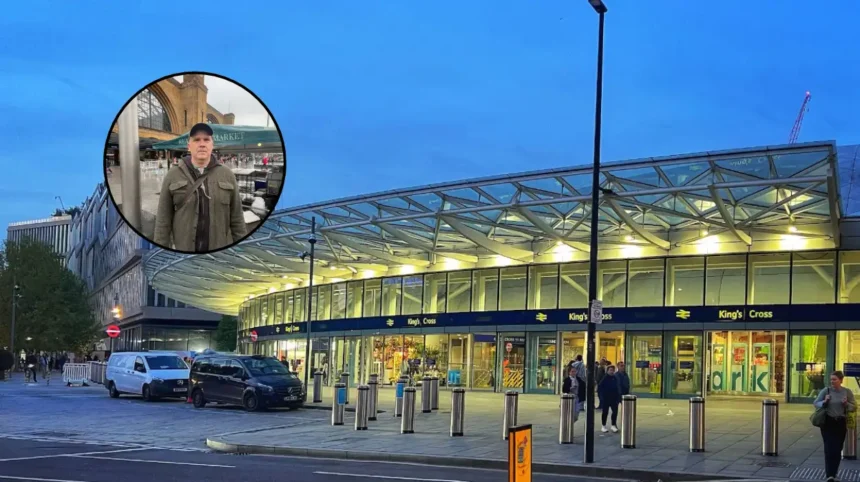
King’s Cross Station (North London News) November 4, 2026 – Market traders operating outside King’s Cross Station have been left facing severe operational disruption after Transport for London (TfL) painted double red lines across an informal loading area on Pancras Road, effectively banning commercial loading and unloading. Small business owners who run street food and retail stalls at Station Square contend that the sudden removal of the bay leaves them with no practical alternative for receiving stock, creating immense logistical strain and threatening their financial viability.
- Key Points
- How has Transport for London’s red route designation affected King’s Cross market traders?
- What is Transport for London’s position on the Pancras Road loading bay?
- What is the background to the Pancras Road loading dispute?
- How could this development affect local traders and the wider high street economy?
How has Transport for London’s red route designation affected King’s Cross market traders?
As reported by Josef Steen, Local Democracy Reporter for MyLondon, market traders who have operated outside King’s Cross Station for more than ten years have relied on a designated stretch of pavement along Pancras Road as an ad-hoc loading bay. However, on or immediately prior to September 11, TfL highway contractors painted double red lines over the site, designating the section strictly for emergency vehicle use only.
The decision has sparked widespread confusion among small business operators in the area. As documented by Local Democracy Reporter Josef Steen of MyLondon, David Lesniak, owner of the comfort food stall Outsider Tart, expressed deep frustration over the complete lack of prior communication from transport authorities. Lesniak stated:
“No one told us what was happening. You’d expect to be told there was going to be work or disruption, or that we can no longer park there. We had nothing”.
Lesniak further recounted the moment he discovered the bay had been eliminated upon arriving at Station Square, telling reporter Josef Steen:
“That’s when I thought, what the hell do I do? Where do I go?”.
According to calculations provided by Lesniak and published by MyLondon, the removal of the loading space leaves stallholders exposed to penalty charge notices (PCNs) totaling up to £800 per month per business, incurred solely while attempting to bring goods to their premises.
What is Transport for London’s position on the Pancras Road loading bay?
In response to inquiries regarding the sudden change to the road layout, Transport for London maintained that the location was never a legally designated loading zone. As detailed in the report by Josef Steen for MyLondon, a spokesperson for TfL stated that the informal loading space was “never officially authorised through a traffic order” and explained that the highway layout had simply been reinstated to its former status as a red route.
Under London’s red route network regulations, double red lines prohibit vehicles from stopping, waiting, or loading at any time, reserving space purely for operational access by emergency service vehicles. TfL enforces these restrictions stringently to prevent traffic congestion and ensure public transport and emergency corridors remain clear across major arterial routes.
However, local traders who have maintained market stalls at King’s Cross Station Square for over ten years dispute TfL’s account. As reported by MyLondon, long-standing stallholders reject the claim that a active red route previously existed at that exact stretch of pavement, arguing that the space functioned as a recognised and functional delivery point for years without enforcement intervention.
What is the background to the Pancras Road loading dispute?
Pancras Road, situated between King’s Cross Station and St Pancras International, forms part of one of the busiest pedestrian and transport interchanges in Western Europe. Following major redevelopments around King’s Cross Station and Station Square over the past fifteen years, street food markets and independent traders became an integral feature of the public realm, operating under local trading agreements.
To supply these daily operations, stallholders required regular access for delivery vans carrying heavy kitchen equipment, perishable food supplies, and retail stock. Due to restricted vehicular access across the pedestrianised station plaza, traders adopted a small recessed pavement area on Pancras Road as an ad-hoc loading bay. For over a decade, this arrangement functioned informally, allowing light commercial vehicles to unload during morning setup and evening pack-down without receiving traffic enforcement sanctions.
In recent years, TfL has systematically reviewed informal stopping points across its 580-kilometre Transport for London Road Network (TLRN)—commonly known as London’s red routes. Red routes account for less than 5% of London’s road network but carry over 30% of its traffic. In line with wider mayoral strategies to optimize traffic flow, reduce engine idling, and improve pedestrian safety around major transit hubs, TfL has progressively eliminated un-gazetted loading areas that lack formal Traffic Regulation Orders (TROs). The painting of double red lines on Pancras Road around September 11 represents the latest step in enforcing these strategic arterial controls.
How could this development affect local traders and the wider high street economy?
The removal of the Pancras Road loading area creates significant long-term operational and financial challenges for small, independent businesses operating in public spaces:
- Increased Operational Costs for Small Businesses: Traders facing daily delivery needs must either risk accruing cumulative traffic fines—potentially reaching hundreds of pounds each month—or absorb significantly higher logistics costs by paying for private commercial parking facilities located further away from their stalls.
- Supply Chain and Logistical Bottlenecks: Without immediate roadside access, stock must be hand-carted across greater distances over busy pedestrian zones, increasing setup times, labour requirements, and physical risk for market staff handling heavy goods.
- Risk to Market Diversity and Micro-Enterprise Viability: Independent food vendors and micro-businesses operate on narrow profit margins. The added burden of fines or elevated logistics expenses may force smaller vendors to close or relocate, reducing the diversity of independent traders around key public transportation hubs.
- Precedents for Informal Urban Space Usage: The enforcement action highlights a growing tension between centralized transport authorities enforcing formal traffic mandates and micro-enterprises relying on historic, informal operational practices across urban centers.