Key Points
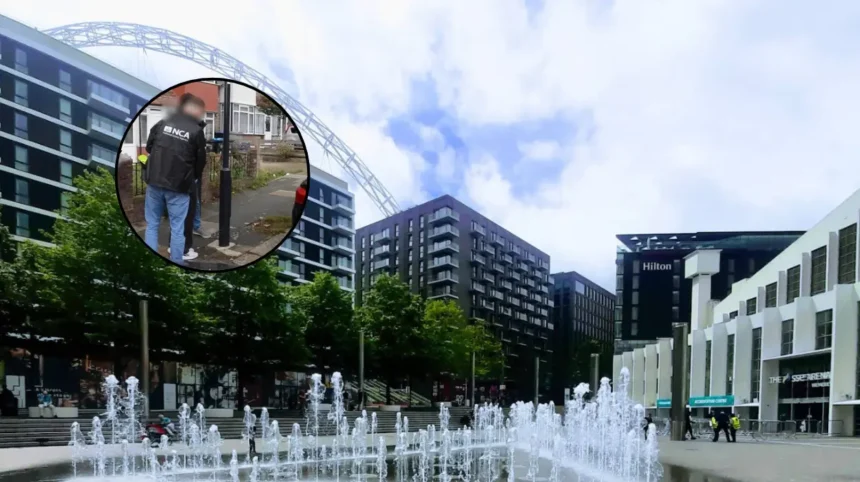
- Suspect Detained in North-West London: A 29-year-old Afghan national was arrested on Tuesday, 3 November 2026, by National Crime Agency (NCA) officers at an address in Brent.
- Social Media Crossings Probe: The operation follows the discovery of a TikTok account allegedly advertising illegal migration services and small-boat or land transit routes from the UK to mainland Europe.
- Five European Destinations Targeted: Promoted routes allegedly advertised transit from Britain into France, Spain, Portugal, Italy, and Germany.
- Digital Evidence Seized: Law enforcement officers seized a mobile phone at the Brent property during the execution of the search warrant.
- Bail Status: The suspect has been released on bail pending further inquiries by investigators.
- Enforcement Legislation: The arrest was carried out under provisions linked to the Border Security, Asylum and Immigration legislation, targeting online promotion of illegal immigration.
Brent (North London News) November 4, 2026 — A 29-year-old man has been arrested in north-west London as part of a National Crime Agency (NCA) investigation into the online promotion of illegal immigration services.
The suspect, an Afghan national, was apprehended by officers on Tuesday, 3 November 2026, at a residential address in Brent. During the operation, investigating officers confiscated a mobile phone, which is now undergoing digital forensic analysis.
The law enforcement operation was initiated following the discovery of a TikTok profile that allegedly advertised illicit transport services for migrants seeking passage from the United Kingdom to several mainland European countries, including France, Spain, Portugal, Italy, and Germany.
Following questioning by investigators, the suspect was released on bail pending further inquiries.
What were the official statements regarding the Brent arrest?
As reported by Anna Loren of The Independent, the National Crime Agency confirmed that officers targeted an address in Brent as part of an active drive against organized immigration crime networks operating on popular digital platforms.
Commenting on the operation, National Crime Agency Senior Investigating Officer Martin Matthews stated:
“Tackling organised immigration crime remains a top priority for the National Crime Agency, and we are doing all we can to disrupt and dismantle those networks involved. This includes targeting the use of online platforms to advertise suspected illegal crossings.”
Law enforcement figures indicate that criminal networks are increasingly utilising major social media platforms to advertise services, organize logistics, and communicate with prospective migrants across various international borders.
How are law enforcement agencies tackling online migrant advertising?
The arrest in Brent forms part of a wider UK strategy to disrupt people-smuggling operations that rely on digital marketing. As highlighted by political correspondent Eleni Courea of The Guardian, UK law enforcement agencies have intensified measures against online accounts that promote unlawful Channel crossings, fake travel documentation, and fraudulent employment offers.
According to data released by the National Crime Agency, intelligence referrals to major tech platforms—including TikTok, Meta, X, and YouTube—led to a 40 per cent increase in account takedowns over recent monitoring periods, removing thousands of profiles dedicated to illegal transport services. NCA operational leaders have noted that while initial contact often occurs on open social media feeds, criminal coordinators quickly attempt to shift communications to encrypted messaging channels to bypass detection.
Background of online migration promotions and UK legislation
Over recent years, organized immigration crime groups have adapted their business models by adopting commercial social media strategies. Criminal syndicates have been documented posting promotional videos, customer testimonials, and “package deals” on platforms such as TikTok and Telegram, offering transit, accommodation, and illegal employment arrangements. While historically these services were primarily advertised to bring individuals into the United Kingdom, recent intelligence indicates growing digital marketing for secondary movements from the UK back into mainland European jurisdictions.
To address these evolving methods, the UK Parliament introduced updated legal measures under border security legislation, explicitly criminalising the online advertisement of illegal border crossings, forged visas, and unauthorized employment schemes. These provisions grant law enforcement agencies expanded powers to prosecute operators, platform account creators, and facilitators who utilize web infrastructure to promote people-smuggling activities.
Prediction: How will this development affect social media users and border enforcement?
This enforcement action in Brent signals an intensifying operational focus on digital facilitators of illegal migration, which is expected to directly impact several key stakeholder groups:
- Social Media Platforms and Tech Operators: Tech companies are likely to face heightened regulatory scrutiny and stricter compliance demands from government regulators. Platforms will probably be required to deploy more aggressive automated moderation algorithms and allocate dedicated human trust-and-safety teams to detect, flag, and immediately remove accounts promoting illicit cross-border journeys.
- Online Users and Content Creators: Everyday social media users can expect stricter content moderation policies, quicker account suspensions, and heightened automated filtering surrounding keywords associated with travel, border crossings, and immigration assistance.
- Organized Crime Syndicates: As public social media accounts face proactive takedowns and targeted police raids, criminal smuggling networks will likely be forced to migrate their marketing operations deeper into private, end-to-end encrypted messaging applications, making law enforcement surveillance increasingly reliant on undercover operations and direct digital forensics.