Key Points
- Former Tottenham Hotspur and Switzerland international Ramon Vega has declared his intention to run for the FIFA presidency.
- Vega transitioned into global finance following his 2004 retirement from professional football, founding asset management firms including Vega Swiss Asset Management.
- The candidate launched his campaign by issuing an extensive manifesto outlining fundamental governance reforms to restore trust within international football.
- Incumbent FIFA President Gianni Infantino faces criticism over governance and aborted commercial schemes, though he retains support across multiple confederations.
- Candidates must secure nominations from at least five member associations prior to the election deadline.
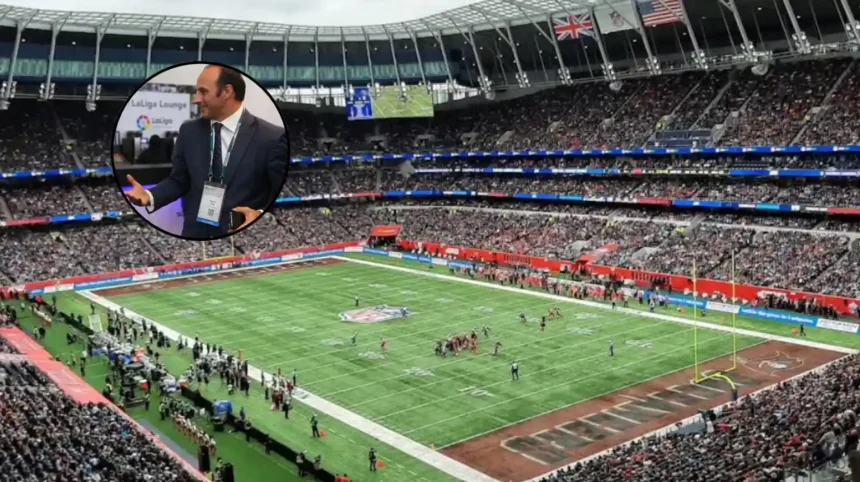
Tottenham (North London News) November 6, 2026 – Former Tottenham Hotspur defender Ramon Vega has announced his intention to challenge Gianni Infantino for the FIFA presidency in the forthcoming election cycle. The 55-year-old former Swiss international, who built a career in asset management and hedge fund operations after retiring from professional football in 2004, has set out a platform focused on institutional reform, transparency, and financial restructuring for world football’s governing body.
As reported by Abbie Meehan of Football London, Vega spent four years at White Hart Lane between 1997 and 2001, making 81 appearances and scoring eight goals for Tottenham Hotspur before completing stints at Celtic and Watford. Following his playing career, Vega completed a transition into finance. In 2012, he became a founding member of London-based Duet Asset Management, which managed £1.9 billion in assets and specialised in private equity, before founding Vega Swiss Asset Management six years later.
Why is Ramon Vega standing for the FIFA presidency?
As reported by Agence France-Presse (AFP), Vega outlined his campaign motives in an official dossier, stating:
“I am standing because my life has prepared me to serve the game. I believe I have a duty and a social responsibility to protect and defend football — its integrity, its people and its future.”
Vega argued that recent leadership decisions have damaged relationships between governing entities, adding:
“Faith and trust across the football family have been deeply damaged. We must rebuild both, restore FIFA’s credibility and reunite the global football family.”
As reported by Goal, Vega emphasised that administrative bodies must remember the broader sports community:
“Football does not belong to presidents, confederations or administrators. Football is greater than any position, any individual or any institution.”
He added that
“the current leadership has demoralised the game”
and that “weak governance has damaged FIFA’s credibility and eroded trust across the global football family.”
How does Ramon Vega propose to reform world football’s governing body?
As reported by Insider Sport, Vega launched his campaign alongside an 11-page manifesto detailing proposals for constitutional and governance updates. The document asserts that FIFA requires structural changes rather than minor adjustments, calling for “decisive change – not cosmetic adjustments.” Vega’s campaign highlights his combined experience as an elite professional athlete and an asset manager to argue for enhanced corporate oversight, transparent auditing of development funds, and structured engagement with member associations.
As reported by DAWN via AFP, Vega previously examined presidential runs during past election cycles, including 2015 and 2019, but noted that member associations are now “much more open to change”. To secure a spot on the official ballot for the election at the FIFA Congress in Rabat, Morocco, candidates must formally secure nominations from at least five of FIFA’s 211 member federations before the declaration deadline, while meeting eligibility requirements regarding active involvement in football governance.
What is the background of this presidential challenge?
The challenge comes at a period of ongoing debate surrounding FIFA’s structural governance and commercial direction. Incumbent President Gianni Infantino, who assumed office in 2016 following the resignation of Sepp Blatter, announced his intention to seek re-election for another term. Infantino’s administration has faced scrutiny from several European member associations and confederations over proposed commercial restructuring and expansion plans, including an aborted scheme involving private equity investment for FIFA competitions.
While some European associations, including the Swiss Football Association, have expressed reservations regarding accountability and institutional transparency under the current executive executive leadership, Infantino maintains significant support across other regional confederations. The Asian Football Confederation (AFC) recently endorsed Infantino’s candidacy, providing him with a strong voting base among its member nations. Additionally, Japan Football Association honorary president Kozo Tashima has declared his own intent to run, broadening the field of prospective candidates.
What is the prediction for how this development could affect football member associations and stakeholders?
The emergence of candidates from corporate and non-traditional administrative backgrounds, alongside continental federation leaders, is likely to force a wider debate on distribution models, regulatory frameworks, and competition schedules across FIFA’s 211 member associations.
For national football federations—particularly smaller and developing associations—a competitive election campaign will push candidates to present clearer commitments regarding financial distribution, infrastructure grants, and development funding transparency. For European clubs and regional confederations, the debate over commercialization and calendar expansion will remain a central point of negotiation with FIFA leadership regardless of the final ballot outcome.