Key Points
- Pay Increase Secured: UNISON members employed as traffic wardens in Camden have voted overwhelmingly to accept a two-year pay deal, featuring a 9 percent pay increase in the current financial year and a further 6.1 percent rise to £19.10 per hour in April next year.
- Enhanced Working Conditions: The agreement incorporates an additional three days of annual leave starting in April next year, overturning initial employer claims that terms could not be altered.
- Fifth Consecutive Dispute Victory: The resolution marks the fifth successful campaign against private contractor NSL by the predominantly Black and migrant workforce in the borough.
- Strategic Ambitions: Trade union members have confirmed that future claims will focus on securing seven days of additional annual leave, full sick pay from day one, and bringing outsourced parking enforcement services back under direct Camden Council management.
- International Solidarity: Delegations of striking wardens extended support to French trade unionists during recent general strike demonstrations in Paris.
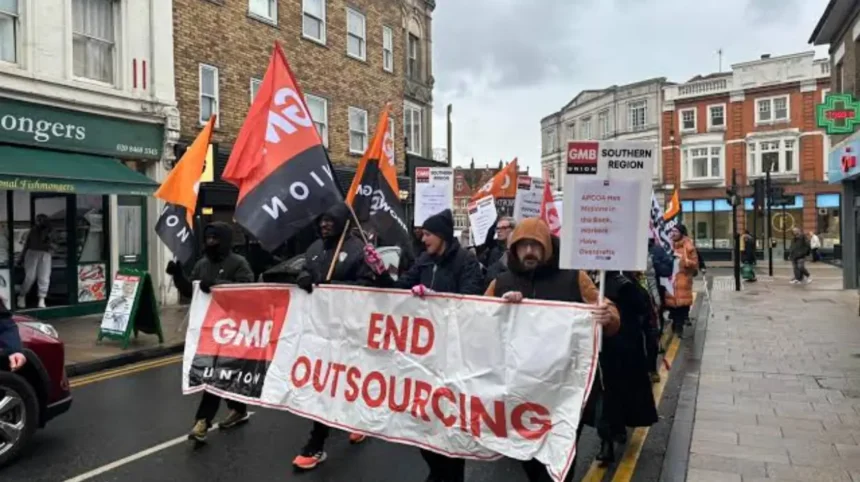
Camden (North London News) November 10, 2026 — Traffic wardens in the London Borough of Camden have voted overwhelmingly to end a six-week continuous strike after securing a significant two-year pay and conditions agreement with their employer, private contractor NSL. As reported by Jude McKechnie of Socialist Worker, the agreement provides a 9 percent hourly rate increase in the current financial year—more than double the Retail Prices Index (RPI) rate of inflation—followed by an additional 6.1 percent pay rise in April next year, raising the hourly rate to £19.10.
- Key Points
- What are the key terms of the agreement accepted by Camden traffic wardens?
- How did union strategy and picket line action shape the dispute outcome?
- What future targets have Camden traffic wardens identified?
- Background of the Camden Parking Enforcement Industrial Dispute
- Prediction: Impact of the Settlement on Employers, Trade Unions, and the Migrant Workforce
The industrial dispute involved a predominantly Black and migrant workforce represented by the UNISON trade union. The settlement marks the fifth consecutive successful dispute resolution achieved by the workforce against NSL, which holds the parking enforcement contract for Camden Council.
What are the key terms of the agreement accepted by Camden traffic wardens?
Under the terms approved by union members, the hourly wage will immediately rise by 9 percent for this financial year, with a secondary rise scheduled for April next year to bring earnings to £19.10 per hour. Beyond base compensation, the contract settlement guarantees three additional days of annual leave for all covered staff starting in April next year.
The concessions represent a shift from the initial negotiation stance of NSL. At the onset of the dispute, management maintained that the maximum achievable wage adjustment was limited to 55p per hour, while initially asserting that changes to annual leave allowances were impossible due to standardized national terms and conditions.
Furthermore, NSL management had proposed limiting leave enhancements strictly to staff with over five years of service. Union representatives rejected the proposal, maintaining unified demands across all experience levels. As reported by Jude McKechnie of Socialist Worker, a worker involved in the dispute stated:
“We wouldn’t have got this deal for every worker without striking. What we have learned in previous strikes is that you have to be prepared to stick it out for as long as it takes. But as long as you are all together you are strong. We wanted to stand our ground until we had an agreement that benefited every worker”.
How did union strategy and picket line action shape the dispute outcome?
The six-week strike was sustained through regular mass meetings on picket lines where union members evaluated management offers. Strikers maintained resolve throughout the industrial action, signaling an intent to mandate an open-ended strike if an acceptable resolution was not reached by the sixth week. As reported by Jude McKechnie of Socialist Worker, one traffic warden recalled:
“We always said if we got to six weeks and we still didn’t have an acceptable offer, we were going to put in for an indefinite strike. It was always, we’re all staying out until we get this done”.
During the strike period, a delegation of Camden wardens traveled to Paris to support French workers taking part in nationwide general strike actions. As reported by Jude McKechnie of Socialist Worker, a UNISON site representative described the atmosphere surrounding the trip to France, noting:
“We visited the natural history museum to meet with French workers on the picket line and gave solidarity. We have a lot of things in common, we’re all getting paid a pittance and then it all gets taken back any way it can through bills and taxes and whatever else they can hit you with. I admire the French for standing up for their rights. I wish we were doing more of that in this country. That’s what we did with our strike—stood up for ourselves”.
What future targets have Camden traffic wardens identified?
Despite accepting the current two-year deal, union representatives indicated that the settlement represents a intermediate step in broader employment goals. Outstanding union demands include securing seven full days of annual leave and full contractual sick pay starting from the first day of illness.
As reported by Jude McKechnie of Socialist Worker, a union member commented following the vote:
“This is a very good win. We already have our eyes set on next year’s claim to secure the rest of what we want. We didn’t get the seven days of annual leave or sick pay from day one that we put in for. Sick pay and more annual leave—NSL knows that will be our next target. We’re already getting ready”.
A broader long-term objective for the workforce remains the full insourcing of parking services back under Camden Council. As reported by Jude McKechnie of Socialist Worker, another worker explained the strategic rationale behind aligning contractor pay and benefits with local authority standards:
“At the moment, Camden council is outsourcing the workforce to NSL because it saves money by not paying into pension pots or for sick or annual leave. We want to be brought back in house. That’s what all of us are fighting for”.
Background of the Camden Parking Enforcement Industrial Dispute
The dispute between Camden traffic wardens and NSL occurs within a multi-year context of industrial relations and public sector outsourcing in local government services. Parking enforcement across several London boroughs has historically been contracted out to private entities such as NSL (a division of Marston Holdings) to manage operational costs and administrative overheads for local authorities.
Over recent bargaining cycles, UNISON members in Camden have engaged in targeted strike campaigns to close the compensation and benefits gap between third-party contracted staff and directly employed municipal workers. Previous industrial actions by the Camden branch have focused on incremental wage adjustments to offset inflation, baseline working hours, and entitlement protections. The latest six-week continuous strike builds upon four prior dispute resolutions, establishing a pattern of organized labor interventions within municipal services contracting in North London.
Prediction: Impact of the Settlement on Employers, Trade Unions, and the Migrant Workforce
The successful industrial action by Camden traffic wardens is expected to influence local government contracting, union organizing strategies, and labor dynamics across several areas:
- Pressure on Local Authority Outsourcing Models: As outsourced contracts approach parity with municipal employment packages in terms of hourly wages and leave allowances, the financial incentive for councils to maintain external contracts diminishes. Camden Council and neighboring local authorities may face heightened political and economic pressure from trade unions to bring enforcement and civil services back in-house.
- Precedent for Private Contractors: Private service providers like NSL operating in public sector transport and enforcement will likely experience increased wage demands across other municipal contracts in Greater London. Union branches are expected to utilize the Camden settlement as a benchmark during upcoming contract renegotiations.
- Impact on Low-Paid and Migrant Labor Dynamics: The high participation rate and organized strike action by a predominantly Black and migrant workforce challenge prevailing labor market assumptions regarding wage depression in low-paid sectors. The dispute demonstrates that sector-wide union density and collective bargaining can push wages upward, offering an operational blueprint for union drives across other outsourced service industries.