Key Points
- The Dallas Morning News published letters addressing Gina Hinojosa, a Carrollton jail-intake dispute, abortion policy and Plano’s Aquatic Center.
- Logan Casada criticised a requirement that arrested people have bail set in Carrollton before jail intake.
- One letter urged Texas to protect women and children while discussing abortion policy.
- Plano residents Marycook Nabors Blanshard and M. K. Werner defended the Plano Aquatic Center’s accessibility, programmes and community value.
Dallas (North London News) November 19, 2026 — The Dallas Morning News published a letters page featuring reader responses to political leadership under Gina Hinojosa, a dispute over Carrollton’s jail-intake requirement, abortion policy and a proposal affecting Plano’s Aquatic Center. The letters present residents’ views rather than official findings or decisions.
What did readers say about the jail-intake rule?
As reported by The Dallas Morning News in its November 19 letters page, Logan Casada of Duncanville responded to coverage of a renewed court rejection of an effort to block a jail-intake rule. The dispute concerns Carrollton and the sheriff’s office over whether people arrested in the city must first have bail set there before being accepted into the county jail.
The letters-page item did not provide a new ruling, settlement or confirmed change to the requirement. It referred readers to the newspaper’s earlier Metro coverage.
How did the letters address Gina Hinojosa and abortion policy?
The page included a letter responding to Destiny Herndon-De La Rosa’s earlier letter, titled “Texas failed women — We can protect both women and children.” The published material indicates that the exchange concerned abortion policy and arguments about protecting women and children, but it did not establish a new law or government action.
The letters page also referenced Gina Hinojosa in the context of Texas political leadership. The available report did not identify a new policy announcement by Hinojosa connected to these letters.
Why are Plano residents defending the Aquatic Center?
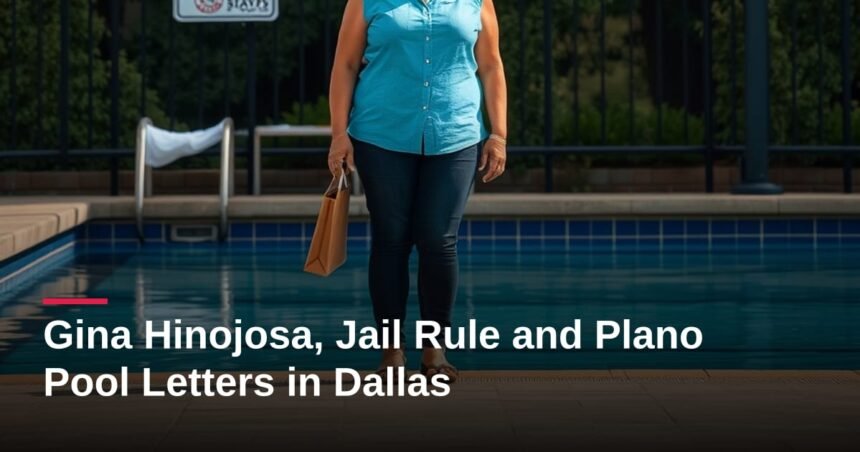
Marycook Nabors Blanshard of Dallas wrote that a proposal involving the Plano Aquatic Center overlooked accessibility, swim-lane availability and the facility’s role in serving central Plano. She said Plano and Plano Independent School District had historically sought comparable services for residents across the city.
Nabors Blanshard also questioned whether a transfer to the school district would leave taxpayers funding the same facility through another institution. She criticised the city Parks and Recreation Department for relying on cost-recovery figures without sufficient community, employee and user input, while noting that the City Council was asking questions.
M. K. Werner of Plano described the 25-metre facility as an important city asset. Werner said the pool had served generations through lap swimming, lessons, competitions and birthday parties, and argued that other recreation-centre pools were more crowded and less suitable for some users.
What is the background to the letters?
The letters were published as reader responses to previously reported news stories and editorials. The jail-intake correspondence followed coverage of a legal challenge involving Carrollton and the sheriff’s office. The Plano correspondence followed an editorial arguing that the city could end its pool operations and move programmes elsewhere. The page also connected abortion-policy discussion to an earlier letter by Destiny Herndon-De La Rosa. The published material did not report final outcomes for the Plano facility or a new legal resolution for the jail-intake dispute.
How could these issues affect their audiences?
Readers following Gina Hinojosa may view the letters as evidence of continued public interest in state leadership and policy direction, but the page does not confirm a new action by her. People affected by the Carrollton jail-intake rule may continue to await further court or law-enforcement decisions. Pro-life and abortion-policy audiences are likely to focus on the competing arguments about protecting women and children. Plano pool users, particularly swimmers, families, people with disabilities and residents seeking less crowded lap lanes, may monitor negotiations and City Council deliberations about the Aquatic Center.