Key Points
- Residents and the Keep Kensal Green Campaign fear that redevelopment of the former Kensal Green Gasworks could release contamination, including cyanide, benzene, naphthalene and asbestos, into surrounding areas.
- Campaigners say remediation could result in more than 100 lorries a day carrying toxic waste along Harrow Road during a 10–12-year development period; combined with Ballymore’s Project Flourish, they claim the total could reach 180 lorries a day.
- The Keep Kensal Green Campaign is preparing legal action once Ballymore’s Section 106 agreement for Project Flourish is filed.
- St William, a partnership between Berkeley Group and National Grid, submitted a planning application in 2025 for about 789 homes on the former gasworks site.
- Kensington and Chelsea Council says objectors’ concerns were considered, planning permission for Project Flourish was resolved subject to a Section 106 agreement and referral to the Mayor of London, and conditions and obligations are intended to secure controls and mitigation.
- Ballymore says the former gasworks site has already undergone substantial remediation and that much contamination has been removed; it says contaminated material will be removed off site and environmental controls will include hoarding and continuous monitoring.
- The council’s planning records show St William’s application was received on 13 June 2025, validated in July 2025, with consultation from 11 July to 19 September 2025; a decision date remained listed as “TBC” in the council’s published timeline.
- Campaigners also raise concerns about traffic, potential unexploded Second World War bombs, effects on Kensal Green Cemetery and the level of affordable housing.
Kensal Green (North London News) November 20, 2026 — Residents living near the former Kensal Green Gasworks say they fear that plans to build thousands of homes on contaminated land could expose communities in Kensington and Chelsea and Brent to airborne toxins and heavy lorry traffic.
The warning has been issued by the Keep Kensal Green Campaign, which is campaigning against both the St William Kensal Gasworks Development and Ballymore’s Project Flourish, a separate redevelopment on land around the Ladbroke Grove Sainsbury’s site. Campaigners have compared the potential consequences with the Corby toxic waste scandal, saying that without effective controls, contaminated material could be spread through the air and transported through residential streets.
What are residents worried about?
The campaign group says the former gasworks land may contain harmful substances including cyanide, benzene, naphthalene and asbestos. It argues that excavation and remediation could release dust and gases into the atmosphere, potentially affecting homes, schools and businesses nearby.
As reported by MyLondon, Jude Allen of Keep Kensal Green said:
“Residents will be inhaling Benzene, naphthalene, cyanide, asbestos, for example, will suffer headaches, itchy, streaming eyes, nausea, and a tight chest. Those are the short-term effects. But what the developer doesn’t want to flag up is that these births of excess will be occurring.”
The campaign group has also said that contamination could travel up to seven kilometres, reaching parts of Westminster and Brent. These claims are contested by the developers and have not been independently established in the reporting.
How many lorries could be involved?
Keep Kensal Green argues that remediation of the St William site could see more than 100 lorries a day using major routes, including Harrow Road, to remove toxic waste during a development period of 10 to 12 years.
The group says that, when combined with waste movements linked to Ballymore’s Project Flourish, the number could reach 180 lorries a day. Ms Allen said:
“St William wants to remove their toxic waste by lorry or container, going through residential areas and taking the route via Harrow Road. They are taking it to what’s called a soil hospital and piling it up there.”
She added: “It’s just horrendous. So, not only have we got these toxic chemicals going into the atmosphere, being carried seven kilometres into Westminster and Brent, we also have, from Ballymore, actual toxic waste will be taken along Harrow Road in 100 lorries a day.”
What do councillors say?
Liberal Democrat councillor Barbara Want, who represents a neighbouring ward in Brent, told MyLondon that residents’ concerns about health impacts were a central issue. She said:
“There are lots of different reasons that people might want to reject to this application, but the one thing that stood is the fear of the health impact, you can argue forever the percentage of affordable housing and local infrastructure, but I don’t feel in our ward that is the key issue.”
Cllr Want said parents had told her they wanted to move away because of fears over the possible release of toxic gas. She said:
“The response was that this was scaremongering, but you do not scaremonger the fact that this is heavily contaminated land and that it is going to be excavated, and that history shows that trusting a council or a contractor is not a guarantee of safety. Have you seen Toxic Town?”
Although the St William site is in Kensington and Chelsea, Cllr Want said contaminated soil was reportedly due to be transported through Brent, prompting concerns about the approval process.
What is being built?
St William, a partnership between Berkeley Group and National Grid, submitted its application for 789 homes on the former Kensal Gasworks gasometers site on 25 July 2025, according to MyLondon. The proposal is smaller than Ballymore’s Project Flourish, but campaigners say their concerns remain the same.
The Royal Borough of Kensington and Chelsea’s planning website states that St William Homes LLP submitted application PP/25/03535 on 13 June 2025 for redevelopment of land in the north-west of the Kensal Canalside Opportunity Area. It also submitted a separate application, PP/25/03536, for works at the Ladbroke Grove Junction and Canal Way.
The council says the St William application seeks permission for demolition of above-ground structures and a mixed-use development containing residential and flexible ground-floor commercial space. Its detailed proposals include approximately 241 homes, while the outline proposals cover further residential floorspace, commercial space, access, open space, landscaping, parking and infrastructure.
The council’s application summary says the illustrative masterplan would result in 794 homes, while a “maximum provision” scenario would deliver 891 homes to assess reasonable worst-case impacts.
What is Project Flourish?
Project Flourish is Ballymore’s proposed redevelopment of land around the Ladbroke Grove Sainsbury’s store, across the Grand Union Canal from Kensal Green Cemetery. As reported by LondonWorld, the scheme would include 2,519 homes, at least 500 of them affordable, two parks, 90,000 square feet of development and 13,000 square feet for a new Sainsbury’s.
MyLondon reported that Ballymore said the development would bring 2,519 homes, including 500 affordable homes, two public parks and play spaces, biodiversity gains and contributions to local amenities. The company did not provide a statement in response to MyLondon’s request for comment.
Ballymore previously told LondonWorld that the former gasworks site had “already undergone substantial remediation” and that results showed “much of the contamination has been removed”. The company said that, before works began, it would remove contaminated material off site for treatment, erect 2.4-metre perimeter hoarding and continuously monitor dust, noise, odour and vibration.
What does the council say?
Kensington and Chelsea Council said objectors were given the opportunity to address the Planning Committee directly and that members considered their concerns. It said the committee resolved to grant planning permission for Project Flourish, subject to completion of a Section 106 legal agreement and referral to the Mayor of London.
The council said it had imposed planning conditions and secured planning obligations through the Section 106 agreement “to ensure that appropriate controls, mitigation measures and other planning benefits are delivered as part of the development”.
Cllr Elizabeth Campbell, leader of Kensington and Chelsea Council, said:
“This is a major milestone for the borough. We have very little space to build in Kensington and Chelsea and a very high demand for housing, so it’s absolutely crucial that the opportunity is grasped with both hands at Kensal Canalside.”
She added: “I hope it won’t be long before the developer can get on with the job of building over 2,500 much-needed homes, 500 of those will be affordable. It will be a change for the area, but I look forward to it becoming a happy neighbourhood and a new amazing space, offering homes and community for many people in the near future.”
Cllr James Husband, chair of the council’s Planning Committee, said the committee had considered the application for almost three hours. He said:
“The number of homes is very significant in the context of our borough and in the end the public benefit outweighed the harms. At a vote of four to one, the committee agreed to resolve to grant planning permission.”
What happens next?
MyLondon reported that a planning decision on the St William site had not yet been made at the time of publication. It said consultation had concluded earlier in the month and that a decision was due on October 8.
The council’s published planning timeline, last updated on 10 July 2025, listed the Planning Committee meeting and application decision as “TBC”. It says that, if permission is granted, conditions may require further details to be submitted for approval, and that an applicant can appeal to the Secretary of State if permission is refused or conditions are considered unreasonable.
The Keep Kensal Green Campaign is crowdfunding legal action against the proposals. It says the action will be launched once the planning application is finalised and once Ballymore files the Section 106 agreement for Project Flourish.
Background of the development
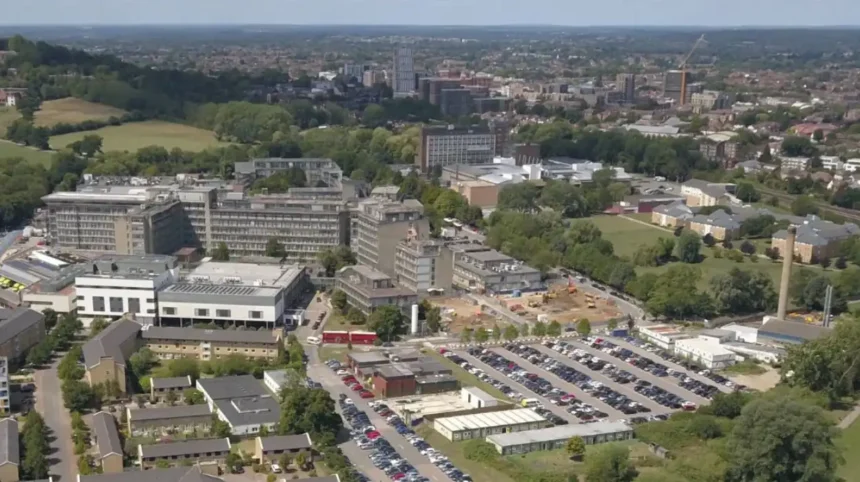
The Kensal Canalside Opportunity Area has been identified for growth under the London Plan 2021 and Kensington and Chelsea’s Local Plan 2024. The council says the former Kensal Gas Works site lies within the Dalgarno ward, at Canal Way, London W10 5JD.
The area was formerly occupied by gasworks infrastructure, including gasometers. Campaigners say this industrial history is the reason they are concerned about residual contamination in the ground.
The Keep Kensal Green Campaign began as opposition to Ballymore’s Project Flourish, which was being developed in partnership with Sainsbury’s. It later extended its campaign to the separate St William proposal on the former gasworks site.
In 2023, LondonWorld reported that Jude Allen’s Keep Kensal Green petition had attracted more than 3,000 signatures since its launch in April that year. The petition raised concerns about the remediation of contaminated land, air pollution and the impact of construction on local residents.
Prediction: How could this affect residents?
If the developments proceed as proposed, residents in Kensal Green, Ladbroke Grove and nearby parts of Brent could face several years of construction activity, lorry movements and remediation work. The most immediate practical effects may include traffic disruption on routes such as Harrow Road, noise, dust and changes to access around the sites.
For households close to the former gasworks, the central issue is whether the developers’ proposed controls prevent contamination from becoming airborne during excavation. Ballymore says it will remove contaminated material off site and monitor dust, noise, odour and vibration, while the council says planning conditions and Section 106 obligations are intended to secure appropriate controls and mitigation.londonworld+1
For campaigners and residents who remain unconvinced, the planned legal action could delay or alter aspects of the schemes if it proceeds. The outcome may also influence how future developments on former industrial land in London are assessed, particularly where contamination, transport routes and densely populated neighbourhoods overlap.