
Key Points
- London Underground drivers belonging to the RMT union are taking part in a 24-hour strike from 12pm on Thursday 26 November until 11.59am on Friday 27 November.
- The Elizabeth line is not directly affected by the RMT strike and is expected to run as normal on both days.
- Transport for London (TfL) says the Elizabeth line may be busier than usual because passengers are expected to switch from disrupted Underground services.
- The Piccadilly, Circle and Waterloo & City lines face the most severe disruption during the strike.
- TfL says disruption across the Underground network will begin before the formal strike period and continue afterwards.
- The RMT has announced eight 24-hour strikes across 16 days between November 2026 and February 2027.
- The dispute concerns London Underground’s proposed voluntary four-day working week and its Trains Modernisation Framework.
- RMT general secretary Eddie Dempsey says the proposals would force drivers to give up existing protections and could lead to job cuts.
- London Underground’s Nick Dent says the proposals would give drivers a meaningful choice over their working pattern while improving the service.
- ASLEF organiser Finn Brennan says drivers who wish to remain on a five-day week will be able to do so without detriment.
- The DLR, London Overground, buses, trams and National Rail services are expected to operate normally.
London (North London News) November 26, 2026 — London Underground passengers face two days of disruption as RMT members begin a 24-hour strike, but the Elizabeth line is not part of the industrial action and is expected to operate normally. As reported by Ed Cunningham of Time Out, the strike began at 12pm on Thursday 26 November and is scheduled to end at 11.59am on Friday 27 November.
- Key Points
- Is the Elizabeth line running during the strike?
- Which Underground lines are most affected?
- Why are London Underground drivers striking?
- What has the RMT said?
- What has London Underground said?
- What has ASLEF said?
- What other transport is available?
- When are the next strikes?
- How will airport journeys be affected?
- Background of the development
- Prediction: How could this affect London commuters?
The action affects London Underground drivers and comes after last-ditch negotiations between the union and Transport for London failed on Tuesday 24 November. The RMT has announced eight 24-hour strikes across 16 days between November 2026 and February 2027.
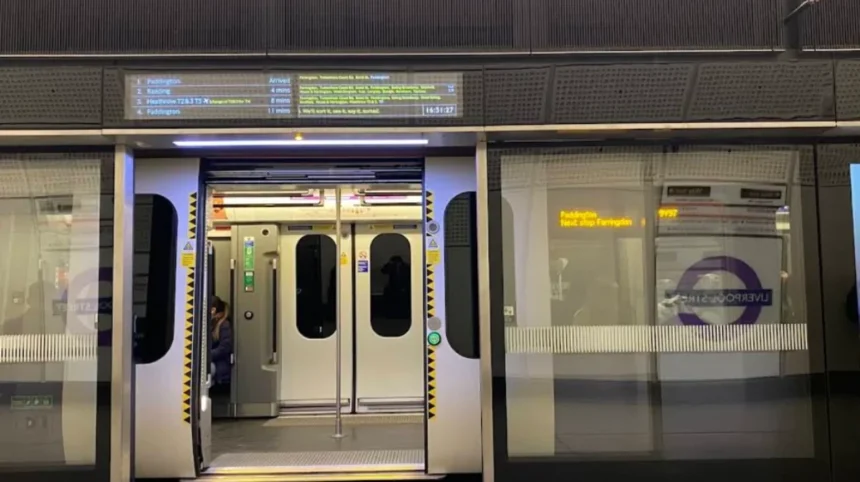
Although the Elizabeth line is often mistaken for part of the London Underground network, it is a separate rail service. Time Out reports that no Elizabeth line strikes are currently planned and that the purple line will run normally during the current walkout.
Is the Elizabeth line running during the strike?
Yes. The Elizabeth line is expected to run as normal on Thursday 26 November and Friday 27 November.
As reported by Time Out, the line will not be directly affected by the RMT strike. However, passengers should expect services to be busier than usual, as commuters diverted from the Underground are likely to use the Elizabeth line instead.
TfL says that some Elizabeth line stations may have reduced interchange access during the disruption. Passengers travelling to or from stations shared with London Underground services should therefore allow additional time for their journeys.
The Elizabeth line has not been affected by major industrial action for almost two years. Time Out notes that control room staff last walked out on New Year’s Eve 2024.
Which Underground lines are most affected?
The Piccadilly, Circle and Waterloo & City lines face the most significant disruption during the strike.
According to TfL’s guidance reported by Time Out, there will be no Piccadilly or Circle line services all day on Thursday 26 November. The Waterloo & City line will also have no service from midday.
Normal Underground service is expected until 10am on Thursday. Services will then begin to be reduced, with disruption across all lines from midday. TfL says there will be no services on the entire Underground network after 9pm on Thursday.
On Friday 27 November, services are expected to begin late. Disruption is due to continue until 11.59am, with no trains on the Circle, Piccadilly and Waterloo & City lines. Services on all lines are then expected to resume after midday, although disruption may continue. TfL says normal service should return by about 6pm.
Why are London Underground drivers striking?
The RMT says its members are taking action in protest at “attacks on working conditions”.
As reported by Time Out, the union is opposing London Underground’s plans to introduce a so-called voluntary four-day working week alongside a new Trains Modernisation Framework.
The RMT argues that the proposals would require drivers to surrender hard-won protections whether they work four or five days a week. It also says drivers could face more time driving trains, earlier starts, later finishes and possible displacement from their current depots.
The union has warned that the plans could pave the way for “hundreds of job cuts”.
What has the RMT said?
RMT general secretary Eddie Dempsey said:
“London Underground is attempting to dress up a wholesale attack on drivers’ working conditions as a voluntary four-day week.”
As reported by Time Out, Dempsey said:
“But there is nothing voluntary about a scheme that forces drivers to give up existing protections whether they work four days or five, and threatens those who refuse with displacement from their depots.”
He added: “Our members are being asked to spend more time driving trains, accept longer and more unpredictable shifts and surrender agreements that have been negotiated and defended over many years.”
Dempsey said: “This is not about improving work-life balance. It is about squeezing more work out of fewer drivers while giving management greater flexibility at the expense of our members.”
He said the RMT was not opposed to a genuine four-day working week that benefits its members, but would not accept it being used as a vehicle for job cuts, intensified working and the erosion of terms and conditions.
Dempsey said: “London Underground must withdraw these damaging proposals and engage seriously with the union to reach a negotiated settlement.”
What has London Underground said?
Nick Dent, director of customer operations for London Underground, said the proposals would give colleagues “a real, meaningful choice on their working pattern without having to change where they work”.
As reported by Time Out, Dent said:
“This will also mean less time at work for Tube drivers, while delivering a more efficient, reliable Tube service for our customers.”
London Underground has not announced that the strike has been called off. Time Out reports that talks between the RMT and TfL failed on Tuesday 24 November.
What has ASLEF said?
Finn Brennan, ASLEF’s full-time organiser on London Underground, told the BBC that the union was surprised by the RMT’s decision to strike.
As reported by Time Out, Brennan said:
“We are surprised that the RMT has, once again, decided to take strike action to try to prevent Underground drivers moving to a four-day week on a voluntary basis.”
He said the voluntary four-day week would give Tube drivers an extra 35 days off every year, with rosters based on a 34-hour week, in return for some changes to working conditions and a move to electronic rather than paper-based systems for booking on for duty.
Brennan said: “Management have agreed that anyone who wants to keep working a five-day week will be able to do so without suffering any detriment, and we will be holding them to that.”
He added: “A strike designed to stop people having the choice of a shorter working week and more time off is a strange choice to make.”
What other transport is available?
TfL says the Elizabeth line, DLR, London Overground, buses, trams and National Rail trains are working as normal during the strike.
Time Out reports that the London Overground is not directly affected by the current industrial action. No strikes are currently planned on the Overground network.
Eurostar is not expected to be affected by the strike action. No further bus strikes are currently planned, although east London has experienced bus strikes over the past year.
TfL recommends that passengers allow extra time for journeys during the strike period. E-bike hire schemes are also expected to be in greater demand, as they were during earlier strikes in April and June 2026.
When are the next strikes?
The RMT has announced seven further 24-hour strikes after the current action.
According to Time Out, the dates are:
- Thursday 17 December 2026
- Saturday 19 December 2026
- Monday 4 January 2027
- Wednesday 6 January 2027
- Wednesday 17 February 2027
- Tuesday 23 February 2027
- Thursday 25 February 2027
Each strike is expected to begin at midday and end at midday the following day. The current period of industrial action is set to end on 26 February 2027, although further strikes could be called if no agreement is reached.
How will airport journeys be affected?
Passengers travelling to London airports may need to change their usual route during the strike.
Time Out reports that the Piccadilly line, which serves Heathrow, will be affected. Travellers can instead use the Elizabeth line or Heathrow Express to reach the airport.
Coaches operated by companies including National Express are also expected to run from central and outer London areas. All London airports remain accessible by road, although passengers should expect potentially higher levels of traffic on strike days.
Background of the development
The strike forms part of a wider dispute between the RMT and London Underground over proposed changes to drivers’ working arrangements.
The union says the proposed voluntary four-day week and Trains Modernisation Framework would reduce protections, increase working hours and potentially lead to job cuts. London Underground says the proposals would offer drivers greater choice over their working patterns while improving the reliability and efficiency of the service.
The RMT’s action is separate from a dispute involving the TSSA union, which walked out on the Piccadilly and District lines on 20 and 21 November. Previous London Underground strikes have taken place in 2022, 2023, 2025 and earlier in 2026.
Prediction: How could this affect London commuters?
London commuters are likely to face longer journeys, crowded alternative services and greater uncertainty during the strike period. The Elizabeth line is expected to remain running, but increased demand could make it busier, particularly at major interchange stations.
Passengers who normally use the Piccadilly, Circle or Waterloo & City lines may need to use the Elizabeth line, buses, DLR, Overground or National Rail services. Those travelling to Heathrow may also consider the Elizabeth line or Heathrow Express instead of the Piccadilly line.
With further RMT strikes scheduled for December, January and February, commuters may need to plan journeys in advance and allow additional travel time throughout the winter period. Employers, students and airport passengers could also be affected by disruption during the announced strike dates.