Key Points
- Camden is the London Borough of Camden in north London, bordering the City of London, Westminster, Islington, Haringey, Barnet, and Brent.
- Known as a central hub of culture and tourism, featuring famous markets, artistic heritage, vibrant music scene, and extending into suburban north London.
- Key neighbourhoods include Bloomsbury, Camden Town, Kings Cross, Holborn, Kentish Town, Euston, Hampstead, Highgate, Primrose Hill, Swiss Cottage, and Fortune Green.
- Notable places of interest: British Museum, British Library, the Roundhouse, Camden Town markets, most of Hampstead Heath, Primrose Hill, London Zoo, Wellcome Collection, Highgate Cemetery, and Kenwood House.
- Pub quiz fact: A proposed name for the borough was Fleet, after the subterranean river running through the area.
- Population: 216,943 (2024 estimate from ONS).
- Demographics (2021 census): 59.5% identify as white, 18.1% as Asian, 9% as black, 6.6% as mixed race, and 6.8% as other; 21.3% use a main language other than English, with Bengali, French, and Spanish prominent.
- Average property price: £784,000 (ONS, December 2025).
- Average monthly rent: £2,614 (ONS, January 2026).
- Band D council tax for 2026/27: £2,207.
- Transport: 17 Tube stations, one Elizabeth line station, nine London Overground stations, around 435 bus stops, plus Euston, Kings Cross, and St Pancras railway stations (TfL data).
- Local history: Named after first Earl Camden, Charles Pratt, who started Camden Town in 1791; borough formed in 1965 from Hampstead, Holborn, and St Pancras metropolitan boroughs; ancient history includes human life from 7000 BC on Hampstead Heath; features rivers like Fleet, Tyburn, Westbourne; Swiss Cottage named after 19th-century tavern.
- Electoral history: Mostly Labour-controlled since 1965; Conservatives held from 1968-1971; no overall control 2006-2010; regarded as safe Labour seat; Prime Minister Sir Keir Starmer is MP for Holborn and St Pancras in southern Camden.
- Local elections scheduled for Thursday, 7 May, with guides produced for London’s 32 boroughs.
Camden (North London News) April 6 2026, the London Borough of Camden stands as a vibrant north London powerhouse blending cultural icons with suburban stretches, as detailed in comprehensive borough profiles ahead of polling day.
- Key Points
- Where Exactly is Camden Located in London?
- What Makes Camden a Cultural and Tourism Hub?
- How Diverse is Camden’s Population and Demographics?
- What are Camden’s Housing Costs and Council Tax Rates?
- How Does Transport Shape Daily Life in Camden?
- What is Camden’s Rich Local History?
- What is Camden’s Electoral History and Current Landscape?
- Why Does Camden Matter in the 7 May Local Elections?
This profile, drawing from official sources and historical records, highlights Camden’s unique position as a tourism magnet and electoral stronghold, where voters will decide council representation amid soaring property prices and a diverse population.
Where Exactly is Camden Located in London?
The London Borough of Camden occupies a strategic spot in north London, sharing borders with the City of London to the east, Westminster to the south, Islington to the northeast, Haringey further north, Barnet to the northwest, and Brent to the west.
This positioning places it at the heart of the capital’s transport and cultural networks.
As outlined in the official local elections guide produced ahead of 7 May polling, Camden’s geography spans from bustling central zones to quieter suburbs, making it a microcosm of London’s urban diversity.
What Makes Camden a Cultural and Tourism Hub?
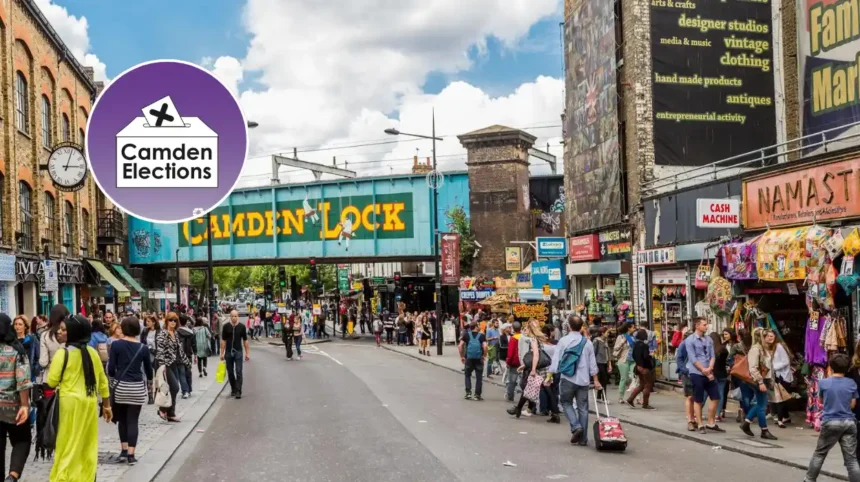
Camden thrives as a central hub of culture and tourism, renowned for its famous markets, rich artistic heritage, and pulsating music scene. Yet, the borough extends far into suburban north London, offering a mix of high-energy urban life and green escapes.
According to the borough profile compiled for the upcoming elections, standout neighbourhoods include Bloomsbury with its literary legacy, Camden Town’s punk vibes, Kings Cross’s regeneration, Holborn’s legal heart, Kentish Town’s community feel, Euston as a transport nexus, Hampstead’s leafy affluence, Highgate’s historic charm, Primrose Hill’s panoramic views, Swiss Cottage’s modern residential appeal, and Fortune Green’s village-like atmosphere.
Places of interest abound: the world-class British Museum, the vast British Library, the iconic Roundhouse venue, bustling Camden Town markets, most of Hampstead Heath’s expansive greenery, Primrose Hill for sunset vistas, London Zoo, the Wellcome Collection’s medical curiosities, atmospheric Highgate Cemetery, and elegant Kenwood House.
A quirky pub quiz fact notes that a proposed name for the borough was “Fleet”, honouring the subterranean river that courses through much of the area, as referenced in historical borough overviews.
How Diverse is Camden’s Population and Demographics?
Camden’s population stands at 216,943 according to the 2024 estimate from the Office for National Statistics (ONS), accessible via their local statistics portal for area E09000007.
Demographic data from the 2021 census paints a multicultural picture: 59.5% identify as white, 18.1% as Asian, 9% as black, 6.6% as mixed race, and 6.8% as other ethnic groups.
Notably, around 21.3% of residents use a main language other than English at home, with Bengali, French, and Spanish ranking prominently among them.
These figures, visualised in ONS census area changes for E09000007, underscore Camden’s role as a global village within London, influencing everything from council services to election dynamics.
What are Camden’s Housing Costs and Council Tax Rates?
Housing in Camden remains among London’s priciest. The Office for National Statistics (ONS) reports the average house price hit £784,000 in December 2025, per their housing prices local visualisation for E09000007.
Rental costs are equally steep, with ONS data showing an average monthly rent of £2,614 in January 2026 for the same area.
On the tax front, Band D council tax for the 2026/27 financial year is set at £2,207, as published on the Camden Council website’s council tax guide.
These figures highlight affordability pressures that could shape voter priorities in the 7 May elections.
How Does Transport Shape Daily Life in Camden?
Transport for London (TfL) describes Camden’s connectivity as exceptional, with 17 Tube stations, one Elizabeth line station, nine London Overground stations, and approximately 435 bus stops. Major rail hubs include Euston, Kings Cross, and St Pancras International, as detailed in TfL’s borough information pages.
This network supports the borough’s tourism draw and commuter flows, but also fuels debates on infrastructure and congestion ahead of local polls.
What is Camden’s Rich Local History?
Camden’s name derives from Charles Pratt, the first Earl Camden, who kickstarted Camden Town’s development in 1791. The borough formed in 1965, merging the metropolitan boroughs of Hampstead, Holborn, and St Pancras.
Its history stretches back millennia, with evidence of human life around 7000 BC discovered on Hampstead Heath. For centuries, much of the area stayed undeveloped, crisscrossed by rivers like the Fleet, Tyburn, and Westbourne amid thick forests, as chronicled on Camden Council’s “Camden’s History” page.
Swiss Cottage emerged later, named for a Swiss-style tavern built in the early 19th century as a tollgate; it evolved into a popular spot, possibly London’s first sports bar.
What is Camden’s Electoral History and Current Landscape?
Electorally, Camden has leaned Labour since its 1965 inception. The Conservatives controlled the council briefly from 1968 to 1971, and there was no overall control between 2006 and 2010. It is widely seen as a safe Labour stronghold.
Adding national weight, Prime Minister Sir Keir Starmer serves as MP for Holborn and St Pancras, covering the borough’s southern reaches.
As the 7 May local elections approach, these profiles for London’s 32 boroughs – including Camden – equip voters with essential context on governance, services, and history.
Why Does Camden Matter in the 7 May Local Elections?
With its blend of cultural prestige, demographic diversity, sky-high housing costs, and Labour dominance, Camden exemplifies the stakes in London’s local polls. Voters face choices on council tax, housing, transport, and preserving iconic spaces amid suburban needs.
The borough’s profiles emphasise its evolution from ancient forests to modern cultural beacon, positioning the 7 May vote as pivotal for balancing tourism booms with resident priorities.