

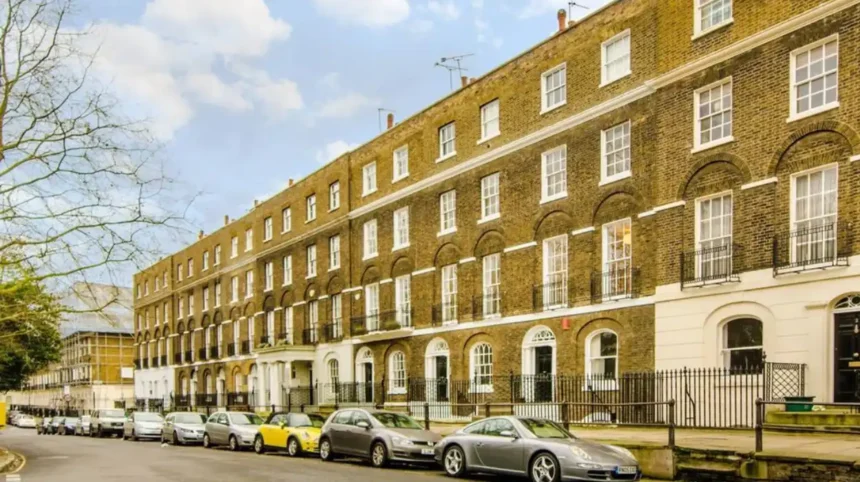
Islington’s Georgian squares are among the most distinctive examples of historic residential planning in North London. Developed mainly between the late 18th century and the mid-19th century, these squares transformed former agricultural estates into organised residential neighbourhoods. Their architecture reflects Georgian design principles, early Victorian influences, changing social conditions and the expansion of London beyond its historic centre.
- What Are Georgian Squares in Islington?
- When Did Islington’s Georgian Squares First Develop?
- Why Did Developers Build Georgian Squares in Islington?
- How Did Barnsbury Become the Centre of Islington’s Georgian Architecture?
- What Architectural Features Define Islington’s Georgian Squares?
- London stock brick façades
- Symmetrical windows and entrances
- Stucco and decorative details
- Basement areas and iron railings
- Roof structures and parapets
- How Did Islington’s Georgian Squares Influence Residential Architecture?
- The development of continuous residential terraces
- The relationship between houses and gardens
- The transition towards early Victorian architecture
- What Is the History of Duncan Terrace and Colebrooke Row?
- What Role Did Northampton Square Play in Islington’s Residential Development?
- How Did Industrialisation and Population Growth Change Islington’s Historic Squares?
- Railway expansion and suburban movement
- Changes in property occupancy
- The changing character of Barnsbury
- How Did Islington’s Georgian Squares Become Protected Heritage Areas?
- The introduction of conservation protection
- What does conservation area status protect?
- The importance of Article 4(2) Directions
- Which Georgian Squares Should Visitors Explore in Islington?
- How Can Visitors Explore Islington’s Georgian Architectural Heritage?
- What Is the Lasting Influence of Islington’s Georgian Squares on Modern Residential Architecture?
- The importance of shared green spaces
- The preservation of historic townhouses
- The relationship between conservation and regeneration
- Their relevance to future urban development
- Why Are Islington’s Georgian Squares Important to London’s Architectural History?
The historic squares of Islington include Canonbury Square, Barnsbury Square, Thornhill Square, Gibson Square and Milner Square. Each reflects a different stage in the area’s residential development. Their buildings feature traditional brick façades, sash windows, decorative stucco, basement areas, landscaped gardens and carefully planned street layouts.
These squares were originally associated with prosperous merchants, professionals and middle-class households seeking larger homes outside central London. Their development also established architectural patterns that influenced Islington’s later residential streets.
Today, the squares remain important parts of North London’s architectural heritage. Their historic buildings, gardens and surrounding streets provide evidence of how Islington developed from a semi-rural settlement into a densely populated London district.
What Are Georgian Squares in Islington?
Georgian squares in Islington are planned residential spaces surrounded by houses built predominantly between the late 18th and mid-19th centuries. They combine formal street layouts, consistent architectural façades and central gardens, creating distinctive neighbourhoods such as Canonbury and Barnsbury.
A Georgian square is an urban residential development arranged around an open central space. Houses generally occupy the surrounding streets, creating a continuous architectural frontage. The central area provides greenery, visual separation and a shared outdoor environment.
The Georgian architectural period traditionally covers the reigns of the first four Hanoverian kings, from 1714 to 1830. However, Islington’s historic residential landscape also includes early Victorian buildings constructed after 1837. These developments frequently continued Georgian architectural traditions.
In Islington, the term Georgian squares therefore describes a wider collection of late-Georgian and early-Victorian residential developments.
The principal architectural characteristics include:
- Symmetrical façades: Windows and entrances follow balanced arrangements.
- Stock brick construction: Yellow or brown London stock bricks create consistent external surfaces.
- Sash windows: Traditional vertically sliding timber windows provide light and ventilation.
- Stucco decoration: Rendered architectural details create emphasis around entrances, windows and façades.
- Basement accommodation: Many townhouses include lower-ground-floor rooms and front lightwells.
- Central gardens: Landscaped communal spaces provide greenery within residential developments.
These features distinguish Islington’s historic squares from ordinary residential streets. The combination of architecture, building proportions, landscaping and street layout creates a recognisable historic environment.
The borough’s conservation policies recognise that heritage value extends beyond individual buildings. Historic boundaries, paving, trees, gardens and the relationship between buildings contribute to the character of these areas.
When Did Islington’s Georgian Squares First Develop?
Islington’s Georgian square development began around 1800 with Canonbury Square and expanded during the 1820s, 1830s and 1840s. Barnsbury subsequently became a major residential development, with planned estates introducing distinctive squares and terraces.
Before large-scale residential development, much of Islington consisted of agricultural land, country estates, scattered settlements and open fields. Its position north of the City of London made it increasingly attractive as London expanded.
The late 18th century and early 19th century brought growing demand for suburban housing. Wealthier households wanted larger homes with gardens and access to central London.
Landowners responded by leasing estates to developers and builders. These arrangements encouraged the creation of organised residential neighbourhoods rather than isolated houses.
Canonbury Square and the beginning of planned development
Canonbury Square was laid out in 1800 and is recognised by the London Parks and Gardens Trust as the earliest of Islington’s squares.
The development took place on land belonging to the Marquess of Northampton. Henry Leroux and Richard Laycock were associated with its development.
The square established an important residential pattern for Canonbury. Houses faced a central garden, creating an organised environment with a clear relationship between private residences and shared open space.
The garden also experienced several changes in ownership and management. The 4th Marquess of Northampton opened it to the public in 1884. It was transferred to Islington Borough Council in 1888.
The original railings were lost during the Second World War. Reproduction railings now contribute to the historic appearance of the garden. Landscaping improvements followed in 2006.
Canonbury Square also became associated with notable cultural figures, including writers Evelyn Waugh and George Orwell and artists Duncan Grant and Vanessa Bell.
The expansion of residential development
During the 1820s, development expanded towards Barnsbury. Landowners divided former agricultural estates into building plots, creating opportunities for residential construction.
The development process accelerated during the 1830s and 1840s. Larger estates produced coordinated streets, terraces and landscaped squares.
This period established the architectural character that remains visible throughout much of Islington.
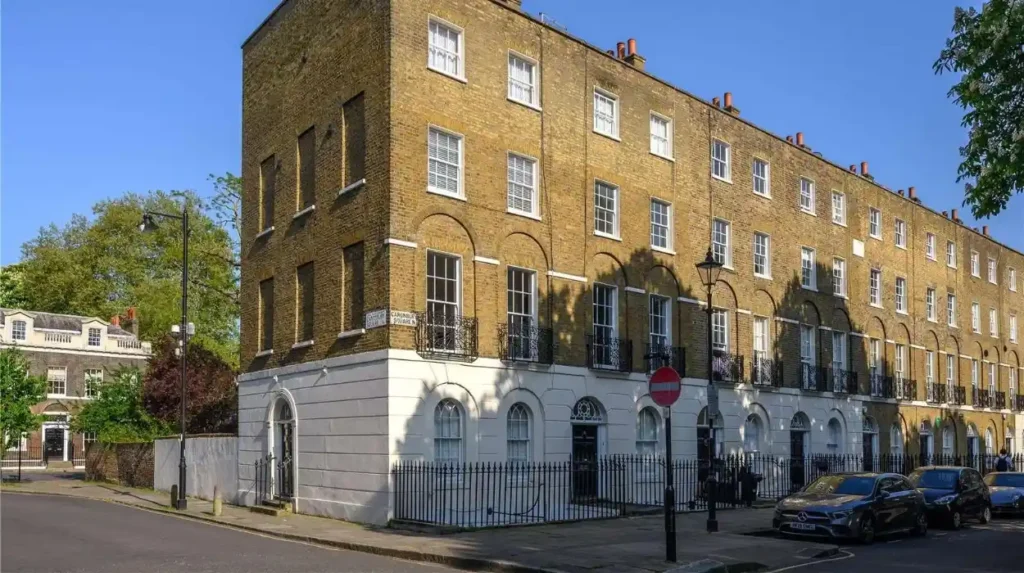
Why Did Developers Build Georgian Squares in Islington?
Developers built Georgian squares in Islington to meet growing demand for suburban housing, attract prosperous households and increase the value of former agricultural estates. Their planned layouts combined residential accommodation, attractive gardens and convenient access to London.
The expansion of Georgian Islington reflected broader changes in London’s population, economy and residential preferences.
During the late 18th and early 19th centuries, the capital experienced significant commercial growth. Merchants, professionals, government employees and business owners required suitable housing near the City.
Central London had limited space for large residential properties. Suburban locations offered opportunities for bigger houses, private gardens and less congested surroundings.
Islington offered several advantages.
First, it was close enough to central London for commercial and professional travel. Second, its agricultural landscape provided substantial areas of developable land. Third, established roads connected the district with surrounding settlements and the City.
The role of landowners and building leases
Landowners controlled large estates across Islington. They frequently granted building leases to developers, who organised construction and sold or rented completed properties.
This arrangement allowed estates to generate long-term income while encouraging residential expansion.
In Barnsbury, the historic estate system shaped the location and development of several residential squares. The land was progressively divided into building plots from the 1820s onwards.
The influence of middle-class housing demand
The intended residents included prosperous tradespeople, merchants and professionals.
Their housing requirements influenced architectural design. Large townhouses provided multiple floors, reception rooms, bedrooms and domestic service accommodation.
The central gardens also strengthened the residential appeal of these developments.
The result was a recognisable suburban housing model that combined private domestic space with shared landscaped surroundings.
How Did Barnsbury Become the Centre of Islington’s Georgian Architecture?
Barnsbury became one of Islington’s principal historic residential areas through estate development beginning in the 1820s. Its squares, including Cloudesley, Gibson, Lonsdale and Thornhill, demonstrate the expansion of late-Georgian and early-Victorian architecture.
Barnsbury developed from agricultural and manorial land into a planned residential district.
The area takes its name from Ralph de Berners, whose family held local manorial land during the 13th century. Large-scale residential building started in the 1820s.
Islington Council identifies Barnsbury as an important example of formal late-Georgian and early-Victorian residential development. Its conservation area contains several notable sequences of squares and terraces.
Cloudesley Square
Cloudesley Square is one of Barnsbury’s early residential developments. Its history is associated with the expansion of the Cloudesley estate during the 1820s.
The square demonstrates the relationship between residential architecture and religious institutions in developing suburban neighbourhoods.
Holy Trinity Church became an important landmark in the surrounding area. Its presence reflects the importance of churches and community facilities in the planning of expanding residential districts.
Gibson Square
Gibson Square represents the formal residential architecture of Barnsbury.
Its buildings form a coherent architectural environment, with traditional proportions, brick construction and carefully arranged façades.
The square forms part of the area’s wider collection of late-Georgian and early-Victorian developments.
Lonsdale Square
Lonsdale Square is particularly distinctive because of its Tudor Gothic architectural design.
The square was designed in 1835 by architect Richard Cromwell Carpenter. Its pointed architectural details and Gothic-inspired appearance distinguish it from conventional Georgian brick terraces.
This development demonstrates that Barnsbury’s residential architecture was not restricted to one uniform style. Developers and architects introduced different historical influences while retaining the planned square layout.
Thornhill Square
Thornhill Square developed during the 1840s as part of the wider Thornhill estate.
Its architecture reflects the transition from late-Georgian design towards early-Victorian residential development.
The surrounding streets include substantial houses and consistent building frontages. Their scale demonstrates the continuing demand for spacious middle-class housing in North London.
The Islington Council Barnsbury conservation guidelines specifically identify Lonsdale Square, Gibson Square and Thornhill Square as important examples of the area’s historic residential development.
What Architectural Features Define Islington’s Georgian Squares?
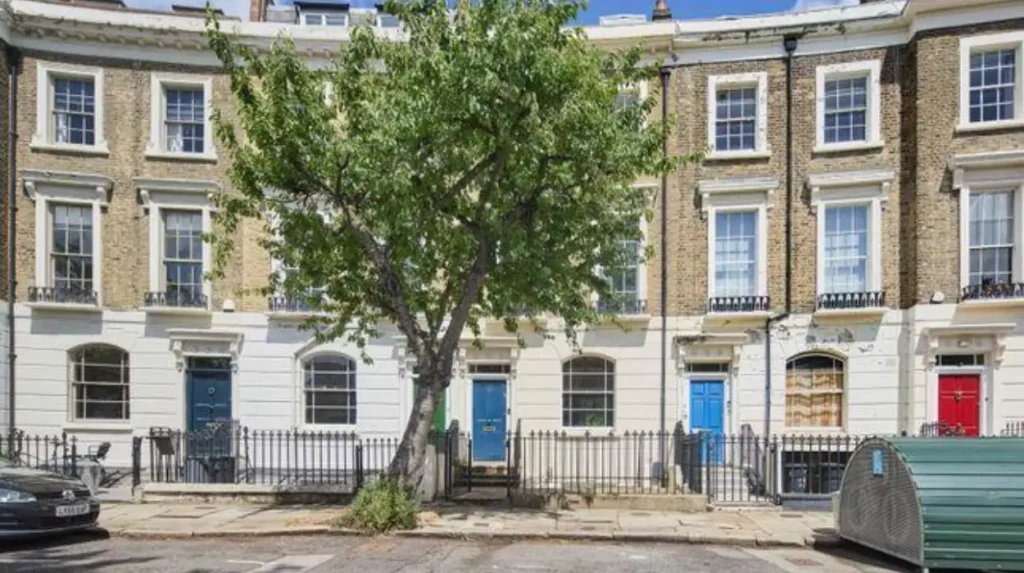
Islington’s Georgian squares feature symmetrical brick townhouses, sash windows, decorative entrances, stucco façades and landscaped central gardens. Their architectural consistency creates recognisable residential streetscapes, while variations in building materials, rooflines and decorative details reflect different construction periods.
The architectural character of Islington’s squares developed through a combination of Georgian planning principles and changing building techniques.
Although individual developments differ, several recurring features connect them.
London stock brick façades
London stock brick is one of the most recognisable materials in Islington’s historic residential architecture.
Its yellow, brown and muted earthy tones create visually consistent building frontages. Brickwork also provided a durable construction material for large residential terraces.
Many houses feature decorative brick detailing around windows, doors and upper-storey elevations.
Symmetrical windows and entrances
Georgian architecture prioritised balanced proportions.
Windows generally follow regular vertical and horizontal arrangements. Main entrances often occupy prominent positions within the front elevation.
Traditional timber sash windows are another important feature. Their vertically sliding sections provided ventilation and natural light.
Stucco and decorative details
Stucco became increasingly prominent in residential architecture during the late Georgian and early Victorian periods.
This rendered material created smoother surfaces around entrances, columns and window surrounds.
Some Islington houses feature decorative cornices, parapets and classical entrance details. These elements give residential buildings a more formal appearance.
Basement areas and iron railings
Many historic townhouses include basement accommodation.
Front lightwells allow natural light into lower-ground-floor rooms. Iron railings traditionally separate these areas from pavements and streets.
These architectural arrangements also demonstrate how developers maximised usable space within relatively narrow urban plots.
Roof structures and parapets
Historic houses frequently conceal their roof structures behind parapets.
The roof design often includes concealed valley gutters and sloping roof sections. This arrangement maintains a consistent street-facing roofline.
The resulting architectural appearance contributes to the visual continuity of Islington’s residential squares.
How Did Islington’s Georgian Squares Influence Residential Architecture?
Islington’s Georgian squares established residential design principles based on coordinated building frontages, regular proportions, traditional materials and shared landscaped spaces. These principles influenced surrounding terraces, villas and later housing developments across North London.
The influence of the squares extended beyond their central gardens.
Their architectural arrangements created a framework for residential development throughout Barnsbury and Canonbury.
The development of continuous residential terraces
The Georgian townhouse became an important model for Islington’s residential expansion.
Developers constructed rows of connected houses using consistent heights, materials and architectural proportions.
This approach produced continuous street frontages and maximised the use of available land.
The same principles appeared in neighbouring streets, where houses followed established building lines and similar façade arrangements.
The relationship between houses and gardens
Central gardens became defining elements of planned residential squares.
They provided green space within increasingly developed neighbourhoods. Their presence also improved the visual setting of surrounding houses.
The relationship between private homes and shared gardens became an important part of Islington’s residential character.
The transition towards early Victorian architecture
The architectural development of Islington continued after the Georgian period.
Early Victorian buildings frequently retained Georgian proportions while introducing additional decorative features.
Stucco façades, Gothic influences and more elaborate architectural details became increasingly visible.
The Barnsbury conservation area demonstrates this transition particularly clearly. Its residential streets contain formal developments from both periods.
What Is the History of Duncan Terrace and Colebrooke Row?
Duncan Terrace and Colebrooke Row represent an important historic residential landscape near Islington’s New River. Their development connects early Georgian housing, engineered water infrastructure and the later expansion of residential streets around landscaped open spaces.
Duncan Terrace and Colebrooke Row form part of a distinctive historic environment near the Angel.
Their setting is closely connected with the New River, an artificial watercourse constructed to bring fresh water from Hertfordshire to London.
The New River opened in 1613. Its original route passed through parts of Islington and influenced the subsequent development of surrounding land.
Residential construction around Duncan Terrace and Colebrooke Row took place over an extended period, broadly from the early 18th century into the early 19th century.
These streets are therefore important when examining the wider history of Islington’s Georgian residential development.
The relationship with the New River
The New River provided an important water supply for London.
Its route created a distinctive landscape within Islington. Sections of the original watercourse later became landscaped walks and gardens.
The surviving historic street pattern reflects the relationship between infrastructure, open space and residential development.
The architectural character
Duncan Terrace and Colebrooke Row contain historic residential buildings with traditional brick façades and period architectural details.
Their relationship with the former watercourse gives the area a distinctive character compared with the more formally planned squares of Barnsbury.
Islington Council designated the Duncan Terrace and Colebrooke Row Conservation Area on 7 January 1969.
What Role Did Northampton Square Play in Islington’s Residential Development?
Northampton Square represents another important example of Islington’s historic planned residential environment. Its development reflects the wider influence of estate ownership, formal urban layouts and changing residential requirements across the borough.
Northampton Square is situated in the southern part of the borough, near Clerkenwell.
Its history forms part of the wider development of planned residential environments around central and southern Islington.
The square is particularly relevant when examining the relationship between historic residential architecture and later institutional development.
Its central open space and surrounding built environment demonstrate the continuing importance of planned squares within London’s urban structure.
Northampton Square also has a designated conservation area. Islington Council recorded its designation on 18 September 1990.
The square’s historic significance sits within a broader network of protected architectural environments, including Barnsbury, Canonbury and Duncan Terrace.
How Did Industrialisation and Population Growth Change Islington’s Historic Squares?
Industrialisation, railway expansion and population growth changed Islington’s residential character during the 19th century. Wealthier households increasingly moved towards newer suburbs, while older properties experienced changing occupancy, subdivision and periods of physical decline.
The early Victorian period brought significant changes to London’s housing market.
Industrial and commercial growth increased the capital’s population. Transport improvements also changed where people lived and worked.
Islington’s established residential neighbourhoods experienced these changes directly.
Railway expansion and suburban movement
The expansion of London’s railway network improved connections between residential districts and employment centres.
Commuting became increasingly practical from more distant suburban locations.
Islington Council’s Urban Design Guide explains that the growth of commuting during the early Victorian period contributed to the movement of middle-class households towards newer suburbs.
This movement affected the residential character of established neighbourhoods.
Changes in property occupancy
As wealthier residents moved elsewhere, some older townhouses experienced changes in use.
Large properties became subdivided into smaller accommodation. Other buildings experienced alterations to accommodate different household requirements.
These changes affected the original architectural layouts and residential appearance of some streets.
The changing character of Barnsbury
Barnsbury also experienced periods of decline.
Its earlier reputation as an attractive residential district weakened as wealthier households moved towards newer suburban locations.
The neighbourhood nevertheless retained much of its historic building stock.
Its architectural consistency later became an important reason for conservation and restoration initiatives. islington.
How Did Islington’s Georgian Squares Become Protected Heritage Areas?
Islington’s Georgian squares gained formal protection through conservation area designation, beginning in 1968 and 1969. These planning measures protect historic layouts, buildings, gardens, trees and architectural features from inappropriate changes.
Historic residential architecture requires more than the protection of individual listed buildings.
The appearance of an entire square depends on the relationship between its houses, gardens, streets and surrounding structures.
Conservation areas provide a planning framework for managing these historic environments.
The introduction of conservation protection
Islington’s conservation programme began in November 1968, when areas including Clerkenwell Green and the New River received designation.
Several important historic neighbourhoods followed in 1969.
These included:
- Duncan Terrace and Colebrooke Row, designated 7 January 1969.
- Arlington Square, designated 7 January 1969.
- Highbury Fields, designated 7 January 1969.
- Canonbury, designated 18 February 1969.
- Barnsbury, designated 1 April 1969.
The designation process recognised the architectural and historic importance of these neighbourhoods.
What does conservation area status protect?
Islington currently has 42 conservation areas, according to the council’s published register.
The designation protects the wider character of an area rather than focusing exclusively on individual buildings.
Relevant considerations include historic street layouts, building materials, boundaries, landscaping and trees.
The council also exercises additional planning controls over demolition, alterations and certain developments.
For example, substantial demolition within a conservation area requires planning permission. Certain tree works also require six weeks’ written notice to the council.
The importance of Article 4(2) Directions
Article 4(2) Directions provide additional planning controls in designated conservation areas.
They apply where further protection is necessary to preserve architectural character.
Depending on the direction, homeowners require planning permission for changes that would otherwise fall within permitted development rights.
These changes include certain alterations to external doors, windows and painted brickwork.
This system helps maintain the historic appearance of Georgian streets.
Which Georgian Squares Should Visitors Explore in Islington?
Visitors exploring Islington’s Georgian heritage should prioritise Canonbury Square, Barnsbury Square, Gibson Square, Lonsdale Square and Thornhill Square. These locations demonstrate different architectural styles, historic development periods and relationships between residential buildings and landscaped gardens.
Each square offers a different perspective on Islington’s architectural history.
Canonbury Square
Canonbury Square is an excellent starting point for understanding the development of Islington’s planned residential architecture.
Its history dates to 1800, making it an important example of early suburban square development.
Visitors can examine the surrounding townhouses, landscaped garden and historic railings. The area also has connections with important literary and artistic figures.
Barnsbury Square
Barnsbury Square provides insight into the development of the Bishop Estate during the 1830s.
Its central garden originally served as private ornamental grounds for estate residents. The gardens opened to the public in 1891 under the management of the Metropolitan Public Gardens Association.
The square also occupies a historically significant site associated with a medieval moated farm.
Gibson Square
Gibson Square demonstrates the formal residential character of Barnsbury.
Its historic houses and organised layout reflect the architectural consistency that made the neighbourhood an important example of planned 19th-century residential development.
Lonsdale Square
Lonsdale Square is particularly interesting for its Tudor Gothic architectural influence.
Designed by Richard Cromwell Carpenter in 1835, it demonstrates the architectural diversity of Barnsbury’s historic residential developments.
Thornhill Square
Thornhill Square reflects the later stages of Barnsbury’s residential expansion.
Its buildings illustrate the transition from Georgian design towards early Victorian architectural traditions.
Together, these locations provide a practical introduction to the architectural development of North London.
How Can Visitors Explore Islington’s Georgian Architectural Heritage?
Visitors can explore Islington’s Georgian heritage through self-guided walking routes connecting Canonbury, Barnsbury and surrounding historic streets. These routes reveal residential architecture, conservation areas, landscaped gardens and the historical relationship between development and open space.
A walking tour provides a useful way to understand the relationship between individual squares.
A Canonbury heritage walk
Begin at Canonbury Square and examine its historic townhouses and garden.
Continue towards Canonbury Tower, an important surviving landmark associated with the area’s earlier manor.
Explore the surrounding residential streets to observe how Georgian and later Victorian buildings form the wider neighbourhood.
A Barnsbury architectural walk
Start at Barnsbury Square and continue towards Lonsdale Square.
Visit Gibson Square and Thornhill Square to compare their architectural arrangements.
The route also provides opportunities to explore surrounding streets, including Richmond Avenue and Hemingford Road.
The Islington Local History Centre’s Barnsbury Local History Trail provides additional historical information and walking directions.
Understanding the wider historical landscape
Visitors interested in the development of North London should also explore the historical relationship between Islington’s residential streets, former estates and public gardens.
The borough’s [historic development and heritage of North London] (Insert Anchor Text for History Article Here) provides a broader context for understanding how former agricultural settlements became established residential districts.
This connection between historical development and present-day architecture helps explain why Islington’s Georgian squares remain significant.
Explore More Area Guide
How Islington Became a Centre of Political Activism
How Did Islington Become a Centre of Political Activism?
What Is the Lasting Influence of Islington’s Georgian Squares on Modern Residential Architecture?
Islington’s Georgian squares continue to influence modern residential planning through their emphasis on architectural consistency, landscaped communal spaces and pedestrian-friendly streets. Their historic buildings also support conservation-led regeneration and maintain the borough’s distinctive residential identity.
The influence of these developments extends beyond their original construction period.
Their layouts established principles that remain relevant to urban design and residential conservation.
The importance of shared green spaces
Central gardens remain important features of Islington’s historic residential environment.
They provide outdoor space for residents and improve the setting of surrounding buildings.
Their continued presence demonstrates the value of integrating landscaping into residential development.
The preservation of historic townhouses
Many Georgian and early Victorian properties remain in residential use.
Some original townhouses have been converted into flats, while others retain their traditional multi-storey layouts.
These buildings contribute to the architectural diversity of Islington’s housing stock.
The relationship between conservation and regeneration
Historic residential areas require regular maintenance and sensitive adaptation.
Property owners must consider traditional materials, architectural details and planning requirements when carrying out alterations.
Conservation policies help maintain the visual consistency of historic streets while allowing buildings to continue serving modern residential needs.
Their relevance to future urban development
Islington’s historic squares provide examples of how residential density and public green space can exist together.
Their layouts demonstrate the long-term importance of organised streets, accessible gardens and coherent architectural design.
For modern planners, these historic environments remain useful references when considering neighbourhood character and sustainable urban development.
Why Are Islington’s Georgian Squares Important to London’s Architectural History?
Islington’s Georgian squares document London’s expansion beyond its historic centre during the late 18th and 19th centuries. Their architecture, landscaped gardens and residential layouts preserve evidence of changing housing demand, estate development and evolving urban planning.
Their historical importance comes from several connected factors.
First, Canonbury Square demonstrates the early development of planned residential spaces outside central London.
Second, Barnsbury preserves extensive examples of coordinated late-Georgian and early-Victorian residential architecture.
Third, streets such as Duncan Terrace and Colebrooke Row demonstrate the relationship between historic infrastructure and residential development.
Finally, conservation designations protect these environments as part of London’s wider architectural heritage.
The squares also demonstrate how architectural styles evolved without completely abandoning earlier design principles.
Georgian symmetry, traditional brick construction and formal residential layouts continued to influence buildings constructed during the Victorian period.
For historians, architects and visitors, Islington offers a valuable record of this transition.
Its historic squares are not isolated architectural attractions. They form part of a wider urban landscape shaped by land ownership, population growth, transport development and changing residential expectations.
Their continued preservation ensures that the architectural history of North London remains visible within the modern city.
When were Islington’s Georgian squares built?
Islington’s Georgian squares were mainly developed between the late 18th century and the mid-19th century. Canonbury Square dates to 1800, while Barnsbury’s residential squares expanded during the 1820s, 1830s and 1840s.