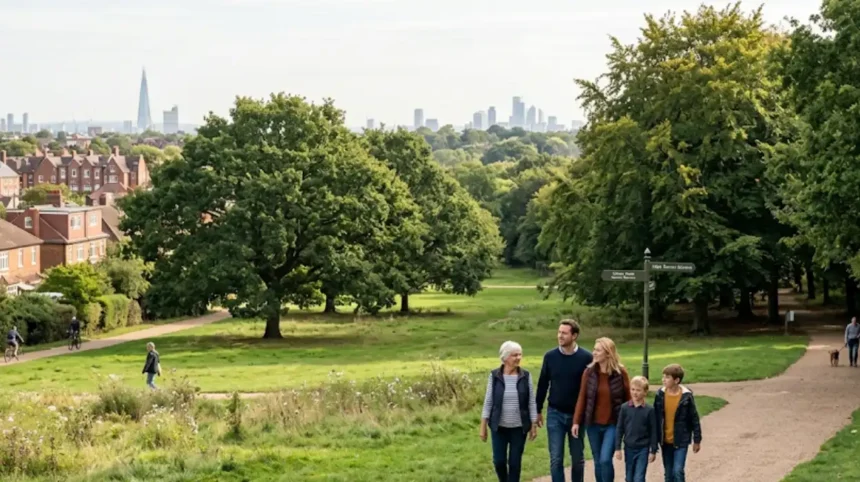
Stay in High Barnet, Finchley, or Mill Hill for the best access to parks, conservation areas, and green spaces. These areas place you within walking distance of premier parks, nature reserves, and heritage sites while offering excellent transport links to central London. Tourists seeking leafy retreats, digital nomads wanting work-friendly green hubs, and business travellers maximising downtime will find Barnet’s 200+ parks and 16 conservation areas provide exceptional environmental value and recreational depth.
- What Makes Barnet a Top Choice for Green-Focused Stays?
- Which Areas in Barnet Offer the Best Access to Parks?
- How Do Barnet’s Conservation Areas Enhance the Visitor Experience?
- What Are the Key Parks and Nature Reserves to Prioritise?
- Why Is Barnet’s Green Belt Environmentally Significant?
- Where Can Digital Nomads Find Work-Friendly Green Hubs?
- How Do Barnet’s Parks Compare to Other London Boroughs?
- What Should Visitors Know About Park Facilities and Access?
- Which Accommodation Options Place You Closest to Nature?
- What Are the Long-Term Environmental Plans for Barnet’s Green Spaces?
What Makes Barnet a Top Choice for Green-Focused Stays?
Barnet is one of London’s greenest boroughs, with 93% of households within one kilometre of accessible green space and over 200 parks covering 878 hectares. The borough’s environmental significance stems from its extensive green belt, seven Local Nature Reserves, and 67 Sites of Importance for Nature Conservation, making it ideal for nature-focused stays.
Barnet’s green infrastructure exceeds the London average for accessible open space. The Department for Environment, Food and Rural Affairs estimates 151,526 of 162,461 households in Barnet have an accessible green space of two hectares or larger within one kilometre of their home. This represents 93% of homes, significantly higher than comparable London boroughs.
The borough contains 127 documented parks and green spaces totalling 878.2 hectares. Major spaces include Moat Mount Open Space (94.07 hectares), St Pancras and Islington Cemetery (62.93 hectares), and King George’s Playing Fields (35.26 hectares). Barnet’s 16 premier parks include seven that have achieved Green Flag Award status, recognising high environmental and management standards.
Barnet’s green spaces serve multiple functions: formal sport, park cafés, children’s playgrounds, dog walking, and wilderness exploration. The borough manages extensive areas of greenbelt, leafy river valleys, and wild landscapes alongside formal gardens. This diversity supports tourists seeking varied outdoor experiences, from structured recreation to unstructured nature immersion.
Which Areas in Barnet Offer the Best Access to Parks?
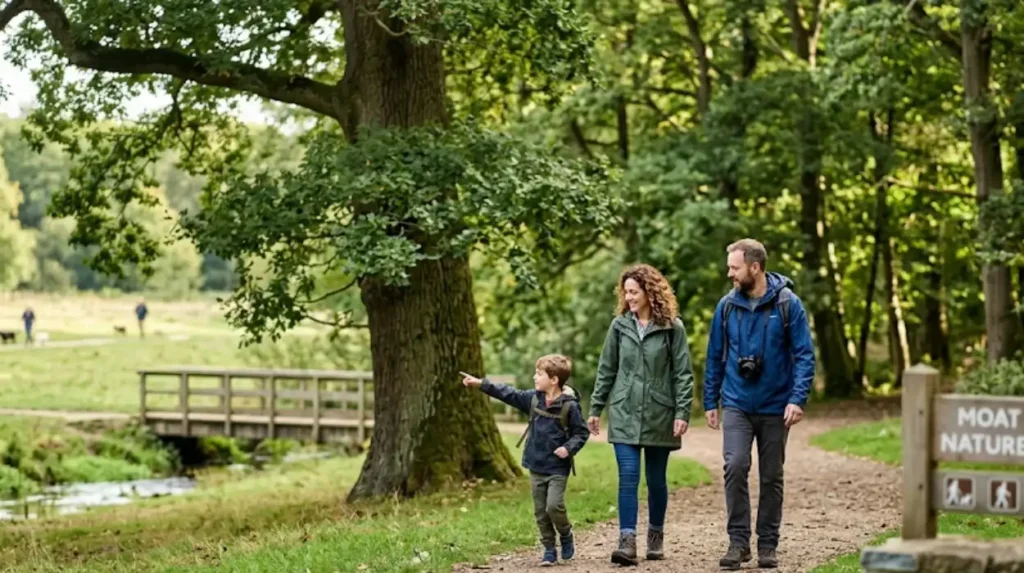
High Barnet, Finchley Central, and Mill Hill provide the highest concentration of premier parks within walking distance, with multiple green spaces under 15 minutes from residential and hotel zones. These districts combine heritage character with exceptional green infrastructure.
High Barnet places visitors near Old Court House Recreation Ground (2.94 hectares), Barnet Hill open space, and Whitings Hill Open Space. The area’s conservation status and proximity to Hadley Green (9.88 hectares) create a continuous green corridor extending into Monken Hadley Common. High Barnet’s historic Wood Street location offers cafés and shops within park-adjacent settings.
Finchley Central provides access to Victoria Park (3.79 hectares), Cherry Tree Wood (5.47 hectares), and Long Lane Pasture (1.09 hectares). The area’s Garden Village conservation status enhances the visitor experience with tree-lined streets and heritage architecture. Finchley’s Stephen’s House and Gardens offers formal horticultural displays within walking distance of central accommodation.
Mill Hill grants access to Barnet Gate Wood, Arrandene Open Space, and the Barnet Memorial Woodland along Daws Lane. The area’s proximity to Scratchwood and Moat Mount Open Space (94.07 hectares combined) provides extensive wilderness walking. Mill Hill’s conservation areas include designated historic settlements with preserved character.
East Barnet and Oak Hill Park (33.39 hectares) offer another concentration of green space with two playgrounds and cycling paths. The area’s proximity to Oak Hill Wood Nature Reserve (9.71 hectares) adds biodiversity value for nature-focused visitors.
How Do Barnet’s Conservation Areas Enhance the Visitor Experience?
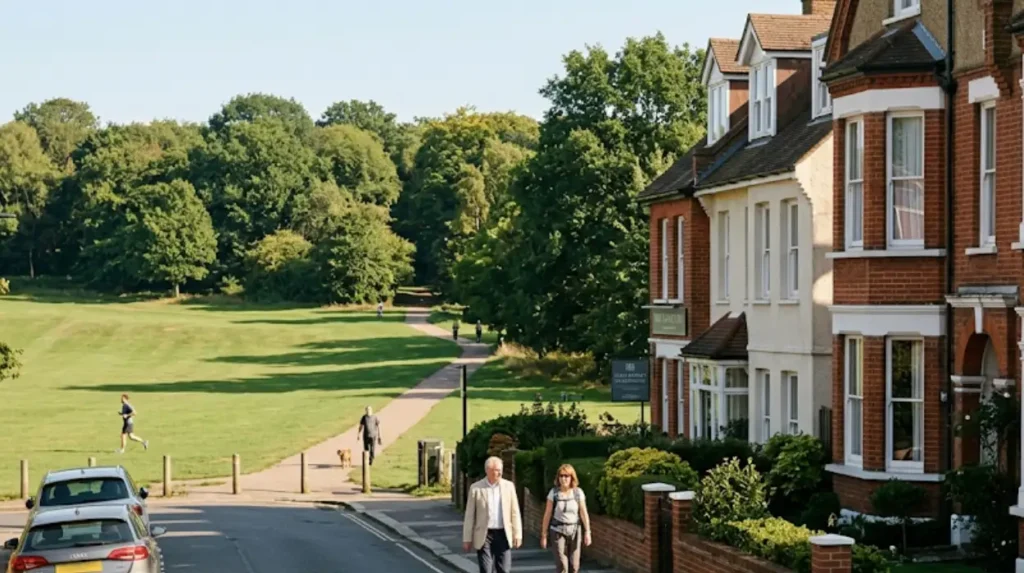
Barnet’s 16 conservation areas protect special architectural and historic character, creating visually distinctive neighbourhoods where heritage buildings, mature trees, and preserved streetscapes enhance park-adjacent stays. These designations ensure environmental and aesthetic continuity across green-space corridors.
Conservation areas in Barnet include Hampstead Garden Suburb, Finchley Church End, Mill Hill, Golders Green Town Centre, Monken Hadley, Totteridge, and Wood Street (High Barnet). Each area maintains distinct architectural character, from Arts and Crafts garden suburbs to medieval market town layouts.
Hampstead Garden Suburb, one of London’s most significant planned residential areas, features tree-lined avenues, low-density housing, and integrated green spaces. The Bishop’s Avenue conservation area within this suburb represents high architectural quality with substantial tree cover. Visitors staying here access Big Wood (7.54 hectares) and Little Wood (1.13 hectares) as urban forests within the suburb’s fabric.
Monken Hadley and Totteridge conservation areas preserve village character with direct access to King George’s Fields (35.26 hectares) and Totteridge Fields Nature Reserve (7.4 hectares). These areas maintain historic settlement patterns where green spaces form integral parts of the village structure rather than peripheral additions.
Finchley Garden Village and Finchley College Farm conservation areas extend the garden suburb model into north Finchley, creating continuous green corridors linking residential areas to parks. These designations prevent inappropriate development that would fragment green-space networks.
As you explore the modern site, you are crossing land with a deep heritage. Read about the full [Barnet historical heritage and conservation areas guide] to understand its origins. The borough’s conservation framework ensures that park-adjacent development maintains visual and environmental quality.
What Are the Key Parks and Nature Reserves to Prioritise?
Prioritise Moat Mount Open Space, Scratchwood, Hampstead Heath Extension, and Brent Reservoir for their ecological significance, size, and biodiversity value. These sites represent Barnet’s most important environmental assets and offer distinct visitor experiences.
Moat Mount Open Space (94.07 hectares) and Scratchwood form a continuous wilderness area in Mill Hill with ancient woodland, grassland, and wetland habitats. The site’s designation as a Local Nature Reserve recognises its importance for biodiversity, including rare invertebrates and breeding birds. Barnet Gate Wood within this complex provides additional ancient woodland habitat.
Hampstead Heath Extension (31.14 hectares) extends the famous heath into Barnet, offering acid grassland, woodland, and panoramic views from Golders Hill Park (31.14 hectares combined with Extension). The heath’s management as a Site of Special Scientific Interest ensures high conservation value while maintaining public access.
Brent Reservoir (Welsh Harp) holds dual designation as a Local Nature Reserve and Site of Special Scientific Interest, recognising its importance for overwintering wildfowl and breeding birds. The reservoir’s 168-hectare surface (partially in Barnet) supports guided wildlife walks and birdwatching facilities.
Darland’s Lake Nature Reserve (33.32 hectares) in Totteridge provides wetland and grassland habitats with public footpaths and observation points. The reserve’s management prioritises biodiversity while maintaining accessible walking routes for visitors.
Oak Hill Wood Nature Reserve (9.71 hectares) in East Barnet represents ancient semi-natural woodland with bluebell displays and mature oak canopy. The wood’s proximity to Oak Hill Park creates a combined green space exceeding 43 hectares with diverse recreational and ecological functions.
Why Is Barnet’s Green Belt Environmentally Significant?
Barnet’s green belt prevents urban sprawl, maintains biodiversity corridors, and provides ecosystem services including flood mitigation, air quality improvement, and carbon sequestration across 878 hectares of managed open space. The borough’s environmental strategy explicitly recognises these functions in planning policy.
Barnet’s green belt forms part of London’s Metropolitan Green Belt, restricting development to preserve open character and prevent coalescence of settlements. This designation maintains continuous green corridors linking Barnet’s parks to regional habitats in Hertfordshire and neighbouring boroughs.
The borough’s 67 Sites of Importance for Nature Conservation (SINCs) create a networked ecological infrastructure supporting species movement and genetic diversity. These sites range from ancient woodlands to wetlands, grasslands, and brownfield habitats, each contributing to London’s biodiversity targets.
Barnet’s trees and woodland provide measurable ecosystem services. The borough’s tree population intercepts rainfall, reduces surface water flooding, filters air pollutants, and sequesters carbon. These services have quantifiable economic value, reducing municipal costs for flood management and public health.
The borough’s Open Spaces Strategy 2016 establishes management frameworks ensuring green spaces maintain environmental quality while supporting public access and recreation. This strategy balances conservation objectives with visitor needs, preventing overuse that would degrade ecological value.
Climate change adaptation increasingly shapes Barnet’s green-space management. The borough’s parks provide cooling during heatwaves, with tree canopy and grassland surfaces reducing urban temperatures by several degrees compared to built environments. This cooling effect has measurable public health benefits during extreme weather events.
Where Can Digital Nomads Find Work-Friendly Green Hubs?
High Barnet, Finchley Central, and Golders Green offer cafés with reliable Wi-Fi adjacent to parks, creating ideal work–nature balance for digital nomads seeking productive outdoor-adjacent environments. These areas combine transport connectivity with green-space proximity.
High Barnet’s Wood Street and Station Road host independent cafés within 200 metres of Old Court House Recreation Ground and Barnet Hill open space. The area’s Northern Line station provides 25-minute access to central London while maintaining village character.
Finchley Central’s High Road offers chain and independent cafés with Wi-Fi within walking distance of Victoria Park and Cherry Tree Wood. The area’s Garden Village conservation status ensures pleasant streetscapes for walking meetings between work sessions.
Golders Green Town Centre conservation area provides diverse cafés and restaurants within 300 metres of Golders Hill Park and Hampstead Heath Extension. The area’s Northern Line station enables flexible commuting while the adjacent heath offers extensive walking and running routes.
Mill Hill Broadway and Mill Hill East offer suburban café environments near Barnet Gate Wood and Arrandene Open Space. These areas suit nomads preferring quieter, residential settings with direct access to wilderness walking.
Barnet’s 14% of households meeting the doorstep standard (accessible green space of at least 0.5 hectares within 200 metres) indicates concentrated neighbourhoods where work–nature integration is structurally embedded. Digital nomads prioritising daily green-space access should target these zones.
How Do Barnet’s Parks Compare to Other London Boroughs?
Barnet’s 200+ parks and 93% household access to green space exceed London averages, with seven Green Flag Award parks and 67 Sites of Importance for Nature Conservation establishing environmental leadership. The borough’s green infrastructure ranks among London’s most extensive.
Barnet’s 878.2 hectares of parks and green spaces represent substantial per-capita provision given the borough’s 395,000 population. This yields approximately 22 square metres of park space per resident, exceeding many inner London boroughs constrained by development density.
The borough’s 16 premier parks include seven Green Flag Award recipients, recognising high environmental standards, management quality, and visitor facilities. Green Flag status requires meeting 54 criteria across horticultural, environmental, and community engagement metrics.
Barnet’s seven Local Nature Reserves exceed many boroughs’ provision, with sites including Big Wood and Little Wood, Oak Hill Wood, Scratchwood and Moat Mount, Coppetts Wood and Glebelands, Rowley Green Common, Totteridge Fields, and Brent Reservoir. These designations require demonstrated biodiversity value and public access provisions.
The 93% household access figure (green space of two hectares or larger within one kilometre) substantially exceeds London averages, where many boroughs report 70–80% access. This differential reflects Barnet’s lower density and extensive green belt preservation.
What Should Visitors Know About Park Facilities and Access?
Barnet’s parks offer playgrounds, cafés, sports facilities, and nature trails with standard opening hours from dawn to dusk, though some sites have seasonal restrictions or dog-control zones requiring visitor awareness. Planning around these parameters maximises visitor experience.
Barnet’s premier parks include playgrounds at Victoria Park, Montrose Playing Fields, Silkstream Park, Oak Hill Park (two playgrounds for different age groups), and Swan Lane Open Space. These facilities suit families with children across age ranges.
Park cafés operate at Old Court House Recreation Ground (serving breakfasts and lunches), Trent Park (near the woodland entrance), and selected other sites. These venues provide refreshment options for extended park visits without requiring departure to commercial zones.
Sports facilities include football pitches at Watling Park, tennis courts at multiple sites, and footgolf at Tudor Sports Ground. Barnet’s parks support formal sport alongside informal recreation, with booking systems for organised activities.
Dogs are welcome in most Barnet parks, though some sites implement seasonal dog-control zones to protect ground-nesting birds or livestock. Visitors should check site-specific signage and Barnet Council’s website for current restrictions.
Locking times apply to certain parks and open spaces, typically at dusk, to prevent antisocial behaviour and protect wildlife. Day visitors face no restrictions, but evening users should verify closing times for specific sites.
Explore More Area Guide
Why Is Barnet One of the Greenest Areas in North London? Parks and Nature
Most Beautiful Places to Visit in Barnet for Scenic Days Out
Which Accommodation Options Place You Closest to Nature?
Boutique hotels and guesthouses in High Barnet, Finchley, and Mill Hill position visitors within 500 metres of premier parks, enabling spontaneous green-space access without transport dependency. These areas balance accommodation quality with environmental proximity.
High Barnet’s Wood Street and Station Road host independent hotels and guesthouses within 300 metres of Old Court House Recreation Ground and Barnet Hill open space. The area’s conservation status ensures heritage character alongside green-space access.
Finchley Central’s High Road offers chain hotels and serviced apartments within walking distance of Victoria Park and Cherry Tree Wood. These properties suit business travellers seeking work-friendly accommodation with nearby running and walking routes.
Mill Hill’s Broadway and surrounding roads provide suburban hotels near Barnet Gate Wood and Arrandene Open Space. These properties offer quieter environments with direct wilderness access, appealing to nature-focused visitors.
Barnet’s accommodation landscape includes budget options from £85 per night to mid-range properties around £149, with availability across the borough’s key districts. Price differentials reflect location, transport connectivity, and proximity to green spaces.
Visitors prioritising park access should filter accommodation searches by proximity to specific green spaces rather than general borough location. Properties within 500 metres of premier parks enable spontaneous visits without transport planning, maximising green-space utilisation during limited stays.
What Are the Long-Term Environmental Plans for Barnet’s Green Spaces?
Barnet’s Open Spaces Strategy 2016 and subsequent updates establish long-term frameworks for green-space management, biodiversity enhancement, and climate adaptation through 2030 and beyond. These plans prioritise ecological resilience alongside public access.
The Open Spaces Strategy sets objectives for maintaining and improving green-space quality, expanding biodiversity, and ensuring equitable access across the borough. Implementation occurs through annual management plans and capital investment programmes.
Barnet’s partnership with Friends groups enables community-led management of local green spaces, extending the council’s capacity for maintenance and biodiversity enhancement. Approximately 200 parks and open spaces benefit from this collaborative model, with volunteer groups adopting specific sites.
Climate adaptation increasingly shapes Barnet’s green-space planning. The borough’s trees and woodland provide measurable cooling during heatwaves, with management strategies prioritising canopy expansion in heat-vulnerable neighbourhoods. This approach aligns with London-wide climate resilience objectives.
Biodiversity targets within Barnet’s Local Plan require net gains in ecological value from development, ensuring green-space networks expand rather than fragment over time. These policies prevent incremental loss of environmental infrastructure through piecemeal development.
The borough’s 93% household access to green space provides a baseline for future improvement, with objectives to increase the proportion meeting doorstep standards (0.5 hectares within 200 metres) from 14% toward 25% by 2030. This target focuses investment on neighbourhoods currently underserved by proximate green infrastructure.