Key Points
- The Eritrean Embassy in the United Kingdom issued an official diplomatic statement on 19 August 2026 rejecting media and legal reports identifying 33-year-old Bruke Desalagne as an Eritrean national.
- Following an incident outside St John’s Church in Harrow, North London, diplomatic officials stated they found no record of Desalagne in their national registry.
- The diplomatic mission requested verifying evidence from Harrow Crown Court and several major British news outlets, including the BBC, Daily Mail, The Telegraph, and GB News, but reported receiving no establishing documentation.
- The embassy highlighted broader diplomatic and immigration concerns, claiming that 50 to 70 percent of asylum applicants claiming Eritrean origin across the UK and Europe are falsely identified, though no formal source was provided for the statistic.
- Diplomatic representatives formally called upon British and European authorities to re-evaluate country-of-origin verification protocols in legal and asylum proceedings.
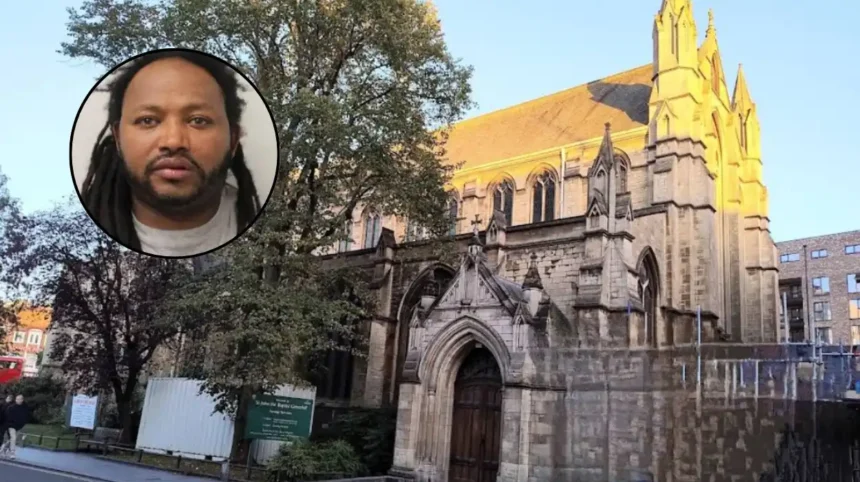
North London (North London News) August 21, 2026 – The Eritrean Embassy in the United Kingdom has formally denied reports identifying a 33-year-old man involved in a legal case outside St John’s Church in Harrow, North London, as an Eritrean citizen. In an official statement released on 19 August 2026, diplomatic authorities confirmed that an exhaustive review of their consular records yielded no evidence or registration matching the individual identified in court documents as Bruke Desalagne.
Why Has the Embassy Contested the Court Records and Media Reports?
As reported by journalist Mintesinot Nigussie of FSX Business, the diplomatic mission in London took action after British court proceedings and news coverage attributed Eritrean citizenship to the defendant. According to the embassy’s release, formal requests were submitted directly to Harrow Crown Court seeking concrete documentation or consular verification establishing Desalagne’s national identity. Embassy officials confirmed that no primary documentation, official confirmation, or supporting evidence was provided by the judicial administration to substantiate the claim.
Beyond judicial channels, the embassy directed similar verification requests to leading British news organisations. As reported by Mintesinot Nigussie, the embassy sought clarification from major media outlets—specifically the BBC, Daily Mail, The Telegraph, and GB News—regarding how Desalagne’s nationality had been verified prior to publication. The diplomatic statement noted that none of the outlets provided documentation explaining the methodology used by British law enforcement or judicial authorities to determine the defendant’s nationality. The original diplomatic release contained no details regarding the specific criminal charges or the underlying legal proceedings in Harrow Crown Court.
What Wider Systemic Concerns Were Raised Regarding Asylum Processing?
Addressing the broader context of UK immigration and nationality verification, the Eritrean Embassy used the Harrow incident to raise concerns regarding asylum proceedings across the United Kingdom and continental Europe. As reported by Mintesinot Nigussie of FSX Business, embassy officials asserted that a significant proportion of individuals claiming Eritrean nationality during asylum processing do not originate from Eritrea.
The embassy claimed in its official communication that between 50 percent and 70 percent of asylum applicants identifying themselves as Eritrean nationals are not of Eritrean origin. While the embassy did not cite specific statistical sources or formal documentation to back this estimate, it argued that unverified nationality claims distort official immigration records, complicate administrative procedures, and misrepresent the Eritrean diaspora.
The diplomatic mission made explicit reference to ongoing UK Home Office investigations into immigration fraud. Embassy officials noted instances where applicants allegedly admitted to misrepresenting their national background or deceiving border agencies to secure legal residency status. Condemning the practice of identity misrepresentation, the embassy stated that falsely assuming Eritrean nationality is fundamentally inconsistent with the cultural values and societal principles of the nation. The statement concluded with a formal appeal to British and European immigration authorities to review and strengthen their operational frameworks for establishing an applicant’s country of origin during asylum processing.
Background of the Particular Development
The dispute over nationality in the Harrow Crown Court proceedings highlights long-standing structural challenges in how European and British immigration systems verify the origin of asylum seekers from the Horn of Africa.
Eritrea has historically been one of the primary source countries for asylum applicants in the UK and Europe. Because the Eritrean government maintains strict national service requirements and does not routinely cooperate with Western authorities to provide civil status documentation or verify citizenship for individuals fleeing the country, UK immigration tribunals and law enforcement agencies heavily rely on language analysis, regional knowledge tests, and self-reported declarations to establish nationality.
Over the past decade, the Eritrean Ministry of Foreign Affairs and its overseas diplomatic missions have repeatedly issued public statements criticising Western immigration management. The Eritrean government has maintained that porous border controls and generous asylum criteria for Eritrean nationals create financial and political incentives for non-Eritrean migrants—predominantly from neighbouring regions—to claim Eritrean identity to secure refugee status. Previous Home Office policy reviews have acknowledged the operational difficulties of language-based nationality assessment, making nationality verification a recurring point of debate between British judicial authorities and foreign diplomatic missions.
Explore More North London Crime News
Olmez and Mirzakhanian Appear in Court Over Fatal Crash | Enfield 2026
Met Police Issue CCTV Appeal After Islington Sexual Assault, 2026
Prediction: How This Development Can Affect British Judicial and Immigration Stakeholders
This development is likely to impact British judicial authorities, law enforcement agencies, and the broader legal sector handling asylum and criminal cases involving foreign nationals.
For the Crown Prosecution Service (CPS) and the HM Courts and Tribunals Service, public diplomatic rejections of court records create administrative and procedural hurdles. When a foreign embassy explicitly disputes a defendant’s nationality on the public record, judges and prosecutors may face increased pressure from defense counsel to verify identity through strict evidentiary standards rather than relying on preliminary police reports or self-declarations. This could lead to procedural delays in trial proceedings while independent nationality assessments or diplomatic inquiries are conducted.
For the UK Home Office and immigration practitioners, the embassy’s intervention reinforces demands for more rigorous country-of-origin verification protocols. If diplomatic challenges of this nature increase, immigration authorities may be compelled to integrate advanced biometric verification, expanded linguistic profiling, and updated documentation checks into asylum processing.