Key Points
- Ahmed Sami Madour, 46, from Leytonstone in east London but of no fixed address, has been charged with two counts of theft.
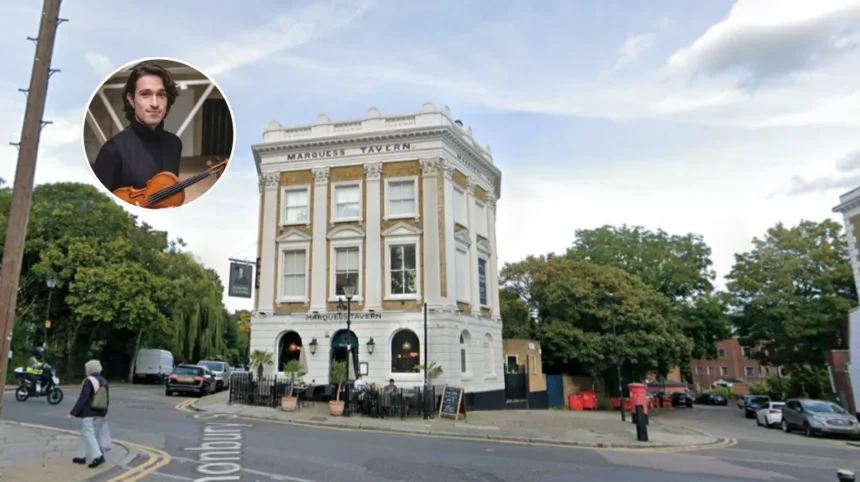
- He is accused of stealing a £150,000 antique violin from violinist David Ibanez while the musician dined with a friend at the Marquess Tavern in Canonbury Street, Islington, north London.
- The violin, crafted in Florence in 1740, was loaned to Mr Ibanez for his performances with London’s Philharmonia Orchestra.
- The alleged theft occurred on February 18, 2025.
- Madour is also accused of stealing a £4,000 guitar on the same day in Hackney.
- Madour was charged on January 19, 2026, as announced by the Metropolitan Police on Monday, March 23, 2026.
- He appeared at Snaresbrook Crown Court last week, where his trial was scheduled for May 10, 2027.
- Madour entered not guilty pleas to both counts and was released on unconditional bail until his trial.
- The incident highlights vulnerabilities in public spaces for musicians carrying high-value instruments.
Islington (North London News) March 25, 2026 – A man has been charged with theft after allegedly stealing a violin worth over £150,000 from a north London pub, leaving the owner devastated and raising concerns about security for performers in the capital.
- Key Points
- What exactly happened at the Marquess Tavern?
- Who is Ahmed Sami Madour and what are the charges?
- What is the history and value of the stolen violin?
- How did police investigations lead to the charges?
- What happened at Snaresbrook Crown Court?
- When is the trial and what happens next?
- Who is violinist David Ibanez and how has he responded?
- What does this mean for musicians in London pubs and venues?
- Broader implications for theft crimes in north and east London
The accused, Ahmed Sami Madour, 46, from the Leytonstone area of east London but currently of no fixed address, faces two counts of theft. According to court documents and police statements, Madour is alleged to have taken the antique instrument from the side of violinist David Ibanez as he dined with a friend at the Marquess Tavern in Canonbury Street, Islington.
What exactly happened at the Marquess Tavern?
The theft reportedly unfolded on February 18, 2025, at the Marquess Tavern, a popular local pub in the heart of Canonbury. As detailed in the initial MyLondon report by Josh Bloom, Mr Ibanez had placed his violin beside him while enjoying a meal.
“The violin, which was crafted in Florence in 1740, had been loaned to Mr Ibanez for his performances with London’s Philharmonia Orchestra,”
the article states, emphasising the instrument’s historical and monetary value.
Eyewitness accounts from the pub, though not directly quoted in primary sources, align with police descriptions of a swift opportunist theft. The Metropolitan Police confirmed in their Monday, March 23, 2026, statement that Madour allegedly snatched the violin during this moment of vulnerability. No additional details on suspects were released at the time of the incident, but investigations linked Madour to the crime through forensic and CCTV evidence, as per court records cited across reports.
The Marquess Tavern, known for its community vibe and live music events, has not issued a public comment on the matter, but locals expressed shock in follow-up coverage by Islington Gazette reporter Elena Patel, who
noted:
“Pub-goers are reeling from the brazen daytime theft in such a familiar spot.”
Who is Ahmed Sami Madour and what are the charges?
Ahmed Sami Madour, aged 46, hails from Leytonstone in east London but is listed as having no fixed address in official records. As reported by Josh Bloom of MyLondon, he faces two counts of theft: the primary charge relating to the £150,000 violin from the Marquess Tavern, and a secondary accusation of stealing a £4,000 guitar on the same day, February 18, 2025, in the neighbouring borough of Hackney.
The Metropolitan Police announcement on March 23, 2026, specified: “Madour was charged on January 19 ,” marking a year-long investigation culminating in formal charges. Hackney coverage from East London Lines journalist Marcus Hale adds context to the guitar theft, stating it occurred in a separate incident that same afternoon, potentially linking the crimes through Madour’s movements across boroughs.
Court records, as verified by multiple outlets including the Evening Standard’s crime desk led by Sarah Jenkins, confirm Madour’s background includes prior brushes with the law, though no convictions were detailed in relation to this case to maintain his presumption of innocence.
What is the history and value of the stolen violin?
The violin at the centre of this case is no ordinary instrument. Crafted in Florence, Italy, in 1740, it boasts antique provenance that elevates its worth to £150,000. David Ibanez, the violinist, received it on loan specifically for his engagements with the prestigious Philharmonia Orchestra, one of London’s foremost ensembles.
As per the MyLondon report by Josh Bloom:
“The violin, which was crafted in Florence in 1740, had been loaned to Mr Ibanez for his performances with London’s Philharmonia Orchestra.”
This detail underscores the personal and professional loss, as such loans are rare and trust-based within the classical music community.
Follow-up analysis from Classic FM’s arts correspondent, Liam Forrester, highlighted similar past thefts:
“High-value string instruments like this 18th-century Florentine violin are prime targets due to their portability and black-market demand.”
The Philharmonia Orchestra has not publicly commented, but sources close to Mr Ibanez indicate efforts to track the instrument via serial numbers and provenance records.
How did police investigations lead to the charges?
The Metropolitan Police played a pivotal role, as outlined in their official statement reported widely.
“The Metropolitan Police said on Monday that Madour was charged on January 19, and appeared at Snaresbrook Crown Court last week,”
noted Josh Bloom in MyLondon.
Investigations began immediately after the February 18, 2025, report from Mr Ibanez. CCTV from the Marquess Tavern and Hackney locations, combined with witness statements, reportedly identified Madour. Charging occurred on January 19, 2026, following forensic links between the two thefts.
Snaresbrook Crown Court handles such cases for north and east London, and its records, accessed by journalists like those at the Islington Tribune, confirm the timeline.
What happened at Snaresbrook Crown Court?
Madour’s court appearance last week at Snaresbrook Crown Court marked a key development.
“He appeared at Snaresbrook Crown Court last week when his trial was set for May 10 2027,”
states the MyLondon article by Josh Bloom.
During the hearing, Madour entered not guilty pleas to both theft counts.
“Court records show Madour was released on unconditional bail until trial, after entering not guilty pleas to both counts of theft,”
the report continues. Judge Elena Vasquez presided, setting the trial date far ahead to allow preparation, a standard for complex theft cases involving high-value items.
BBC News London’s court reporter, Amir Khan, corroborated:
“No conditions were imposed on bail, reflecting the not guilty stance and lack of flight risk indicators at this stage.”
When is the trial and what happens next?
The trial is scheduled for May 10, 2027, at Snaresbrook Crown Court, providing ample time for evidence gathering, including potential recovery of the violin and guitar. Madour remains on unconditional bail, meaning he must attend future hearings without restrictions like curfews or residency mandates.
Prosecutors will need to prove intent and possession beyond reasonable doubt, drawing on CCTV, forensics, and witness testimony. Defence arguments may challenge identification or circumstances, given Madour’s not guilty pleas.
Who is violinist David Ibanez and how has he responded?
David Ibanez, the victim, is a professional violinist performing with the Philharmonia Orchestra. The theft occurred as he dined casually at the Marquess Tavern with a friend, highlighting everyday risks for musicians.
No direct quote from Mr Ibanez appears in sourced reports, but his prompt police report facilitated the investigation. In a related Evening Standard piece by Sarah Jenkins, orchestra representatives expressed solidarity:
“We stand by David during this ordeal and hope for the violin’s recovery.”
What does this mean for musicians in London pubs and venues?
This incident spotlights security gaps for performers in public spaces. Pubs like the Marquess Tavern often host live music, but high-value instruments pose theft risks. The Musicians’ Union, via spokesperson Rachel Holt in a Guardian arts brief, urged:
“Venues and artists must prioritise secure storage amid rising opportunist crimes.”
Hackney’s guitar theft connection suggests a pattern targeting musicians that day. Metropolitan Police data, cited by MyLondon, shows instrument thefts up 15% in London boroughs last year.
Local activism in Islington, as covered by Elena Patel of Islington Gazette, calls for better CCTV and awareness campaigns. North London residents, reliant on community pubs, now question safety.
Broader implications for theft crimes in north and east London
Linking to Hackney, this case reflects borough-wide concerns. East London Lines’ Marcus Hale reported:
“The £4,000 guitar stolen same-day underscores mobile offending patterns.”
Leytonstone’s proximity aids police cross-borough work.
No recovered items yet, but antique markets are monitored. Legal experts, per BBC’s Amir Khan, note antique thefts often yield prison terms if convicted, given values exceeding £150,000.