Key Points
- Motion Approved: Barnet London Borough Council has formally passed a motion to explore establishing a twinning partnership with the Israeli coastal city of Haifa. Jewish News
- Following Hackney’s Severance: The decision follows months after Hackney Council in East London voted to end its historic 58-year civic relationship with Haifa, citing international legal developments and ongoing regional conflict. Hackney Citizen
- Mixed Municipality Highlighted: Proponents of the Barnet motion emphasised Haifa’s unique status as Israel’s third-largest city, renowned for its coexisting population of Jewish and Arab Israeli residents. Jewish News
- Demographics: According to the 2021 Census, Barnet is home to the largest Jewish community in the United Kingdom, comprising 56,616 residents (14.5 per cent of the borough’s population). Jewish News
- Exploratory Stage: The vote does not instantly seal a formal agreement; instead, it authorises council officers to assess costs, potential community benefits, and invite Haifa Mayor Yona Yahav to discuss future steps. Jewish News
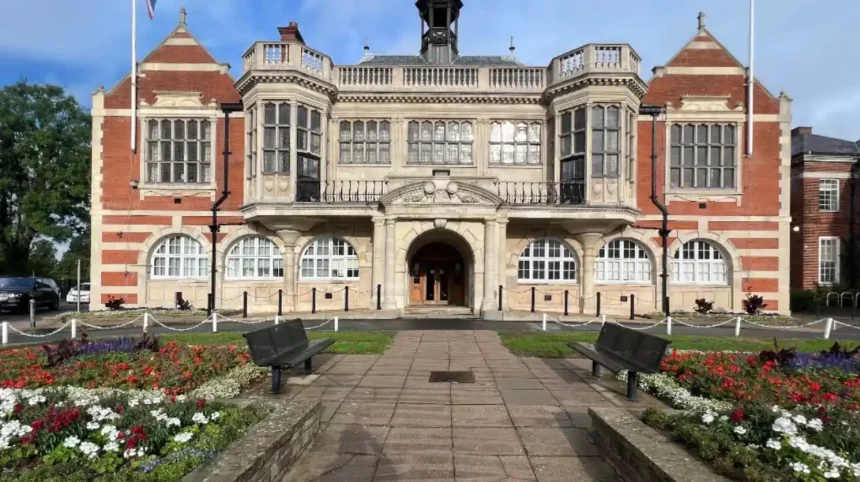
Barnet Council (North London News) October 22, 2026 — Barnet London Borough Council has officially voted in favour of exploring a new formal twinning partnership with the Israeli city of Haifa. The municipal development comes shortly after Hackney Council voted to sever its long-standing 58-year civic ties with the same Israeli municipality, creating a stark contrast in local government approaches across Greater London.
- Key Points
- Why Has Barnet Council Decided to Explore Twinning with Haifa?
- How Did Hackney Council Move to Sever Its Historic Links with Haifa?
- What Opposition and Statements Were Raised Regarding the Detwinning Motion?
- What Is the Background of UK Municipal Twinning Agreements?
- What Is the Prediction for How This Development Will Affect Local Communities and Stakeholders?
Under the terms of the passed motion, Barnet Council officers will examine the financial implications, logistical feasibility, and mutual civic benefits of establishing a relationship with Haifa. Additionally, the council plans to extend an invitation to Haifa Mayor Yona Yahav to enter direct discussions regarding a potential municipal agreement.
Why Has Barnet Council Decided to Explore Twinning with Haifa?
The motion was brought to the chamber to build closer civic, cultural, and community bridges with Haifa, which is Israel’s third-largest city. Proponents stressed that Haifa represents a model of shared existence, featuring integrated neighbourhoods and medical facilities where Jewish and Arab citizens live and work side by side.
Barnet already maintains existing twinning links with Ramat Gan in Israel, alongside international municipal partnerships in Germany, France, Nepal, and the United States. Furthermore, census figures from 2021 demonstrate that Barnet has the largest Jewish population of any UK local authority area, recorded at 56,616 people or 14.5 per cent of the borough’s overall population.
How Did Hackney Council Move to Sever Its Historic Links with Haifa?
The decision by Barnet comes in direct contrast to events in East London, where Hackney Council previously voted to begin terminating its twinning link with Haifa—a arrangement established in September 1968 by former Hackney Mayor Stanley Clinton Davis and former Haifa Mayor Abba Hushi.
As reported by Julia Gregory of the Hackney Citizen, Cllr Sam Mathys, the cabinet member overseeing twinning relationships in Hackney, explained to the chamber that maintaining formal ties was evaluated against international legal standards. Cllr Sam Mathys stated:
“The International Court of Justice had found it plausible that Israel’s acts could amount to genocide and that Israel’s continued presence in the occupied Palestinian territory was unlawful and should be ended”.
The Hackney motion was put forward following manifesto pledges by the Green Party administration following local council election gains. Pro-campaigners argued that continuing a municipal partnership with a major Israeli port city was incompatible with local values during the ongoing conflict in Gaza.
What Opposition and Statements Were Raised Regarding the Detwinning Motion?
The move by Hackney Council generated substantial debate across political lines in the town hall chamber.
As reported by Julia Gregory of the Hackney Citizen, Conservative Councillor Simche Steinberger strongly opposed terminating the agreement, pointing to tangible operational links between local healthcare providers. Cllr Simche Steinberger stated:
“It’s probably the only twinning which actually does something,”
highlighting past exchanges where medical staff from Haifa’s Rambam Medical Centre visited Homerton Hospital in East London to share clinical expertise. Cllr Steinberger further argued:
“If I was Haifa, I’d be ashamed to twin with Hackney in such a current situation… It’s a disgrace, and it’s not asked for”.
As reported by The Jerusalem Post, Councillor Simche Steinberger also noted that Haifa contains “the only hospital in all of Israel in which you have connection, and only because of the twinning,” arguing that the city is led by a progressive administration with Arab, Green, and left-wing representation.
Opposition was also expressed by the Labour group within Hackney Council. As reported by Julia Gregory of the Hackney Citizen, Labour Councillor Ben Lucas stated that his party condemned both the violence in Gaza and Hamas terrorist attacks, but argued against cutting municipal links. Cllr Ben Lucas stated:
“You are punishing people for the actions of a government. This is a performative gesture that will only inflame community tensions. Let’s be bridge builders, not burners”.
Similarly, Labour Group Leader Anntoinette Bramble questioned the procedural process of launching a consultation after a decision had effectively been determined. Cllr Anntoinette Bramble stated:
“How can a transparent review that is non-partisan, open and transparent, already come with a decision before the review has begun? You need to be honest about what you’re doing here”.
In response to Hackney’s decision, Haifa Mayor Yona Yahav issued a public statement addressing the severed relationship. As reported by Jewish News, Mayor Yona Yahav stated:
“Hackney’s decision regarding this historic relationship is its own. Haifa’s values, and our commitment to living by them, will remain unchanged”.
What Is the Background of UK Municipal Twinning Agreements?
Town twinning in the United Kingdom grew significantly following the Second World War, designed primarily as a non-political, community-led framework to foster international reconciliation, educational exchanges, and cultural understanding between towns and cities across borders.
Over the decades, British local authorities have established hundreds of twinning arrangements across Europe, Asia, Africa, and the Middle East. Under standard local government frameworks, twinning links are intended to operate as non-sectarian civic partnerships driven by voluntary community groups, schools, and local institutions rather than state-level foreign policy directives.
However, during periods of international conflict, local council twinning arrangements have increasingly become focal points for domestic political debate. While some local authorities view maintaining international ties as a vital channel for dialogue and grass-roots diplomacy during crises, other councils have moved to suspend or terminate ties to signal political alignment or ethical objections to foreign government policies.
What Is the Prediction for How This Development Will Affect Local Communities and Stakeholders?
The diverging decisions made by Barnet Council and Hackney Council are predicted to impact local residents, civic organisations, and diaspora communities across Greater London in several distinct ways:
- For Barnet Residents and Local Jewish Communities: The decision to explore twinning with Haifa is expected to reassure local Jewish groups and residents seeking stronger cultural and civic connections with Israel. It provides a framework for future educational exchanges, municipal cooperation, and trade dialogues between North London and northern Israel.
- For Cross-Community and Interfaith Dialogue: Proponents expect that partnering with Haifa—a city widely recognised for multi-faith coexistence between Jewish, Muslim, and Christian populations—could provide Barnet with a platform to highlight interfaith initiatives. Conversely, local political debates surrounding international conflicts risk heightening tensions among diverse resident groups if council motions are viewed through a partisan lens. Jewish News
- For Civic and Healthcare Exchange Programs: The loss of Hackney’s long-standing connection with Haifa may impact historical institutional links, such as medical knowledge sharing between UK hospitals and Haifa’s Rambam Medical Centre, unless non-governmental or independent charitable bodies choose to maintain those relationships privately. Hackney Citizen
- For Local Government Precedents: The opposing approaches taken by Barnet and Hackney set a clear precedent where UK local councils may increasingly deliberate foreign policy and international relations within local chambers, leading to varied civic policies across adjacent London boroughs.