Key Points
- Barnet Council decided on 8 December 2025 that it was minded to refuse Barratt London’s planning application for development on the High Barnet Station car park.
- The Mayor of London has called in the application for review, with a public hearing likely scheduled directly after the local elections on 7 May 2026.
- The Barnet Society and Barnet Residents Association have raised serious concerns over a perceived conflict of interest, as the Mayor controls Transport for London (TfL), which owns the site, runs services, commissioned the project, and stands to profit.
- The decision has been delegated to Deputy Mayor Jules Pipe, who has previously made supportive statements about this and other TfL developments, including expressing regret over refusals.
- Local groups fear the development would breach Barnet’s Local Plan, including tall buildings assessments endorsed by the Planning Inspectorate, and misuse the Hillingdon case precedent.
- Criticisms include poor safety and quality of proposed homes, minimal accessibility improvements negated by car park loss, exacerbated congestion on the A1000, harm to neighbourhood identity, environmental unsustainability, and lack of significant community benefits.
- The site is deemed unsuitable for 1,000 new residents due to excessive height, density, design flaws, and operational issues echoing postwar housing mistakes.
- Residents are urged to contact MP Dan Tomlinson (dan.tomlinson.mp@parliament.uk) and Assembly Member Anne Clarke (anne.clarke@london.gov.uk) to voice concerns.
- The issue is expected to influence Barnet Council elections in May 2026, with candidates in High Barnet wards pressed on their stance.
High Barnet, London , (North London News) February 26, 2026 – Tensions are mounting in High Barnet over a contentious planning application, with local groups accusing the Mayor’s office of inherent bias in what they term a clear conflict of interest.
- Key Points
- What Triggered the Mayor’s Call-In of the Application?
- Why Do Locals See a Conflict of Interest?
- What Are the Main Objections to Barratt London’s Proposal?
- Is the Site Suitable for 1,000 New Residents?
- Who Should Residents Contact and Why?
- How Might This Affect Local Elections?
- What Is the Broader Context of TfL-Led Developments?
- What Happens Next in the Planning Process?
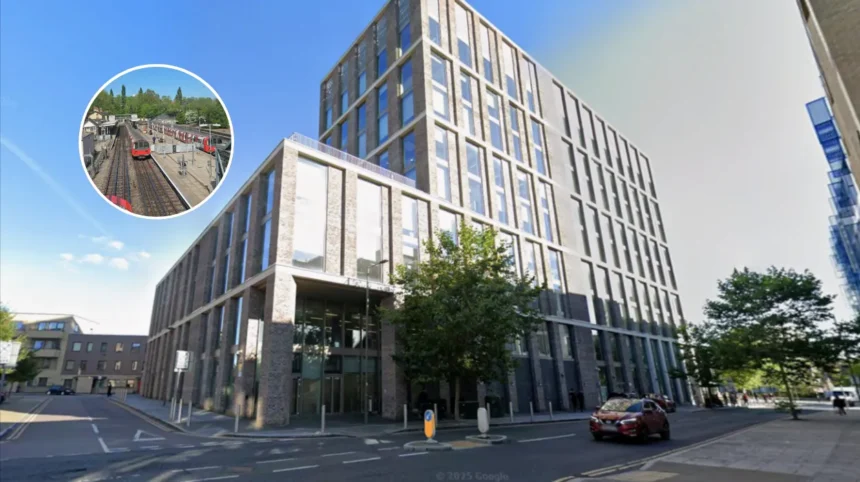
The saga began when Barnet Council, on 8 December 2025, signalled its intent to refuse the application from Barratt London for blocks of flats on the TfL-owned station car park. Now, the Mayor has intervened by calling in the application, paving the way for a public hearing likely just after the local elections on 7 May 2026.
What Triggered the Mayor’s Call-In of the Application?
Barnet Council’s decision to refuse the scheme stemmed from concerns over its scale and impact. As detailed in coverage by local observers, the council concluded on 8 December 2025 that it was minded to reject Barratt London’s proposals due to breaches of local planning policies.
The Mayor of London subsequently exercised his powers to call in the application for personal review.
This move has sparked outrage from community organisations. In a letter circulated widely, as reported across North London community forums, the Barnet Society and Barnet Residents Association highlighted the timing and implications.
“We write on behalf of the Barnet Society & Barnet Residents Association to ask if we can count on your support at the Mayor of London’s representation hearing on this planning application,”
the letter states directly. It references Barnet Council’s 8 December 2025 decision and notes the hearing’s probable date post-7 May 2026 elections.
Attribution here draws from the joint statement issued by the Barnet Society and Barnet Residents Association, as shared in their public correspondence dated prior to February 2026.
Why Do Locals See a Conflict of Interest?
Central to the controversy is the Mayor’s control over TfL.
“Our principal concern at this point is the clear conflict of interest since the Mayor controls Transport for London, which not only owns the site and runs the tube and bus services connecting it to our neighbourhood, but has commissioned the project and stands to profit from its construction,”
the Barnet Society and Barnet Residents Association letter asserts.
“That is setting, writing and marking your own homework.”
The decision has been delegated to Deputy Mayor for Planning and Housing, Jules Pipe. Critics point to his prior statements.
“Jules Pipe has made statements in support of this and other TfL developments. He has also expressed regret at their refusal when they could not be called in,”
the letter continues.
“That is not an unbiased position from which to determine the future character of Chipping Barnet.”
These points are verbatim from the organisations’ letter to elected representatives, emphasising impartiality fears ahead of the hearing.
What Are the Main Objections to Barratt London’s Proposal?
Opponents argue the development grossly exceeds appropriate scale. “If approved, the application will have a most harmful impact on the town and its nearby green spaces, and set a benchmark for future development in the area,” states the letter.
“Visualisations in the application were cynically manipulated to downplay its deplorable visual impact.”
“We’d welcome well-designed homes at an appropriate scale of development. But this proposal grossly exceeds that,”
it adds.
Specific breaches include:
- Violating Barnet’s recently-adopted Local Plan, particularly the tall buildings assessment for the site, endorsed by the Planning Inspectorate.
- Incorrectly invoking the Hillingdon case to justify tall buildings here.
- Creating homes of “unacceptably poor safety and quality in terms of layout, detailed design and amenity.”
- Offering “minimal improvements to accessibility and safety that would be negated by loss of the car park.”
- Exacerbating congestion in the set-down and pick-up area, with vehicles likely backing up onto the busy A1000.
- Irreparably harming the neighbourhood’s identity, both nearby and from afar.
- Being unsustainable by many environmental standards, contrary to developer claims.
- Providing “no compensating benefits of significance by way of transport connectivity or new/improved facilities to the existing community.”
The groups submitted “many pages of comments” detailing breaches of borough, London, and national policies, some undisclosed in earlier consultations.
Is the Site Suitable for 1,000 New Residents?
The letter deems the site wholly unsuitable.
“In sum, the site is unsuitable for 1,000 new residents,” it declares.
“The resulting excessive height, density and design weaknesses – and the operational difficulties that would beset residents and travellers and the public, commercial and emergency services trying to serve them – risk repeating the mistakes of postwar housing estates. That would be to the lasting cost of our community and the identity and character of Chipping Barnet.”
This critique echoes longstanding concerns about high-density projects in suburban areas, drawing parallels to failed 20th-century estates.
Who Should Residents Contact and Why?
The Barnet Society and Barnet Residents Association urge action.
“Readers are urged to make their feelings about the planning application known to Dan Tomlinson MP at dan.tomlinson.mp@parliament.uk and Assembly Member Anne Clarke at anne.clarke@london.gov.uk,”
their public notice states.
The letter is addressed directly to “Dear Dan Tomlinson, Assembly Member Anne Clarke & selected Barnet Councillors,” seeking commitments to support opposition at the hearing.
Note the correct spelling as Anne Clarke in contact details, though the letter uses “Anne Clark” – likely a typographical variance in the original correspondence.
How Might This Affect Local Elections?
The issue looms large over the 7 May 2026 Barnet Council elections.
“We expect candidates seeking election to Barnet Council in May in wards in and around High Barnet will be asked by residents whether they are for or against the blocks of flats being proposed on the tube station car park,”
the groups warn. “For some voters this will be a critical issue.”
“We are hoping for a clear indication of where candidates of all parties stand. The positions to be taken by our MP and GLA member are of particular interest ahead of polling day.”
This positions the development as a key battleground, potentially swaying votes in wards near High Barnet Station.
What Is the Broader Context of TfL-Led Developments?
Jules Pipe’s involvement underscores wider patterns. His expressed regret over past refusals of TfL schemes, as cited, suggests a pro-development stance. TfL’s dual role as landowner and commissioner amplifies bias claims.
Barratt London’s application, while not directly quoted here, has been scrutinised for manipulated visualisations and policy non-compliance, per community submissions.
Barnet’s Local Plan, recently adopted and Inspectorate-approved, sets strict parameters for tall buildings, which this proposal allegedly flouts.
What Happens Next in the Planning Process?
A public hearing post-elections will allow representations. The Mayor’s team, via Jules Pipe, will decide. Local groups call for representatives’ backing to challenge the scheme.
Residents’ input to Tomlinson and Clarke could influence proceedings. Candidates’ stances may crystallise as polling nears.
This case highlights tensions between housing needs and preserving suburban character in outer London boroughs like Barnet.