Key Points
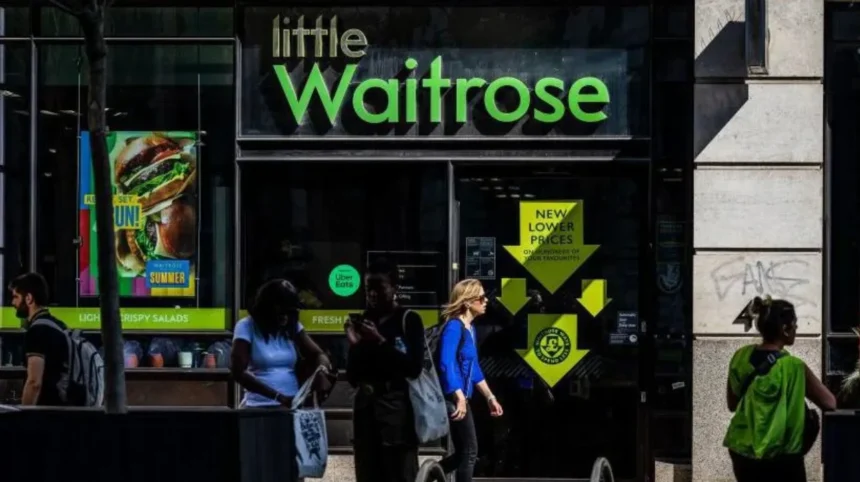
- Major Milestone: Upmarket grocer Waitrose officially opens its first brand-new full-line supermarket in eight years in Cricklewood, north London.
- Investment Plan: The expansion forms part of a broader £1 billion multi-year capital investment strategy rolled out by parent firm John Lewis Partnership.
- Pipeline Rollout: Following Cricklewood, a second new full-line supermarket will open next month in Hale Barns, Greater Manchester, alongside four smaller locations next year.
- Leadership & Strategy: Under the stewardship of Chief Executive Tom Denyard, who assumed leadership in January, Waitrose is also refurbishing 29 existing stores this year.
- Financial Performance: Whilst sales grew by 4% during the six-month period ending 1 August, underlying operating profit slipped by £7 million to £103 million due to price investments and energy overheads.
- Union Recognition: Parent entity John Lewis Partnership has signed a historic company-wide collective union agreement with Usdaw.
Cricklewood (North London News) October 22, 2026 – Upmarket supermarket chain Waitrose has officially launched its first new full-sized supermarket site in eight years, opening the doors of a newly developed branch in Cricklewood, north London, as part of a sweeping £1 billion nationwide investment strategy.
The launch marks a significant operational turning point for the high-end retailer. Alongside the north London opening, the company confirmed that a second full-line supermarket will unveil next month in Hale Barns, Greater Manchester. The commercial expansion pipeline will extend further into next year with four additional outlets, comprising a supermarket in Oakham, Rutland, and three strategically positioned convenience branches in Bedminster (Bristol), Chalk Farm (London), and Springstead Village (Cambridge).
What Are the Details of the £1bn Investment Strategy?
As reported by Sarah Butler of The Guardian, Waitrose originally outlined ambitious strategic growth parameters in 2024. The group, which operates a nationwide footprint of over 300 supermarkets, committed to establishing up to four large-format stores and 100 convenience shops across a five-year horizon. Concurrently, the investment package funds widespread estate refurbishments designed to modernise existing branches with expanded fresh meat, fish, and sushi counters, alongside in-house artisanal bakeries and dedicated fine wine departments.
In statement coverage provided by The Guardian, Tina Mitchell, Retail Director at Waitrose, stated that
“Our supermarkets provide the ultimate showcase for everything that sets Waitrose apart – from our unmatched quality and industry-leading welfare standards to the expert service of our partners”.
Executive leadership at the grocery business underwent a major transition in January with the appointment of former Tesco executive Tom Denyard. Under Denyard’s guidance, Waitrose plans to overhaul and refurbish 29 store locations throughout the course of the current calendar year to bolster the physical shopping experience.
How Are Financial Performance and Market Share Holding Up?
According to industry tracking metrics compiled by analysts at Worldpanel by Numerator and cited by The Guardian, Waitrose has managed to maintain its core grocery market share despite severe commercial headwinds. The business previously suffered operational setbacks stemming from major IT infrastructure failures, which led to widespread logistics delays and noticeable stock deficits on store shelves.
Competitive pressures remain intense, particularly from high-street rival Marks & Spencer, which has successfully captured a higher comparative portion of the UK food retail market following an aggressive rollout of dedicated food-led halls.
Financial disclosures for the six-month period ending 1 August show that sales at Waitrose climbed 4% year-on-year. However, underlying operating profit contracted by £7 million to land at £103 million. Executive leadership attributed this margin compression directly to unbudgeted expenditure required to absorb cost-of-living pressures for consumers, price cuts, enhancements to the MyWaitrose customer loyalty scheme, and elevated summer energy bills driven by heatwave conditions.
What Is the Financial Picture for Parent Group John Lewis Partnership?
As reported by media sources examining the parent entity’s accounts, the wider employee-owned John Lewis Partnership posted a pre-tax loss of £98 million for the half-year ending 1 August. While capital expenditure was poured into updating department store outlets, overall sales across the John Lewis department store division dipped. To protect long-term solvency and control operational overheads, the partnership has systematically reduced its direct workforce numbers.
Amid workforce structural changes, the John Lewis Partnership announced a landmark corporate agreement by entering into its first company-wide union recognition deal with shopworkers’ union Usdaw. The collective bargaining framework comes immediately ahead of updated statutory employment legislation governing workplace access rights.
In commentary captured by The Guardian, Joanne Thomas, General Secretary of Usdaw, stated:
“Usdaw already has members working within the business and this agreement will strengthen that presence and help us in supporting and representing members across the partnership. We now look forward to growing our membership and influence within the partnership and to working with the partnership’s management on finalising the details of how the agreement will work in practice”.
Background of the Particular Development
The launch of the Cricklewood branch represents a decisive strategic pivot for Waitrose following nearly a decade of network consolidation. In the mid-to-late 2010s, facing rising discount competition from Aldi and Lidl and shifting consumer habits, Waitrose curtailed store openings to focus on cost discipline and digital capability. However, the subsequent years presented operational friction, culminating in IT software upgrades that severely disrupted automated supply chains, leading to missing stock and customer dissatisfaction.
During the same window, key rival Marks & Spencer executed a successful turnaround of its food division by aggressively expanding its physical footprint and repositioning its offering as a full-line weekly shop option rather than a purely premium treat destination. Marks & Spencer’s market share gains put direct pressure on Waitrose to modernise its store estate.
The £1 billion capital allocation plan announced in 2024 was engineered specifically to reverse this dynamic. By recruiting former Tesco executive Tom Denyard to lead Waitrose, the John Lewis Partnership signalled a clear shift toward proven, large-scale grocery retail execution. The strategy balances physical brick-and-mortar convenience store expansion with immersive, service-heavy supermarket hubs featuring specialist counters to re-engage affluent shoppers.
Prediction: How This Development Can Affect the Target Audience
The reopening of store expansion pathways directly impacts several distinct audience groups: premium grocery consumers, local retail economies, and store employees (Partners).
For suburban and urban middle-class shoppers—Waitrose’s primary demographic—the expansion signals increased proximity to high-end food retail and counter services. In locations like Cricklewood and Hale Barns, the presence of an 18,000 sq ft flagship store typically exerts an upward pull on local commercial property values and increases footfall for surrounding high-street businesses. Shoppers stand to benefit from intensified price competition as Waitrose continues to sink margin into loyalty discounts to counter Marks & Spencer and mainstream supermarkets.
For retail store workers and union members, the simultaneous expansion and union recognition deal with Usdaw create a new paradigm. While staff numbers have been squeezed overall across the parent partnership to reduce operational expenditure, the expansion into new physical sites creates fresh frontline jobs. The collective union agreement provides employees with structured representation as the business continues to modernise its operational workflows.